
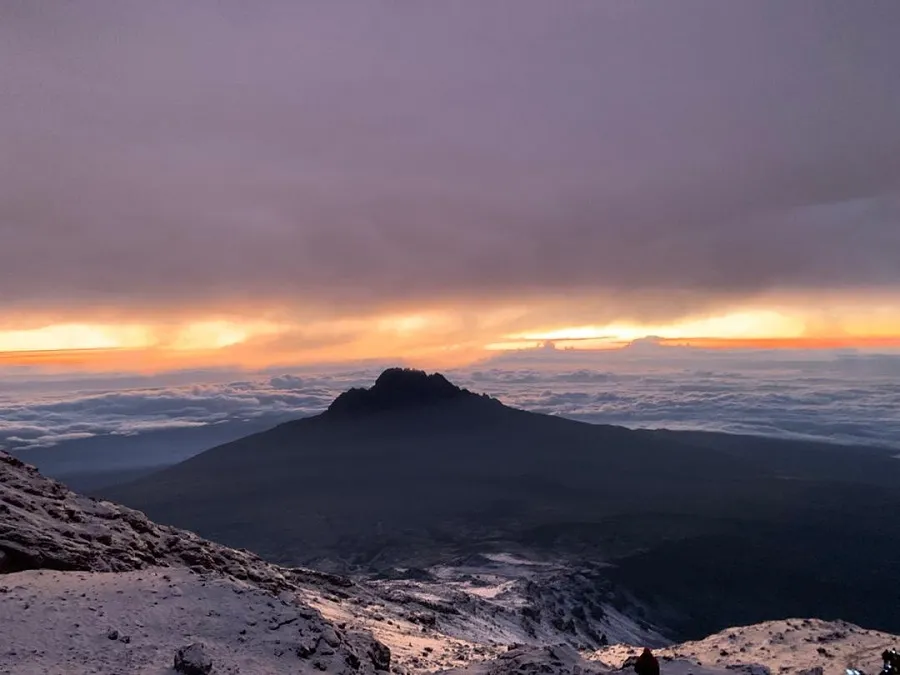
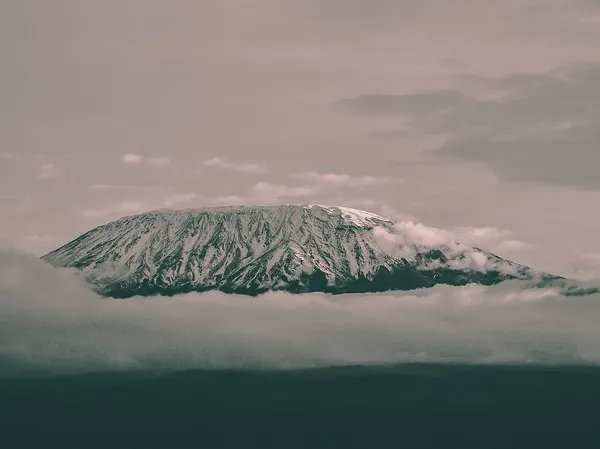
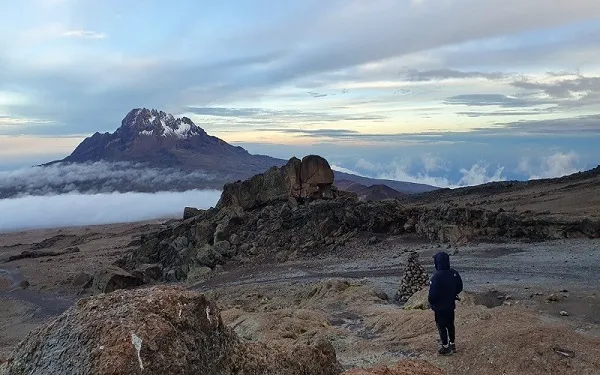
About this climb
The 10-day Northern Circuit is the most comprehensive Kilimanjaro climbing itinerary available anywhere. It takes everything that makes the 9-day Northern Circuit exceptional — the full western rainforest approach, the Shira Plateau crossing, the 360° circumnavigation of Kibo, the remote northern wilderness, the Barranco Wall, and the highest-success summit push — and adds a dedicated full rest and acclimatization day at Moir Hut (4,200 m) on the remote northern slopes. This single additional day is the most effective acclimatization investment available on Kilimanjaro.
The physiological case for a rest day at altitude is well-established: spending additional time in the 4,000–4,500 m zone — without expending energy on walking — allows the body to produce more erythropoietin, increase red blood cell mass, and fine-tune vascular and respiratory adaptations more completely than any amount of "climb high, sleep low" hiking can achieve. For climbers who have struggled with altitude on previous expeditions, or who simply want to give themselves every measurable advantage before the summit night, the 10-day itinerary is the definitive choice.
The 10-day is especially recommended for: climbers who have experienced AMS or altitude headaches on previous treks above 3,500 m; anyone over 50 whose cardiovascular system may adapt more slowly to altitude; first-time high-altitude climbers who want the absolute maximum summit probability; experienced mountaineers who want the most unhurried and comprehensive Kilimanjaro experience; and anyone who simply has ten days and wants to give themselves every possible advantage. The extra day costs less than you might think — primarily one additional park camping fee — and the summit success statistics strongly justify it.
On Day 5, at Moir Hut (4,200 m), there is no mandatory trekking. Your body is at the optimal altitude for adaptation stimulus — high enough to trigger significant erythropoietin release and red blood cell production, but not so high that altitude sickness risk escalates. Guides conduct optional short acclimatization walks, health checks twice daily, and altitude monitoring. You eat, hydrate, rest, and let your body do the work. This is the same protocol used by elite mountaineers preparing for 8,000 m peaks — scaled to Kilimanjaro.
The 10-day Northern Circuit achieves approximately 95%+ summit success, compared to ~90–95% for the 9-day version. That margin — small in percentage terms but significant in real outcomes — is attributable almost entirely to the Moir Hut rest day. For a group of 20 climbers, the difference between 90% and 95% success rates is one additional person reaching the Roof of Africa. For you personally, it is one less variable between ambition and achievement.
10-day itinerary
-
Ten days begins with the longest drive of any Kilimanjaro route — approximately 2.5 hours from Moshi northwest to the remote Londorossi Gate on the western flank. The forest entry is immediately different from all other routes: dense Podocarpus and Macaranga rainforest, wildlife-rich, and virtually crowd-free. Day 1 is deliberately gentle — bodies begin their long, measured preparation.
-
07:00Pickup from Moshi hotel
~2.5 hour drive to Londorossi Gate. Gear check, TANAPA registration, and porter loading. Wildlife briefing — buffalo and elephant are present in the lower forest.
-
10:30Enter the western rainforest
Pristine Podocarpus forest with colobus monkeys, hornbills, and endemic sunbirds. The most biodiverse entry section on Kilimanjaro. Buffalo tracks frequently cross the trail. Guides brief on wildlife approach protocol.
-
14:30Arrive Mti Mkubwa "Big Tree" Camp (2,750 m)
Named for the magnificent Podocarpus trees overhead. First health baseline check — oxygen saturation and pulse recorded. Early dinner and rest. Nine nights of tented camping begins.
- 📍 ~7 km
- ⏱ 4–5 hrs
- ⛰ 2,360 m → 2,750 m
- ⛺ Mti Mkubwa Camp
-
-
The ascent through heather moorland and giant senecio forest toward the Shira Plateau rim — one of Kilimanjaro's most transformative days. Emerging onto the plateau and seeing the summit cone of Kibo enormous ahead is a moment that stays with climbers for years.
-
07:30Ascend through heather and giant senecio zone
The forest canopy opens into heather moorland. Giant lobelias appear. The air cools. The gradient increases toward the plateau rim.
-
12:00Plateau rim — Shira revealed
Suddenly emerge onto the vast Shira Plateau. Kibo's summit cone fills the eastern skyline. Lunch with 360° views. One of Kilimanjaro's great reveal moments.
-
15:00Arrive Shira 1 Camp (3,610 m)
First night on the plateau. Hydrate aggressively. Health check — begin altitude monitoring that will run continuously for the next eight days.
- 📍 ~9 km
- ⏱ 6–8 hrs
- ⛰ 2,750 m → 3,610 m
- ⛺ Shira 1 Camp
-
-
A gentle traverse of the Shira Plateau to Shira 2 Camp, with the afternoon available for the optional Shira Cathedral acclimatization walk to ~3,900 m. The plateau's otherworldly landscape — giant groundsels, open moorland, unobstructed views of Kibo — is experienced slowly and fully.
-
07:30Plateau traverse — Shira 1 to Shira 2
Cross the heart of the Shira Plateau. Giant groundsels loom overhead. Mawenzi peak and the Kenyan plains visible northeast. The Shira Ridge frames the western horizon. A profound and unhurried morning.
-
12:00Arrive Shira 2 Camp (3,850 m)
Hot lunch, two hours rest. Health monitoring. On the 10-day itinerary, this gentle pace is intentional — bodies are being prepared methodically.
-
14:30Optional: Shira Cathedral acclimatization walk (~3,900 m)
Recommended for all. Ascend to the Cathedral rocks and return. The minor altitude gain contributes meaningfully to the acclimatization curve. Dinner and sleep.
- 📍 ~6 km
- ⏱ 4–5 hrs
- ⛰ 3,610 m → 3,850 m
- ⛺ Shira 2 Camp
-
-
The day the Northern Circuit separates from every other Kilimanjaro route. After the critical acclimatization lunch stop at Lava Tower (4,630 m), the trail sweeps dramatically north and east instead of descending south to Barranco. Within thirty minutes, all other routes become invisible. The northern wilderness has begun — and on the 10-day itinerary, there is an entire rest day here tomorrow to savour it.
-
07:30Ascend to Lava Tower (4,630 m) — acclimatization lunch
East from Shira 2 through the alpine desert toward the Lava Tower plug. 4,630 m — higher than any Alpine summit. Altitude effects are expected; rest fully, hydrate, do not rush. The rest day tomorrow makes this lunch even more effective.
-
13:00The northern divergence — trail swings north
The route breaks away from the Lemosho and all southern-circuit routes. The landscape opens dramatically. Open moorland, no other trekkers, the summit cone enormous to the south. Tomorrow you will rest and absorb all of this.
-
16:30Arrive Moir Hut (4,200 m)
Remote camp on the northern moorland. No other route passes here. Views north across the savanna. Dinner and early rest — tomorrow is a rest day, not a hiking day. The mountain's work begins tonight while you sleep.
- 📍 ~11 km
- ⏱ 7–9 hrs
- ⛰ 3,850 m → 4,630 m → 4,200 m
- 🧭 Northern arc begins
- ⛺ Moir Hut
-
-
The defining day of the 10-day itinerary — and the day that most distinguishes it from every other Kilimanjaro route. There is no mandatory hiking. This entire day is dedicated to physiological adaptation at 4,200 m. Your body is producing erythropoietin, building red blood cells, and making the vascular adjustments that will make the difference on summit night. Moir Hut is on the remote northern flank of Kilimanjaro — almost no other climbers visible anywhere. The wilderness is profound.
-
08:00Relaxed breakfast — no pack, no schedule
The only day in ten without a walking target. Hot breakfast, hot drinks. Oxygen saturation and pulse check by guide. Discuss how you feel — the guide monitors closely all day.
-
10:00Optional: short acclimatization walk to ~4,400 m and back
Recommended but not mandatory. A one-to-two hour walk up toward the northern ridge and back — the "climb high, sleep low" principle in its most distilled form. No packs, no rush. Return for lunch.
-
12:30Hot lunch — extended rest in the afternoon
The northern wilderness at midday. Silence, wind, and the summit cone above. Second health check. This is what maximum acclimatization preparation looks and feels like.
-
15:00Free time — read, sleep, absorb the landscape
No itinerary. Experienced climbers use rest days to sleep; first-timers are often surprised how much there is to see and absorb in one of the most remote wilderness settings in East Africa.
-
18:00Dinner & Day 6 briefing
Tomorrow the northern traverse continues. Final health check. Almost universally, climbers report feeling significantly better on Day 6 than Day 5 — the rest day doing exactly what it is designed to do.
- 📍 Optional short walk only
- 🌙 Full rest & acclimatization
- ⛰ Moir Hut 4,200 m (no altitude gain)
- ⛺ Moir Hut (second night)
-
-
The most remote day on the mountain. After a full rest day, bodies are refreshed and ready for the northern traverse — the most solitary section of any Kilimanjaro route. On clear days, Mount Kenya is visible 340 km north across the Kenyan savanna. The circumnavigation presses east toward Third Cave Camp.
-
07:30Depart Moir Hut — continue the northern traverse
After two nights at Moir Hut and a full rest day, bodies feel notably stronger. The trail traverses open northern moorland — no other trekkers in any direction. The most solitary kilometres of any Kilimanjaro route.
-
11:00Northern viewpoint — Mount Kenya on the horizon
On clear days, the white summit of Mount Kenya floats 340 km to the north. Amboseli National Park stretches below. The landscape is elemental. Lunch here with one of the most remote panoramas on the continent.
-
15:30Arrive Third Cave Camp (3,870 m)
Named for the lava caves on the northern flank. A descent from the high traverse — the complementary "sleep low" of the rest day's "stay high". Bodies feel strong. The circumnavigation is more than halfway complete.
- 📍 ~13 km
- ⏱ 6–8 hrs
- ⛰ 4,200 m → 3,870 m
- 🧭 Deepest northern wilderness
- ⛺ Third Cave Camp
-
-
A significant altitude push to School Hut at 4,750 m — the highest non-summit camp on Kilimanjaro. The trail sweeps around the northeastern shoulder of the mountain, completing the upper northern arc with Mawenzi peak close and dramatic. On the 10-day itinerary, climbers arrive at School Hut with better acclimatization than any other group on the mountain.
-
07:30Ascend the northeastern shoulder to School Hut
A steep, sustained climb through alpine desert onto the northeastern ridge. Mawenzi — Kilimanjaro's second peak — becomes close and extraordinary. Air genuinely thin now. Move deliberately and conserve energy.
-
13:30Arrive School Hut (4,750 m)
Kilimanjaro's highest non-summit camp. The crater is directly above. Almost completely deserted — Northern Circuit climbers only. Rest immediately. Eat and hydrate. Note how much stronger you feel here compared to most climbers at this altitude — the rest day dividend.
-
16:00Health check & Day 8 briefing
Oxygen saturation and pulse checked. Discuss Day 8 plan — the long traverse to Barafu via the Barranco Wall. Early dinner and early sleep.
- 📍 ~11 km
- ⏱ 5–7 hrs
- ⛰ 3,870 m → 4,750 m
- ⛺ School Hut (4,750 m)
-
-
A long, dramatic day completing the full circumnavigation of Kibo and delivering climbers to Barafu Base Camp for the summit push. The route descends from School Hut to rejoin the Southern Circuit at Barranco, crosses the iconic Barranco Wall, passes through Karanga Valley, and ascends to Barafu. After seven days and a complete northern arc, arriving at Barafu tonight feels like returning from a different world — and emerging with more acclimatization than anyone else on the mountain.
-
07:00Descend from School Hut — approach Barranco Wall
Descend the western flank. Barranco Camp appears ahead with the iconic wall rising beyond. Other climbers from Machame and Lemosho routes at Barranco — the first significant crowds seen since Day 3. The circumnavigation rejoins the mountain's main artery.
-
10:00The Barranco Wall — 300-metre hands-and-feet scramble
The most famous section of any Kilimanjaro route. Northern Circuit climbers are the best-acclimatized group on the entire wall. Guides positioned throughout. No ropes required. The exposure is extraordinary — enjoy it.
-
12:30Continue to Karanga — last water point
Traverse the southern face to Karanga. Fill all bottles here — last water before Barafu. Brief rest.
-
16:00Arrive Barafu Base Camp (4,673 m)
Complete summit push briefing. Dinner immediately. Bed by 18:30. Wake-up at 23:00. The 360° circumnavigation of Kilimanjaro is complete. One night between you and the Roof of Africa.
- 📍 ~16 km
- ⏱ 8–10 hrs
- ⛰ 4,750 m → 4,673 m
- 🧗 Barranco Wall scramble
- ⛺ Barafu Base Camp
-
-
The summit push. Midnight departure, by headlamp, from the most physiologically prepared base on Kilimanjaro. Nine days of meticulous, patient preparation — the western forest, the Shira Plateau, the northern wilderness, the dedicated rest day, the Barranco Wall, and nine nights of altitude exposure — arrive at this single night. The ~95%+ success rate of the 10-day Northern Circuit is the measurable outcome of everything that preceded this moment.
-
23:00Wake-up — summit push begins
Hot tea and biscuits. Final layer system — temperatures −10°C to −20°C near summit. Headlamps on. The guide sets a measured, sustainable pace. Everything that can be done has been done. Now it is just the mountain and your legs.
-
05:00Stella Point — Crater Rim (5,745 m)
Dawn across the clouds far below. The glaciers catching the first light. On the 10-day Northern Circuit, most climbers feel stronger at Stella Point than they expected. The rest day made a measurable difference. Uhuru Peak is 45 minutes along the rim.
-
06:00UHURU PEAK — 5,895 m 🏔
The Roof of Africa. You circled the entire mountain. You rested on its remote northern face. You gave the summit everything it required — and everything you had. The yellow sign. Sunrise over the crater glaciers. A moment that belongs entirely to you.
-
08:00Begin descent to Mweka Camp (3,100 m)
Long descent via the Mweka Route. Trekking poles essential on loose scree. Arrive mid-afternoon. Celebration dinner — ten days culminating in this.
- 📍 ~18 km total
- ⏱ 12–15 hrs
- ⛰ 4,673 m → 5,895 m → 3,100 m
- ⛺ Mweka Camp
-
-
The final descent through the southern rainforest, your TANAPA Summit Certificate, and the porter farewell song. Ten days is the longest of any standard Kilimanjaro route — the porter crew who walked with you through the forest, across the plateau, into the northern wilderness, up the wall, and to the summit are colleagues now. The farewell song at Mweka Gate reflects that.
-
07:30Final breakfast — tip ceremony for the crew
Sign the porter tip register. Say each crew member's name. Ten days is long enough to know everyone. They carried your mountain — through forest, plateau, northern wilderness, and summit night.
-
08:30Descend to Mweka Gate through the rainforest
The same southern forest received you in a different state ten days ago at Londorossi Gate. You descend it now having circled Africa's highest peak and stood on its summit. Trekking poles on steep sections.
-
12:30Mweka Gate — TANAPA Summit Certificate & porter farewell song
Your Kilimanjaro Summit Certificate. The entire crew — guides, porters, cook, waiter — performs the farewell song in Swahili. Karibu sana. You completed the most comprehensive Kilimanjaro itinerary available.
-
14:00Return to Moshi — celebration dinner
Hot shower, rest, and a group celebration dinner. End of all services.
- 📍 ~9 km
- ⏱ 3–4 hrs
- ⛰ 3,100 m → 1,640 m
- 🏨 Return to Moshi
-
Choose your package
All packages follow the identical 10-day Northern Circuit itinerary with tented camping throughout all 9 nights on the mountain.
- Budget guesthouse Moshi (Day 1 & Day 10)
- All TANAPA park & camping fees (9 nights)
- -certified lead guide
- All porters, cook & sleeping tents
- 3 meals/day + snacks on mountain
- Emergency supplemental oxygen
- Daily pulse oximeter monitoring
- TANAPA summit certificate
- Mid-range hotel Moshi (Day 1 & Day 10)
- All TANAPA park & camping fees (9 nights)
- Dedicated lead guide + assistant guide
- All porters, cook, waiter & toilet tent
- 3 meals/day + hot drinks throughout
- Safety oxygen + Gamow bag
- Twice-daily oximeter check
- Airport transfers included
- TANAPA summit certificate
- Boutique hotel Moshi (Day 1 & Day 10)
- All TANAPA park & camping fees (9 nights)
- Private 1:1 guide ratio
- Full crew + private toilet + shower tent
- Restaurant-quality meals + full snack bar
- Oxygen, Gamow bag & AED device
- 3× daily oximeter + satellite communicator
- Airport transfers + Moshi cultural tour
- Safari combo pricing available
What's included
- All TANAPA national park entry fees
- Camping fees for all 9 nights on the mountain
- -certified professional lead guide
- Assistant guide (1 per 3 climbers)
- Porters (~3 per climber) + mountain cook
- High-quality dome sleeping tents + dining tent
- All mountain meals (3 per day) + water
- Emergency supplemental oxygen cylinder
- Daily pulse oximeter health monitoring
- Dedicated rest day at Moir Hut (Day 5)
- TANAPA summit certificate at Mweka Gate
- KINAPA rescue fee contribution
- International flights to KIA / JRO airport
- Tanzania tourist visa (~$50 USD)
- Personal travel & evacuation insurance
- Personal hiking gear (rental available in Moshi)
- Sleeping bag −15°C rated (rental available)
- Trekking poles — essential (rental available)
- Tips / gratuities for guides and porters
- Alcoholic beverages
- Diamox altitude medication (prescription required)
How the 10-day Northern Circuit compares
Where the 10-day sits relative to all Kilimanjaro routes — the dedicated rest day produces a measurable step-change in summit success:
| Route | Days | Rest Day | Success | Crowds | From |
|---|---|---|---|---|---|
| Machame 7-day | 7 | No | ~85% | High | $1,900 |
| Lemosho 8-day | 8 | No | ~88–92% | Moderate | $2,050 |
| Northern Circuit 9-day | 9 | No | ~90–95% | Very low | $2,350 |
| Northern Circuit 10-day ← You are here | 10 | ✅ Yes — Moir Hut | ~95%+ | Very low | $2,650 |
Best time to climb
The 10-day Northern Circuit is viable year-round, but dry conditions on the northern slopes make the two dry seasons notably superior:
| Months | Season | Summit | Northern Moorland | Rest Day Conditions |
|---|---|---|---|---|
| Jan – Feb | Dry & cold | Excellent | Clear and firm | Cold, clear skies — ideal |
| Mar – May | Long rains | Possible | Muddy — manageable | Cloud-covered — still effective |
| Jun – Oct | Dry (peak) | Excellent | Dry and clear — best | Best conditions — Kenya views likely |
| Nov | Short rains | Good | Some mud — passable | Generally manageable |
| Dec | Dry & clear | Excellent | Clear and dry | Excellent — clear nights |
The dedicated rest day at Moir Hut (Day 5) is physiologically effective regardless of weather conditions — the body adapts in cloud as effectively as in sunshine. However, clear dry conditions on the northern slopes offer the extraordinary bonus of Mount Kenya visible 340 km north from the rest day viewpoints.
Frequently asked questions
-
Day 5 at Moir Hut (4,200 m) is a full acclimatization rest day — no mandatory hiking. Climbers eat, sleep, hydrate, and allow their bodies to adapt at altitude. Guides conduct optional short acclimatization walks of 1–2 hours to approximately 4,400 m and back, which are recommended but not required. Health checks are conducted twice daily. The physiological benefit is significant: extended time at 4,200 m without energy expenditure allows maximum erythropoietin production, red blood cell increase, and cardiovascular adaptation. This is the same protocol professional altitude mountaineers use before 8,000 m peaks — scaled appropriately for Kilimanjaro.
-
For most climbers who can commit the additional day and cost, yes — significantly. The extra day costs primarily one additional TANAPA camping fee (roughly $60–70) plus crew wages, making the premium modest relative to the total investment in a Kilimanjaro climb. The benefit — a dedicated physiological rest day at optimal acclimatization altitude — translates directly into measurably better summit readiness. The 10-day is especially worth the additional investment for anyone with altitude sensitivity history, anyone over 50, and anyone who has attempted Kilimanjaro before and not summited due to altitude illness.
-
Prices range from $2,650 (standard group) to $3,750 (private luxury) per person. All packages include all TANAPA park fees, camping fees for 9 nights, tents, all meals-certified guides and porters, emergency oxygen, the dedicated rest day at Moir Hut, and the TANAPA summit certificate. International flights and visa are not included. The difference between the 9-day and 10-day pricing reflects primarily the additional night's park and camping fees plus crew costs.
-
The 10-day is especially valuable for: climbers who have experienced altitude sickness (AMS) on any previous trek above 3,500 m; anyone over 50 whose physiological altitude adaptation may take longer; first-time high-altitude climbers who want the maximum possible summit probability; experienced mountaineers who want the most comprehensive and unhurried Kilimanjaro traverse; and anyone for whom the cost of a second Kilimanjaro trip to complete an unsuccessful summit attempt would exceed the cost difference between the 9-day and 10-day itinerary. It is suitable for all fit, healthy adults.
-
Yes — the Barranco Wall is included on Day 8, as the Northern Circuit rejoins the Southern Circuit at Barranco Camp after completing the northern arc. The 300-metre hands-and-feet scramble is non-technical and guides assist every climber throughout. On the 10-day itinerary, climbers arrive at the wall with the greatest acclimatization of any group on Kilimanjaro — including the benefit of the Day 5 rest day — which consistently makes the experience more enjoyable and less physiologically challenging than for climbers on shorter routes.
-
Yes, without exception. Resilience Expeditions is a registered (Kilimanjaro Porters Assistance Project) partner. All porters receive above-standard wages, are never loaded beyond TANAPA's 20 kg limit, receive appropriate cold-weather equipment for the northern high camps and the rest day at 4,200 m, are covered by health and accident insurance, and receive adequate food for all ten days on the mountain. Ten days is the longest itinerary we run — porter welfare is monitored throughout and non-negotiable.


