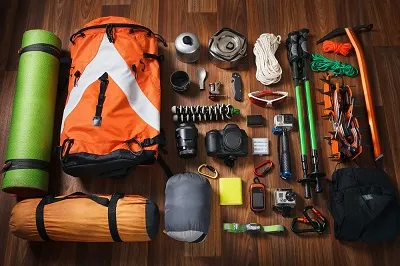
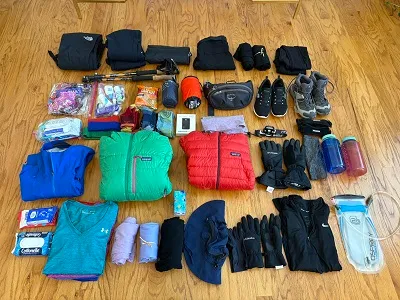
Everything you need to summit Africa's highest peak — and nothing you don't. The definitive
gear list from -certified guides who climb Kilimanjaro every week.
Interactive Kilimanjaro Packing Checklist
Tick items as you pack. Print the completed list or reset to start again.
Packed:
0 / 0
5,895m
Summit height
−20°C
Summit night low
6–9
Days on mountain
~15kg
Your pack weight
Before you start packing
Kilimanjaro is the world's highest free-standing mountain and one of the most extreme environments you can
walk into without technical mountaineering experience. At 5,895 metres, the temperature can drop to −20°C on
summit night; the altitude reduces oxygen to roughly 50% of sea-level concentration; and you will be on the
mountain for 6–9 days in conditions that range from equatorial jungle heat at the base to arctic cold at the
summit glaciers.
Getting your kit right is one of the few things you fully control before you start climbing. Our guides see
thousands of climbers pass through Moshi every year. The advice in this list is based on what we observe
actually working — and the gear mistakes that end climbs prematurely or simply make them miserable.
❄️
The most common gear mistake: underestimating the cold
More climbers fail or suffer unnecessarily on Kilimanjaro from being underprepared for the cold than
from any other single cause. Summit night temperatures between −15°C and −20°C are normal. Your base
layer, mid layer, outer shell, gloves, and sleeping bag are not interchangeable. Each has a specific
job. Do not economise on cold-weather gear.
🎒
The golden rule: your day pack vs your duffel bag
Your day pack (20–30 litres) is what you carry yourself during every hiking day — it
should contain only what you need access to on the trail: water, snacks, rain jacket, camera, sunscreen,
summit headtorch, and your personal small items. Your duffel bag (80–100 litres) is
what your porter carries — it contains everything else including your sleeping bag, camp clothes, and
extra food. Do not confuse the two. Porters are limited to 20 kg total.
Kilimanjaro temperatures by camp
Understanding what temperatures you will actually encounter is essential to packing correctly. The mountain
spans five distinct climate zones, each with different conditions.
Camp
Altitude
Day Temp
Night Temp
Zone
Machame Gate / Start
1,640 m
25–30°C
15–18°C
Rainforest
Machame Camp
2,980 m
15–20°C
5–10°C
Heath/Moorland
Shira Camp
3,840 m
10–15°C
0–5°C
High Moorland
Barranco / Karanga
3,970–4,050 m
8–12°C
−5 to −3°C
Alpine Desert
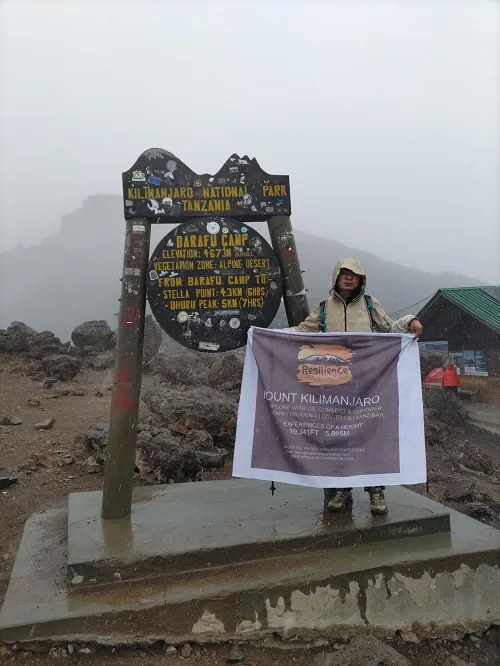
Barafu High Camp
4,673 m
5–10°C
−8 to −5°C
Arctic
Summit (Uhuru Peak)
5,895 m
−5 to −10°C
−20 to −15°C
Arctic/Glacial
The Kilimanjaro layering system
Kilimanjaro demands a proper three-layer system — not because mountain guides enjoy explaining it, but
because the temperature range you will experience (from +30°C in the rainforest to −20°C on the summit) is
simply too wide to address with any single garment. The layering system lets you add and remove precisely as
conditions change throughout each day.
1
Base Layer — moisture management
Worn directly against skin. Must wick sweat away from your body and dry quickly.
This layer keeps you dry throughout the day's hiking.
Traps body heat. Usually a fleece or lightweight down/synthetic jacket. This is
your primary warmth layer at camp and in cold mornings.
Fleece jacket (100–200wt) · Lightweight down or synthetic puffer
3°C+
From Shira
3
Outer Shell — wind & waterproof
Blocks wind, rain, and snow. Does not need to be heavily insulated — the layers
beneath do the warming. Must be fully waterproof (not just water-resistant) and breathable.
Gore-Tex jacket · Hardshell with taped seams · Min. 10,000mm HH rating
Rain+
All weather
4
Heavy Down Jacket — summit insulation
Worn at Barafu High Camp, on summit night ascent, and at Uhuru Peak. This is
your primary warmth layer in arctic conditions. Do not use a light puffer here — you need serious
insulation.
800+ fill power down · At least −10°C rated · Loose enough to layer over
fleece
−10°C
Summit night
Complete Kilimanjaro packing list
Select a category below to view and tick off items. All items are tracked across categories. Use the print
button above to save your completed list.
Clothing packed:
0/0
Moisture-wicking base layer top × 2Merino wool or synthetic. Long-sleeved preferred. One to wear, one drying.
Cotton kills — absolutely no cotton on the mountain.
Essential×
2
Moisture-wicking base layer bottoms × 2Long thermal underwear. Merino or synthetic. Worn at night and on cold
mornings. Essential for summit night.
Essential×
2
Fleece mid layer jacket (200wt)100–200 weight fleece. Your primary mid layer for hiking in cold conditions.
Worn under the shell or over the base on warm days.
Essential
Heavy down or synthetic summit jacket800+ fill power down or equivalent synthetic. This is your primary
summit-night insulation layer. Must fit over your fleece. This item is non-negotiable for safety at
−20°C.
Critical — do not skip
Hardshell waterproof/windproof jacketFully waterproof (10,000mm+ HH rating), windproof, and breathable. Gore-Tex or
equivalent. Taped seams. The rainforest zone will test it — so will the summit wind.
Critical
Waterproof over-trousersFull-length waterproof trousers that go over your trekking trousers. Side-zip
preferred so you can put them on over boots.
Essential
Trekking trousers × 2Lightweight, quick-drying trekking trousers. Zip-off legs are useful. One pair
for hiking, one pair for camp. Do not bring jeans.
Essential×
2
Warm fleece or thermal trousers × 1Worn at camp in cold evenings and on summit night. Worn over your base layer
bottoms below the waterproof shell.
Essential
Heavyweight summit gloves (−15°C+ rated)Waterproof outer, insulated inner. Must cover your wrists. Frostbite risk to
fingers is real at Uhuru Peak. Ski/mountaineering gloves are ideal. This is not the place for thin
running gloves.
Critical — frostbite risk
Lightweight liner glovesThin merino or fleece gloves worn under summit gloves or alone on cold
mornings below High Camp. Also useful for handling equipment.
Essential
Warm beanie hat (covers ears)A wool or fleece beanie that covers your ears completely. Worn at High Camp
and during the summit ascent. Essential — significant heat loss through an uncovered head.
Critical
Balaclava or neck gaiterA balaclava covers your face, neck, and head in one. Alternatively a neck
gaiter (buff) plus beanie works well. Summit wind on exposed sections is severe.
Essential
Sun hat with brimEquatorial UV above 4,000 m is extreme. A wide-brimmed sun hat for the daytime
hiking sections is essential to prevent sunburn and heat exhaustion on the lower mountain.
Essential
Hiking shirts (long or short sleeve) × 3Quick-dry synthetic or merino hiking shirts. Long-sleeved provide sun
protection. Three shirts for 6–9 days is sufficient with your base layers.
Essential×
3
Merino or wool hiking socks × 4–5 pairsCushioned hiking socks, merino preferred for warmth when wet. At least one
heavyweight pair for summit night. Liner socks (thin nylons) under hiking socks help prevent
blisters.
Essential× 4–5
pairs
Underwear × 4 + camp shorts or light trousersComfortable moisture-wicking underwear. A pair of light camp shorts or
trousers for evenings in camp on the lower mountain.
Essential
Footwear packed:
0/0
Waterproof hiking boots (ankle support, B1/B2 rated)Stiff-soled, ankle-high waterproof boots. Must be fully broken in before the
climb — blisters from new boots end more climbs than altitude. Gore-Tex lining preferred. B1/B2
crampon-compatible rating for summit ice.
Critical — must be broken in
Camp sandals or lightweight shoesTo rest your feet at camp after hiking. A pair of lightweight sandals, Crocs,
or trail runners. Do not hike in them — your feet need the rest.
Essential
Waterproof gaiters (ankle to mid-calf)Keep mud, scree, and snow out of your boots. Particularly important on the
rainforest paths and the scree slopes of the summit approach. Ankle or mid-calf gaiters are
sufficient. Available to rent.
EssentialAvailable to rent
Neoprene overboots or waterproof socks (optional)For additional warmth and waterproofing on summit night if your boots are
older or not fully waterproof. Most climbers do not need these if their boots are in good
condition.
Optional
⚠️
Break your boots in properly — minimum 40 hours
New boots cause blisters. Blisters end climbs. You need a minimum of 40 hours of walking in your
boots before arriving in Moshi. This means hiking in them on weekends for 2–3 months before your trip.
This is the single most important footwear advice we give.
Sleep gear packed:
0/0
Sleeping bag — minimum −10°C comfort ratingA 4-season sleeping bag rated to −10°C comfort (or lower). You will sleep in
this at up to −8°C at Barafu High Camp — wearing your base layers and down jacket inside the bag. A
3-season bag is not sufficient. Available to rent in Moshi.
Critical — min. −10°C comfortAvailable to rent
Sleeping bag linerAdds 3–5°C to your sleeping bag's warmth and keeps the bag cleaner. Silk or
merino. Particularly valuable if renting a sleeping bag.
Recommended
Sleeping mat / foam padProvided in tents on standard packages but worth checking with your operator.
A closed-cell foam mat provides insulation from the cold ground that is essential at high altitude.
Available to rent.
EssentialUsually
provided
Gear packed:
0/0
Trekking poles (telescoping, both types)Telescoping aluminium or carbon fibre. Two poles. Reduce knee stress on
descents by up to 25%. Essential for the steep scree descent from Stella Point. Interchangeable
baskets (small for rock, large for snow). Available to rent.
Strongly recommendedAvailable to rent
Headtorch + spare batteries × 2 setsThe summit push begins at midnight. You will hike 5–6 hours in complete
darkness. A good headtorch with fresh batteries is critical. Lithium batteries perform significantly
better than alkaline in extreme cold. Spare set essential.
Critical — summit night
Day pack — 20–30 litreYour day pack for hiking. Comfortable hip belt. Rain cover included or
purchased separately. Do not use a large backpack as your day pack — your porter carries the heavy
duffel. 20–30L is ideal.
Essential
Large duffel bag — 80–100 litreYour main luggage bag carried by your porter. Must have lockable zips (not
padlocked, but lockable to prevent accidental opening). Soft-sided bags are easier for porters than
rigid suitcases. Available to rent.
EssentialAvailable to rent
Water bottles (2 × 1-litre insulated) + hydration bladderYou need 3–4 litres capacity per day. Insulated bottles prevent freezing on
summit night — wide-mouth bottles are easiest to fill from streams. A hydration bladder tube freezes
above 4,500 m — insulated sleeve required or use bottles above High Camp.
EssentialInsulated for summit
Water purification tablets or filterWater is available from streams on the mountain but must be purified. Iodine
tablets or SteriPen UV purifier. Your cook boils water for hot drinks — purification is for drinking
water during the day.
Essential
Sunglasses — UV400 / Category 3 or 4High-altitude UV is severe — at 5,000 m you are receiving 50% more UV than at
sea level. You need Category 3 (very dark) or Category 4 (glacier glasses) lenses. Side shields are
recommended above the snowline. Snow blindness is a real risk.
UV protection critical
Personal trekking snacks — 6–9 days supplyEnergy bars, trail mix, chocolate, gels, dried fruit. Your operators provide
meals but personal snacks are important at altitude when appetite decreases and you need to fuel the
climb with small, frequent calories.
Essential
Pack rain coverA fitted rain cover for your day pack. The rainforest zone experiences daily
afternoon rain. Keep your electronics and spare clothing dry.
Essential
Sun cream SPF50+ × 2 tubes + lip balm SPFHigh-altitude UV burns through cloud cover. Apply before leaving camp every
morning. Lip balm with SPF prevents painful summit-day chapping. More than you think you
need.
EssentialSPF50+
minimum
Camera + spare batteries + dry bagsKeep electronics in waterproof dry bags or cases. Cold kills batteries rapidly
— keep spares in an inner pocket against your body at High Camp. A waterproof case or dry bag for
all electronics.
Recommended
Power bank (10,000+ mAh)No mains power on the mountain. A power bank charges your phone and camera.
10,000 mAh gives approximately 3 full phone charges. Keep it inside your sleeping bag at High Camp
to maintain charge in the cold.
Recommended
Toilet paper + hand sanitiser + waste bagLeave No Trace on Kilimanjaro. Toilet facilities exist at camps but are basic.
Carry toilet paper and a small waste bag for used paper on the trail between camps.
Essential
Medical packed:
0/0
ℹ️
Resilience Expedition guides carry emergency oxygen and a pulse oximeter
Your guide carries supplemental oxygen, a pulse oximeter, and a comprehensive first aid kit
throughout the climb. Do not bring your own oxygen unless specifically advised by your physician. The
items below are your personal medical kit.
Altitude medication — Acetazolamide (Diamox) if prescribedConsult your doctor before travelling. Acetazolamide (Diamox) at 125–250mg
twice daily is commonly prescribed for altitude acclimatisation. Must be started 24–48 hours before
ascent. Not suitable for everyone — discuss with your GP or travel medicine clinic.
Prescription required
Blister kit (Compeed, Moleskin, needle, antiseptic)Compeed blister pads, moleskin, a sterilised needle, and antiseptic wipes.
Treat blisters early — an untreated blister becomes a wound. Your lead guide has a medical kit but
your own is faster to access.
Essential
Ibuprofen + ParacetamolFor headaches, muscle pain, and general discomfort. Ibuprofen has mild
anti-inflammatory properties that may help with altitude headaches. Follow dosing instructions and
do not exceed recommended doses.
Essential
Anti-diarrhoeal medication (Imodium)Altitude and unfamiliar food can cause digestive issues. Imodium provides fast
relief and is essential kit on a 6–9 day expedition. Anti-nausea medication (Cyclizine) is also
recommended.
Essential
Eye drops (lubricating) + antibiotic eye dropsDust and high UV at altitude cause eye irritation. Lubricating eye drops
provide relief. Your doctor may also prescribe antibiotic drops for conjunctivitis, which is common
after altitude exposure.
Recommended
Personal prescription medications + doctor's letterBring your full supply of any regular medications plus a 5-day buffer. A
doctor's letter explaining any prescription medications is helpful for customs. Keep medications in
your day pack — not your porter's duffel.
If applicable
Documents ready:
0/0
Passport (valid for 6+ months beyond travel dates)Your passport must be valid for at least 6 months beyond your departure date
from Tanzania. Check the expiry date now.
Critical
Tanzania tourist visa (e-visa or on arrival)Most nationalities require a visa for Tanzania. Apply online at evisa.go.tz
before travel. Cost approximately $50 USD. Processing takes 3–5 business days. Print the approval
letter.
Required for most nationalities
Travel insurance with mountain rescue coverYour travel insurance must specifically cover mountain climbing/trekking at
altitude and helicopter evacuation. Generic travel insurance often excludes activities above a
certain altitude. Check the policy wording carefully. Print your policy number and emergency phone
numbers.
Must include helicopter evacuation
Yellow fever certificate (if travelling from endemic country)Required if arriving from a yellow-fever endemic country. Check requirements
for your route. Tanzania may require proof of vaccination on arrival.
Check if required
Booking confirmation + emergency contact listPrint your booking confirmation from Resilience Expedition, the guide team
contact number (+255 742 119 753), and the emergency contacts for the Kilimanjaro National Park
authority.
Essential
Cash for guide and porter tips (USD or TZS)Tips are culturally important and form a significant part of your crew's
income. Our recommended tips: Lead guide $20–25/day, assistant guides $15/day, cook $10/day, porters
$8–10/day. Prepare in envelopes before the summit ceremony. USD is preferred.
Strongly recommended
Rental confirmed:
0/0
Sleeping bag rental confirmedIf you are renting rather than buying, confirm your sleeping bag rental with
Resilience Expedition before arrival. Specify a −10°C comfort rating minimum. Inspect the bag on
arrival for cleanliness and warmth.
Rental itemConfirm before arrival
Trekking poles rental confirmedTelescoping aluminium or carbon fibre poles. Adjust to wrist height on flat
ground. Two poles required. Confirm rental includes both snow and trekking baskets.
Rental item
80–100L duffel bag rental (if needed)If you are travelling light without a large duffel bag, Resilience Expedition
can provide one. Confirm before arrival.
Rental item
Gaiters rental (if not purchasing)Mid-calf waterproof gaiters available for rent. Confirm sizing (S/M/L) before
arrival.
Rental item
What to leave at home
Weight matters on Kilimanjaro. Your porter carries a maximum of 20 kg total (including their own gear and
your duffel). Every unnecessary kilogram you bring makes the climb harder for your crew and wastes porter
carrying capacity on things that will not help you summit.
🚫
Do not bring:
Cotton clothing of any kind (jeans, cotton t-shirts, cotton socks — cotton holds
moisture and causes hypothermia when wet). Unnecessary electronics (laptops, tablets,
large cameras unless you are a photographer). Multiple pairs of everything (you will
wash clothes at camp). Alcohol (massively worsens dehydration at altitude — no alcohol
above 3,500 m). Large rigid suitcases (impossible for porters to carry efficiently).
Perfume or heavily scented products (attract insects and can cause reactions for fellow
climbers in tents).
Final packing tips from our guides
Pack your day pack the night before summit
On summit night you leave Barafu High Camp at midnight in darkness and below-freezing temperatures. Your
day pack for the summit should be packed the afternoon before — headtorch on top, snacks accessible, water
insulated, down jacket ready to layer. Fumbling with a cold, dark pack at midnight is unpleasant and delays
your team.
Keep essentials in your day pack — always
Your down jacket, shell jacket, headtorch, medication, sun cream, and water must always be in your day pack
— never in the porter's duffel. Weather on Kilimanjaro changes in minutes. The difference between a warm day
and a freezing rain event at 4,000 m can be 20 minutes. Your essential items must be on your body at all
times.
Keep weight out of your day pack
The ideal day pack weight is 5–8 kg. Heavier than this and the added physical work compounds with altitude.
Everything not needed on the trail goes in the duffel. This means: spare clothes, sleeping bag, extra food,
camp shoes, and everything else. The discipline of keeping your day pack light pays off on the long summit
days.
Test everything before you leave home
Wear your boots. Test your headtorch. Inflate your sleeping mat. Adjust your poles. Try your full layering
system in cold conditions. A piece of gear that has never been tested before arriving in Moshi has no place
on the mountain. Kilimanjaro's summit is not a place to discover that your boots give you blisters or your
shell jacket's zipper is broken.
More Kilimanjaro guides
Kilimanjaro GuideAll Kilimanjaro Routes — Which is Right for You?Read guide →