
About this climb
The 6-day Umbwe Route is Kilimanjaro's most extreme itinerary. It combines the already-demanding Umbwe Ridge — the steepest path on the mountain — with the elimination of the Lava Tower acclimatization day that the 7-day version includes. The result is a relentless, compressed ascent that gives the body the minimum possible time to adapt before the summit push.
On the 6-day itinerary, the route climbs directly from the Cave Camps to Barranco Camp on Day 3, without the "climb high, sleep low" Lava Tower detour. This saves one day but dramatically compresses the acclimatization profile, lowering summit success rates to approximately 60–65%. We offer this itinerary exclusively to climbers who can demonstrate proven high-altitude performance above 4,500 m.
We require all 6-day Umbwe bookings to include a WhatsApp or email conversation with our team about your altitude experience before we confirm. This is not bureaucracy — it is because we care about your safety and your summit chance. If you cannot clearly demonstrate experience above 4,500 m with successful acclimatization at that altitude, we will not confirm this itinerary and will recommend the 7-day Umbwe or 7-day Machame Route instead.
Elite trail runners and ultra-endurance athletes who have successfully summited Kilimanjaro or another 4,500 m+ peak within the last 12 months; returning Kilimanjaro summiteers who know their body's altitude response well and want the fastest possible route; or acclimatized climbers coming directly from a prior high-altitude expedition. Everyone else should choose a longer itinerary.
Even on the 6-day itinerary, the route joins the southern circuit at Barranco Camp and includes the iconic Barranco Wall scramble on Day 4 before continuing to Barafu. The 300-metre hands-and-feet scramble is non-technical but demanding — and arriving at it without the Lava Tower rest day means you reach the wall on slightly less-acclimatized legs. Your guide monitors and adjusts pace accordingly.
6-day itinerary
-
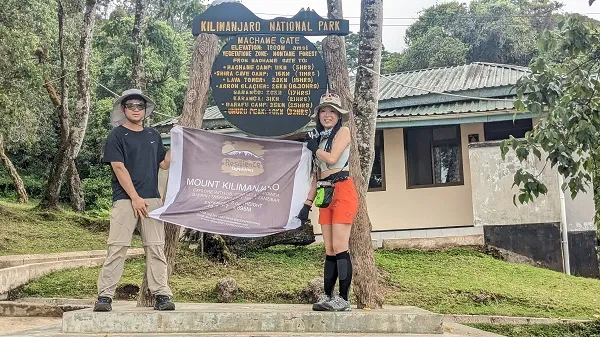
The Umbwe Gate at 1,650 m is the lowest start point of any major Kilimanjaro route. The gradient is steep and relentless from the first steps — no warm-up, no gentle introduction. The narrow jungle ridge climbs between two steep river valleys, enclosed in dense rainforest. This is the beginning of one of the hardest mountain experiences in Africa.
-
07:00Pickup from Moshi hotel
~1.5 hour drive to Umbwe Gate. Park registration and porter loading. Enter the forest without ceremony — the Umbwe starts immediately.
-
09:00Enter the Umbwe ridge — begin the climb
Narrow, steep ridge trail. Dense forest. Exposure on both sides of the ridge. Few other climbers. Very little flat ground. This is Day 1 of the hardest route on Kilimanjaro.
-
13:00Hot lunch on the ridge
Brief rest. Porters have pushed ahead. Trail continues steeply after lunch without relent.
-
16:30Arrive Cave Camp 1 (2,850 m)
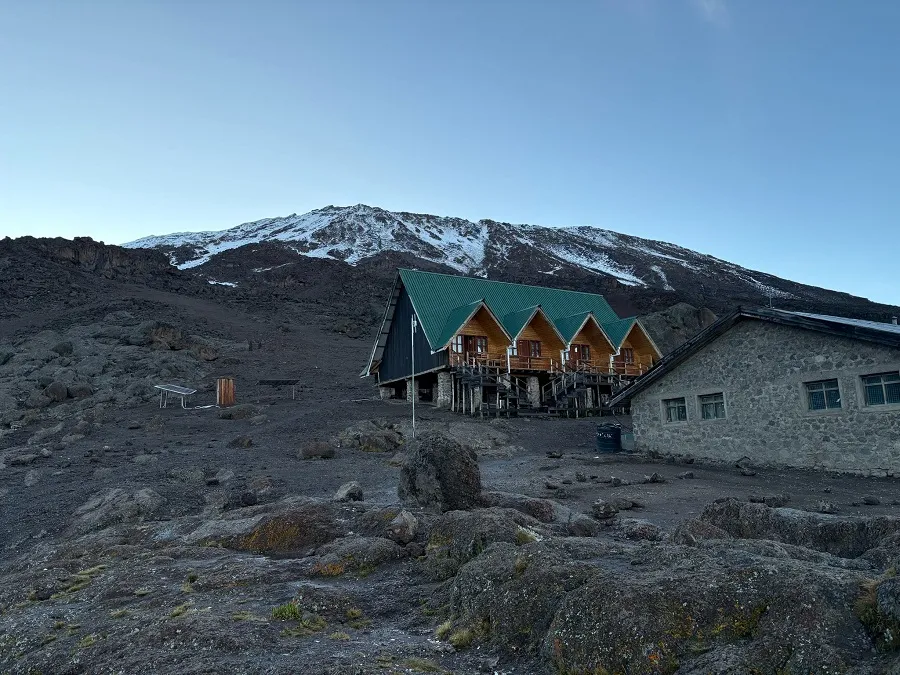
Named for the lava cave nearby. Dense heather. First oxygen saturation check. Rest. On the 6-day, every night of rest is especially critical — use them fully.
- 📍 ~10 km
- ⏱ 5–7 hrs
- ⛰ 1,650 m → 2,850 m
- ⛺ Cave Camp 1
-
-
The forest gives way to giant heather and senecio moorland. The gradient continues demanding throughout — the Umbwe ridge character does not change. Views open dramatically as the canopy thins, with Kibo's summit cone appearing directly ahead along the ridge line. On the 6-day, the guide monitors altitude symptoms here with increased vigilance given the compressed timeline.
-
07:00Depart Cave Camp 1 — continue ridge
Emerge from dense forest into heather zone. Ridge remains narrow and steep. Exposure either side increases. Still very few other people — the Umbwe corridor is genuinely remote.
-
11:00Open views — Kibo summit directly ahead
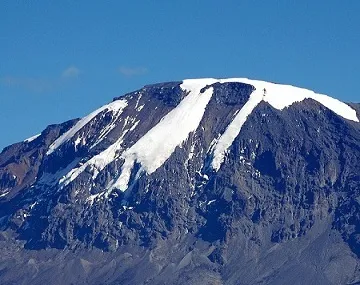
First clear view of the entire summit cone. The ridge leads directly to the mountain's base with striking directness. Your guide checks oxygen saturation for all climbers.
-
13:30Arrive Cave Camp 2 (3,450 m)
Important: arrive early for maximum rest time. On the 6-day there is no Lava Tower acclimatization day tomorrow — this rest period at Cave Camp 2 is the primary acclimatization window before Barranco. Use it fully. Hydrate aggressively. Your guide conducts a thorough altitude assessment of all climbers.
- 📍 ~7 km
- ⏱ 4–6 hrs
- ⛰ 2,850 m → 3,450 m
- ⛺ Cave Camp 2
-
-
This is the defining difference between the 6-day and 7-day Umbwe. On the 7-day, today's route goes up to the Lava Tower (4,630 m) and back down to Barranco — the critical "climb high, sleep low" acclimatization day. On the 6-day, you skip the Lava Tower entirely and traverse directly along the southern circuit to Barranco Camp (3,960 m). The Barranco Wall rises sheer ahead as you arrive — tomorrow's challenge without yesterday's acclimatization stimulus.
Why this is the most physiologically demanding dayOn the 7-day Umbwe, Day 3 includes a Lava Tower acclimatization detour to 4,630 m — 670 m higher than Barranco. This triggers EPO production and gives the body a crucial altitude stimulus. On the 6-day, you reach Barranco (3,960 m) without this stimulus. Your body has had less physiological preparation for Day 4's Barranco Wall and the subsequent push to Barafu. This is the primary reason the 6-day has a significantly lower success rate.
-
07:30Depart Cave Camp 2 — direct traverse to Barranco
Continue up the Umbwe Ridge into the alpine desert, then break west along the southern circuit toward the Barranco Valley — bypassing the Lava Tower junction entirely. Pace is carefully managed by your guide.
-
13:00Arrive Barranco Camp (3,960 m)
The Barranco Wall rises immediately ahead. Rest the entire afternoon — this is the most important rest of the entire 6-day itinerary. Drink at least 4 litres of water. Eat fully. Do nothing strenuous. Your guide monitors oxygen saturation every 2 hours.
-
18:00Dinner & Barranco Wall briefing
Full guide briefing on tomorrow's wall ascent. Additional altitude assessment of all climbers by guide before sleep.
- 📍 ~10 km
- ⏱ 5–7 hrs
- ⛰ 3,450 m → 3,960 m
- ⛺ Barranco Camp
-
-
The most physically demanding day of the 6-day itinerary — and among the hardest single days on any Kilimanjaro route. The Barranco Wall scramble is followed by a brief rest at Karanga Camp (lunch stop, not overnight), then a further ascent to Barafu Base Camp (4,673 m) the same afternoon. This mirrors the demanding Day 4 of the 6-day Machame Route, but with less acclimatization in the preceding days. Excellent pacing and guide monitoring are essential.
Why Karanga is a lunch stop only on the 6-dayOn the 7-day Umbwe, climbers overnight at Karanga (3,995 m) before continuing to Barafu the next day. On the 6-day, Karanga is a lunch stop and water refill — you then ascend a further 678 m to Barafu (4,673 m) the same afternoon. This Day 4 is therefore a combined gain of approximately 1,400 m including the Barranco Wall. It is the most demanding single day of the 6-day itinerary and requires excellent pacing from your guide.
-
07:00Cross the valley — begin Barranco Wall
Face the 300-metre wall. Hands and feet on rock, guides positioned throughout. Take your time — there is more climbing after the wall today. The scramble takes 1.5–2 hours.
-
09:30Summit of the wall — rest briefly
Emerge at the top. Southern Glaciers ahead. Brief rest — but not long, as the afternoon's ascent to Barafu lies ahead. Continue east to Karanga.
-
12:30Karanga Camp (3,995 m) — lunch & water
Hot lunch and complete water refill. Last water point on the mountain. Fill every bottle. Rest for exactly 60 minutes, then continue upward.
-
15:30Arrive Barafu Base Camp (4,673 m)
Reach Barafu on tired legs. Dinner immediately. Full summit night briefing. Lights out by 18:30 — wake-up at 23:00.
- 📍 ~12 km
- ⏱ 7–9 hrs total
- ⛰ 3,960 m → 4,673 m via 3,995 m
- 🧗 Barranco Wall included
- ⛺ Barafu Base Camp
-
-
After everything the 6-day Umbwe has demanded — the ridge, the cave camps, the direct Barranco day, the exhausting Day 4 — the summit push. Midnight departure by headlamp, ascending steep scree toward Stella Point on the crater rim, then the final walk to Uhuru Peak. On this route, arriving at the summit carries an especially hard-earned weight.
-
23:00Wake up — begin summit push
Hot tea, biscuits, final layer check. Temperature −10°C to −20°C near summit. Headlamps on. One step at a time. The Umbwe has been harder than anything before tonight — the summit is the reward.
-
05:00Stella Point — Crater Rim (5,745 m)
Dawn beginning. Brief rest at the rim. The final walk to Uhuru Peak takes 45 minutes along the crater rim. TANAPA certificate available here for those who cannot continue.
-
06:15UHURU PEAK — 5,895 m 🏔
The Roof of Africa. The yellow summit sign. Sunrise. After everything this route demanded — this moment is yours completely.
-
08:00Begin descent to Mweka Camp (3,100 m)
Long descent via Mweka trail. Trekking poles absolutely essential. Arrive Mweka Camp mid-afternoon.
- 📍 ~18 km total
- ⏱ 12–15 hrs
- ⛰ 4,673 m → 5,895 m → 3,100 m
- ⛺ Mweka Camp
-
-
Final descent through the southern rainforest to Mweka Gate and your official TANAPA summit certificate. The porter farewell song at the gate lands differently after what the Umbwe demands — a genuine, communal acknowledgment of what the team endured and achieved together.
-
07:30Final breakfast & porter goodbyes
Sign the tip register. Say goodbye to each crew member by name — they matched you every step of the way on one of Kilimanjaro's hardest routes.
-
08:30Descend to Mweka Gate through rainforest
3–4 hour walk through the southern forest. Legs are spent, mind is clear. Trekking poles on steep sections.
-
12:30Mweka Gate — certificate presentation
Your TANAPA Kilimanjaro Summit Certificate. The porter farewell song. Karibu sana.
-
14:00Return to Moshi — celebration
Hot shower, rest, and a well-earned group dinner. End of all services.
- 📍 ~9 km
- ⏱ 3–4 hrs
- ⛰ 3,100 m → 1,640 m
- 🏨 Return to Moshi
-
Choose your package
All packages follow the identical 6-day Umbwe Route itinerary with tented camping. Note: all bookings require a prior fitness consultation with our team before confirmation.
- Budget guesthouse Moshi (Day 1 & Day 6)
- All TANAPA park & camping fees
- -certified lead guide
- All porters, cook & sleeping tents
- 3 meals/day + snacks on mountain
- Emergency supplemental oxygen
- Enhanced 4-hourly oximeter monitoring
- TANAPA summit certificate
- Mid-range hotel Moshi (Day 1 & Day 6)
- All TANAPA park & camping fees
- Dedicated lead guide + assistant guide
- All porters, cook, waiter & toilet tent
- 3 meals/day + hot drinks + snacks
- Safety oxygen + Gamow bag
- Enhanced 2-hourly oximeter check
- Airport transfers included
- TANAPA summit certificate
- Boutique hotel Moshi (Day 1 & Day 6)
- All TANAPA park & camping fees
- Private 1:1 guide ratio
- Full crew + private toilet + shower tent
- Restaurant-quality meals + full snack bar
- Oxygen, Gamow bag & AED device
- Hourly oximeter + satellite communicator
- Airport transfers + Moshi cultural tour
- Safari combo pricing available
What's included
- All TANAPA national park entry fees
- Camping fees for all 5 nights on the mountain
- -certified professional lead guide
- Assistant guide (1 per 3 climbers)
- Porters (~3 per climber) + mountain cook
- High-quality dome sleeping tents + dining tent
- All mountain meals (3 per day) + water
- Emergency supplemental oxygen cylinder
- Enhanced pulse oximeter monitoring (more frequent than standard)
- Pre-booking altitude fitness consultation
- TANAPA summit certificate at Mweka Gate
- KINAPA rescue fee contribution
- International flights to KIA / JRO airport
- Tanzania tourist visa (~$50 USD)
- Personal travel & evacuation insurance
- Personal hiking gear (rental available in Moshi)
- Sleeping bag −15°C rated (rental available)
- Trekking poles — essential (rental available)
- Tips / gratuities for guides and porters
- Alcoholic beverages
- Diamox altitude medication (prescription required)
How the 6-day Umbwe compares
Where the 6-day Umbwe sits in context — the lowest success rate of any standard Kilimanjaro itinerary:
| Route | Days | Success | Difficulty | Crowds | Accli day | From |
|---|---|---|---|---|---|---|
| Machame 7-day | 7 | ~85% | Challenging | High | ✅ Yes | $1,900 |
| Umbwe 7-day | 7 | ~72% | Hardest | Very low | ✅ Lava Tower | $1,950 |
| Umbwe 6-day ← You are here | 6 | ~62% | Extreme | Lowest | ❌ None | $1,800 |
| Marangu 5-day | 5 | ~65% | Moderate | High | ❌ None | $1,650 |
| Lemosho 8-day | 8 | ~92% | Challenging | Moderate | ✅ Yes | $2,200 |
Best time to climb
The Umbwe ridge is extremely slippery when wet — dry conditions are not optional, they are essential:
| Months | Season | Summit | Umbwe Ridge | Verdict |
|---|---|---|---|---|
| Jan – Feb | Dry & cold | Excellent | Firm, dry, safe | Go |
| Mar – May | Long rains | Poor | Very slippery — dangerous | Avoid |
| Jun – Oct | Dry (peak) | Excellent | Best possible conditions | Go |
| Nov | Short rains | Caution | Wet and slippery | Avoid |
| Dec | Dry & cold | Excellent | Firm, dry, clear | Go |
The narrow, exposed Umbwe Ridge is significantly more dangerous in wet conditions than any other Kilimanjaro route — the steep drops on either side become genuinely hazardous when wet. We will not run the 6-day Umbwe during the long rains (March–May) and strongly advise against November attempts. January–February and June–October are the only recommended months.
Frequently asked questions
-
The critical difference is the elimination of the Lava Tower acclimatization day. On the 7-day Umbwe, Day 3 involves ascending to the Lava Tower (4,630 m) and descending to Barranco Camp (3,960 m) — a vital "climb high, sleep low" acclimatization day that stimulates red blood cell production. On the 6-day, the route goes directly from the Cave Camps to Barranco Camp without this detour. The result is that the body arrives at Barranco and Barafu with significantly less physiological preparation for the summit push, reducing success rates from approximately 70–75% (7-day) to approximately 60–65% (6-day). We also note that Day 4 of the 6-day combines the Barranco Wall with a subsequent ascent to Barafu, making it the longest and hardest single day of any Umbwe itinerary.
-
The 6-day Umbwe has a ~60–65% summit success rate — the lowest of any standard itinerary we offer. More critically, the compressed ascent profile carries a meaningfully higher risk of altitude illness (AMS, HACE, HAPE) than any other itinerary we run. The financial cost of a Kilimanjaro expedition — flights, visas, kit, time off work — makes a failed summit due to altitude sickness genuinely costly. We review prior high-altitude experience to ensure we recommend the right itinerary for you, not necessarily the one you first enquired about. This conversation takes 10 minutes and is genuinely in your best interest.
-
Prices range from $1,800 (standard group) to $2,650 (private luxury) per person. All packages include park fees, camping fees for 5 nights, tents, all meals-certified guides and porters, emergency oxygen with enhanced monitoring frequency, the pre-booking fitness consultation, and the TANAPA summit certificate. The 7-day Umbwe starts at $1,950 — $150 more, one extra day, approximately 10 percentage points more summit success.
-
Yes. The Umbwe Route joins the southern circuit at Barranco Camp, meaning the Barranco Wall scramble is Day 4 of both the 6-day and 7-day Umbwe itineraries. The 300-metre rock scramble is non-technical (no ropes required) and guides position throughout. On the 6-day, the wall is followed the same day by a continued ascent to Barafu — making Day 4 the most physically demanding day of the itinerary. Pace management on the wall is especially important given the further ascent that follows.
-
Potentially yes — with conditions. A returning Kilimanjaro summiteer who successfully reached Uhuru Peak via a long route (Lemosho or Machame, 7–8 days) and who has good knowledge of their personal altitude response is a reasonable candidate for the 6-day Umbwe. However, a prior summit via a shorter or less acclimatized itinerary, or a summit that was physiologically difficult, suggests the 6-day Umbwe may be pushing too hard. Our pre-booking consultation is specifically designed to work through these scenarios with you honestly.
-
Yes, without exception. Resilience Expedition is a registered (Kilimanjaro Porters Assistance Project) partner. All porters receive wages above the fair wage standard, are never loaded beyond TANAPA's 20 kg limit, receive appropriate clothing and equipment, are covered by health and accident insurance, and receive sufficient food. Porter welfare is non-negotiable on every climb.


