Why these two experiences belong together
Tanzania contains two of the world's most extraordinary experiences: the summit of Kilimanjaro — Africa's highest peak, a physical and personal challenge that most people describe as a defining moment in their lives — and a Northern Circuit safari through the Serengeti and Ngorongoro Crater, two of the greatest wildlife destinations anywhere on Earth. Combining them into a single expedition is not just logistically efficient. It is, for many travellers, the single most memorable thing they have ever done.
The contrast is the point. After 7–8 days of focused physical effort — cold nights, altitude, pre-dawn summit pushes, the effort of every step above 5,000 m — arriving on the Serengeti plains and sitting in a vehicle watching lions is a profound decompression. The physical exhaustion gives way to complete relaxed presence. Kilimanjaro teaches you what your body and mind can do. The safari gives you the space to absorb it.
- Physical challenge — push your limits
- Self-directed pace — your effort is the variable
- Cold, dark, and demanding
- Personal triumph at Uhuru Peak
- Internal experience — resilience, focus
- Pre-dawn starts, consecutive physical days
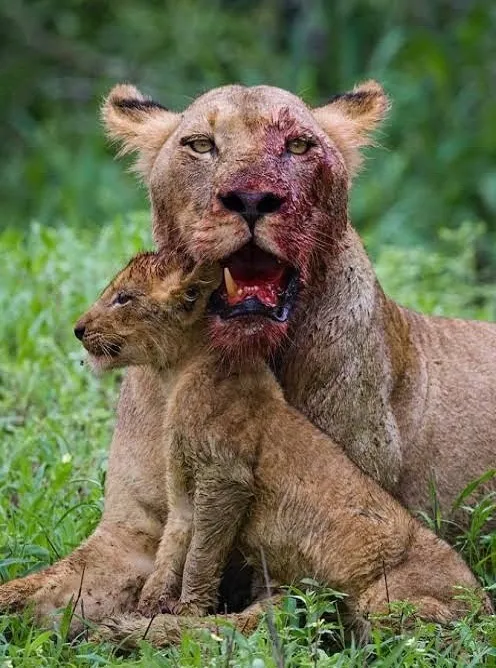
- Passive observation — wildlife comes to you
- Guide-led — you sit and watch
- Warm, golden, and restorative
- Wonder at lions, rhino, and the migration
- External experience — awe, spaciousness
- Comfortable camps, full board, gentle pace
No other country offers both the world's highest free-standing mountain and the world's greatest savanna wildlife — within 300 km of each other, served from the same base city (Moshi). This is uniquely Tanzanian. Kilimanjaro guides and safari vehicles both leave from Moshi. Resilience Expeditions handles both as a single, seamlessly joined expedition — one booking, one team, one experience.
The expedition structure
A Kilimanjaro + safari expedition has a natural, proven sequence that almost every experienced operator follows. The sequence is not arbitrary — each element serves the next.
Kilimanjaro Climb
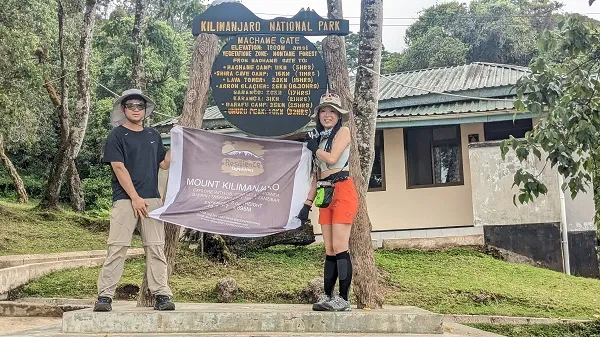
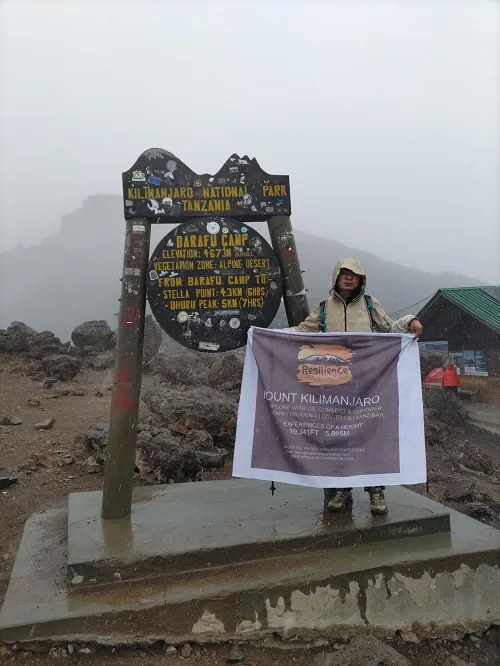
The physical centrepiece of the expedition. 7–8 days on the mountain from Moshi Gate to Uhuru Peak (5,895 m) and back. Always done first — you want to arrive on Kilimanjaro fresh, rested, and uninjured. Choose a 7 or 8-day route for maximum summit probability.
Recovery Day in Moshi
One full day in Moshi after your Kilimanjaro descent. Non-negotiable — your body needs it. Hot shower, full meal, real bed, massage, and 12+ hours of sleep. You will want it. You will feel transformed by morning. Your safari vehicle departs the following morning.
Tanzania Northern Circuit Safari
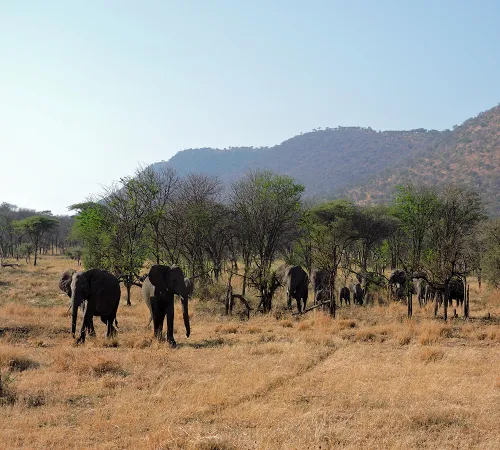
Your private 4×4 and naturalist guide depart from Moshi the morning after your recovery day. 4–6 days visiting Tarangire, Serengeti, and Ngorongoro Crater. The physical contrast with Kilimanjaro makes every moment on safari feel like a reward. Lions while you sit. Elephants while you eat breakfast. Ngorongoro black rhino while your legs recover.
Zanzibar — Ocean Recovery
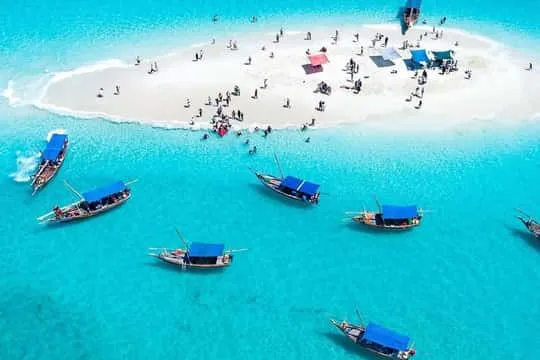
The optional final stage for travellers who want the complete Tanzania experience. A short flight from Arusha or Dar es Salaam brings you to Zanzibar's white sand beaches, clear turquoise water, and the historic Stone Town. After Kilimanjaro's cold and the safari's dust, the ocean is extraordinary. Many travellers describe the Kilimanjaro → Safari → Zanzibar sequence as the greatest three-act trip they have ever taken.
Kilimanjaro before safari — always
The sequence is non-negotiable: Kilimanjaro first, safari second. This is not convention — it is practical wisdom accumulated over thousands of combined expeditions. Here is why.
- You arrive on Kilimanjaro rested, fresh, and at full strength
- Summit performance is maximised — no accumulated fatigue
- The safari becomes a genuine physical reward and recovery
- Sitting in a game vehicle is exactly what your body wants after 7–8 days climbing
- Altitude adjustment to Kilimanjaro happens before, not during, safari travel
- Any Kilimanjaro delays or extensions do not affect booked safari dates
- The emotional arc (effort → reward) creates the most satisfying experience
- Early morning safari drives and long vehicle days accumulate fatigue
- Disrupted sleep from wildlife excitement and camp sounds
- You begin Kilimanjaro with tired legs and a depleted sleep bank
- Safari ends are difficult to predict — delays affect your climb start
- The emotional arc (relaxation → extreme effort) is psychologically harder
- You cannot enjoy the safari fully knowing Kilimanjaro is still ahead
The recovery day — why it cannot be skipped
One full day in Moshi between Kilimanjaro and your safari departure is the most important day in your entire expedition — and the one travellers most commonly try to remove to save time or money. Don't.
We have guided travellers who tried to do this. The Kilimanjaro descent from Barafu to Moshi gate is 20 km and takes 5–6 hours — arriving in the late afternoon of Day 8. Driving directly to Tarangire or Arusha National Park that evening means you begin your first safari game drive exhausted, aching, and sleep-deprived. The wildlife is the same as it would have been the next day. Your ability to appreciate it is not. Build the recovery day into your itinerary.
Choosing the right safari length after Kilimanjaro
After Kilimanjaro, the key question is how many days you have for the safari. Here is our honest assessment of the different options — and what each one delivers.
| Safari duration | Parks visited | What you get | Our recommendation |
|---|---|---|---|
| 1–2 days | Arusha NP / Manyara | A day trip or brief taste. Giraffe, buffalo, colobus monkeys. No Serengeti. No Ngorongoro. | Minimum |
| 3 days | Serengeti + Ngorongoro | Serengeti full day + Ngorongoro Crater descent. Big Five possible. The minimum genuine Northern Circuit experience. | Good |
| 4 days | Tarangire + Serengeti + Ngorongoro | Tarangire elephant herds, two Serengeti nights, Ngorongoro Crater. The most popular post-Kilimanjaro choice. Excellent balance of quality and time. | Recommended |
| 5 days | + Lake Manyara | Adds Lake Manyara (tree-climbing lions, flamingoes). Significantly richer experience for one extra day. | Recommended |
| 6 days | + Lake Natron + Volcano | The full Northern Circuit including extraordinary Lake Natron and Ol Doinyo Lengai active volcano. The most complete single safari available anywhere. | Premium |
The 4-day Northern Circuit (Tarangire → Serengeti ×2 → Ngorongoro) is our most booked post-Kilimanjaro safari for a reason. It hits all three of Tanzania's greatest wildlife destinations, gives you two Serengeti nights, and returns you to Moshi in time for an early morning flight. If you have an extra day, the 5-day is meaningfully better. The cost difference between 4 and 5 days is modest relative to your total expedition investment.
Build your Tanzania expedition
Select your Kilimanjaro route, safari length, and whether to add Zanzibar — your personalised itinerary timeline and price estimate appear instantly.
Tanzania Expedition Planner
Build your itinerary in 30 seconds — instant timeline and price estimate
From $1,650
From $1,900
From $2,050
From $2,200
Serengeti + Ngorongoro · $850
+Tarangire · From $1,200
+Manyara · From $1,450
Full circuit · From $1,600
End in Moshi / Arusha
Beach recovery · +$550
Full Zanzibar · +$850
Sample expedition itineraries
Three complete example timelines — the Classic, the Complete, and the Ultimate. Each is a real, bookable expedition with Resilience Expeditions.
The Classic Tanzania Expedition
Kilimanjaro Machame 7-day + 4-Day Safari. The combination most often described as life-changing.Days 1–7: Machame 7-day route — the most popular Kilimanjaro route. Barranco Wall, Lava Tower, and the summit at Uhuru Peak 5,895 m. Day 8: Recovery in Moshi — shower, massage, real food, sleep. Days 9–12: 4-day Northern Circuit safari departing from Moshi — Tarangire elephant herds, Serengeti (2 nights, including full Day 11), Ngorongoro Crater Big Five. Return to Moshi Day 12 evening. Day 13: Depart Moshi / Kilimanjaro Airport (JRO).
The Complete Tanzania Expedition
Lemosho 8-day + 5-Day Safari + Zanzibar. Three acts, three worlds, one Tanzania.Days 1–8: Lemosho 8-day — Tanzania's finest route, remote western approach, highest success rate (~91%), Barranco Wall, summit Day 8. Day 9: Recovery in Moshi. Days 10–14: 5-day Northern Circuit — Tarangire, Lake Manyara (tree-climbing lions), Serengeti ×2, Ngorongoro. Return Arusha. Day 15: Fly Arusha → Zanzibar. Days 15–18: 4 nights in Zanzibar — Stone Town, Nungwi beach, snorkelling. Day 19: Fly home from Zanzibar.
The Ultimate Tanzania Expedition
Lemosho 8-Day + 6-Day Full Safari + 5-Night Zanzibar. Africa's greatest combination.Days 1–8: Lemosho 8-day, Tanzania's finest route. Day 9: Recovery. Days 10–15: 6-day Full Northern Circuit including Lake Natron and Ol Doinyo Lengai active volcano — the extraordinary finale found on no standard safari. Serengeti 2 nights with full game day. Ngorongoro black rhino. Return Arusha. Day 16: Fly to Zanzibar. Days 16–20: 5 nights — full Stone Town exploration, Nungwi beach, spice tour, snorkelling. Day 21: Fly home from Zanzibar. This is the complete Africa that most people only dream of.
Practical considerations
Flying in and out
The expedition begins and ends at Kilimanjaro International Airport (JRO) — a 40-minute drive from Moshi. Most international routes connect through Nairobi (KQ, KLM), Addis Ababa (Ethiopian), Doha (Qatar), or Amsterdam (KLM). Arrivals need to clear the Tanzania e-visa before landing (apply at evisa.go.tz — approximately $50 USD, 3–5 business days). If your expedition ends in Zanzibar, you depart from Zanzibar International Airport (ZNZ) on a separate booking to your home destination.
The best time of year
Kilimanjaro is climbable year-round. The best months are January–March and June–October — drier conditions with the clearest summit views. The long rains (April–May) are the most challenging climbing period. For the safari, the Great Migration through the Serengeti peaks July–September (river crossings) and January–February (calving). For Zanzibar, June–October is the dry season with the calmest seas. The combination that satisfies all three is typically late June through October.
Booking and deposits
Resilience Expeditions handles both the Kilimanjaro climb and the safari as a single combined booking — one point of contact, one payment structure, seamless logistics. A deposit of 30% confirms your dates; the balance is due 60 days before departure. We recommend booking at least 3–6 months in advance for peak-season dates (July–October), particularly for Serengeti camps which have limited availability.
Booking your Kilimanjaro climb and safari separately from different operators creates a coordination problem: if your Kilimanjaro climb is delayed by one day (weather, slow acclimatisation), your pre-booked safari departure is missed and your accommodation is lost. Resilience Expeditions builds buffer days and handles all logistics as one package — if the mountain takes an extra day, the safari adjusts. This is the most important practical reason to book the complete expedition with a single operator.
Plan every part of your expedition