
About this climb
The 6-day Machame Route covers the same legendary terrain as the 7-day version — the same dense rainforest entry, the spectacular Shira Plateau, the iconic Barranco Wall scramble, and the glaciated summit cone. The key difference is that the Barranco Wall and Karanga Camp sections are combined into a single longer Day 4, eliminating one overnight rest stop and compressing the itinerary by 24 hours.
The result is a faster-paced, more physically demanding itinerary with a lower summit success rate (approximately 75% vs 85% on the 7-day). We recommend the 6-day specifically for climbers who have previous high-altitude trekking experience above 4,000 m, excellent cardiovascular fitness, and a schedule that cannot accommodate the 7-day itinerary.
If you're a first-time high-altitude climber, or if you have any uncertainty about your fitness level, we strongly recommend the 7-day Machame Route instead. The extra overnight at Karanga (3,995 m) costs approximately $150 more per person but increases your summit success rate by approximately 10 percentage points. Given the cost and effort of reaching Tanzania, that's an excellent investment.
The 300-metre Barranco Wall scramble on Day 4 is the signature experience of any Machame climb. Hands-and-feet, non-technical, no ropes — but steep, exposed, and exhilarating. Guides lead from the front and position alongside every climber. Virtually everyone who does it calls it the best part of the entire mountain.
This itinerary is best suited to: trail runners and ultra-endurance athletes; climbers with prior success above 4,000 m (Mt Blanc, Kilimanjaro, Elbrus etc.); those with a strict leave schedule who genuinely cannot do 7 days; or climbers on a return visit who know their personal altitude response well.
6-day itinerary
-
The journey starts at Machame Gate nestled in the south-west forest zone. Today's climb is steady and demanding from the outset — dense montane rainforest, colobus monkeys in the canopy, and no warm-up flatness. This route earns its Whiskey nickname from Day 1.
-
07:00Pickup from Moshi hotel
Gear check, team briefing and 1.5-hour drive to Machame Gate (1,830 m). Register at the park gate while porters weigh and load bags.
-
09:30Enter the rainforest
Trail enters dense montane forest immediately — the gradient is steeper than Marangu from the start. Black-and-white colobus monkeys, buffalo, and rich birdlife throughout.
-
13:00Hot lunch on the trail
Break at a designated area. Your porters have overtaken you — the camp is already being set up above.
-
16:30Arrive Machame Camp (2,980 m)
First campsite in heather moorland. Dinner, hot drinks, and oxygen saturation check by your guide. Rest well — Day 2 is a significant gain.
- 📍 ~11 km
- ⏱ 5–7 hrs
- ⛰ 1,830 m → 2,980 m
- ⛺ Machame Camp
-
-
You climb out of the heather zone and ascend onto the ancient Shira Plateau — the collapsed caldera of Kilimanjaro's original western volcanic peak — arriving at a vast, surreal landscape with Kibo's summit cone rising dramatically to the east.
-
07:00Depart Machame Camp
Steep ascent through heather-moorland transition zone. Giant heathers and lobelias emerge. Views open wide as you gain the ridge.
-
10:00Ridge — first Kibo views
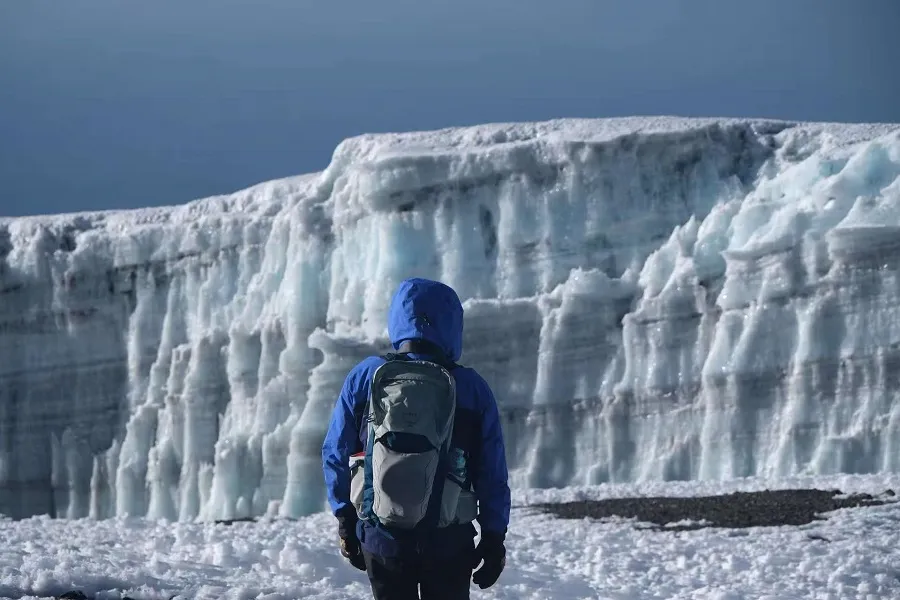
Clear sight of Kibo's ice-capped summit cone for the first time. The Southern Glaciers glint in the distance. A defining moment of the climb.
-
13:00Arrive Shira Camp (3,840 m)
Camp on the open Shira Plateau with 360° views. Rest the afternoon. Optional short walk for an extra altitude stimulus. Hydrate aggressively — tomorrow is demanding.
- 📍 ~8 km
- ⏱ 4–6 hrs
- ⛰ 2,980 m → 3,840 m
- ⛺ Shira Camp
-
-
The most physiologically important day on the Machame Route. You ascend to the dramatic Lava Tower (4,630 m) — higher than Mont Blanc — for lunch, then descend to Barranco Camp at 3,960 m. This "climb high, sleep low" profile powerfully stimulates red blood cell production before the Barranco Wall tomorrow.
-
07:30Depart Shira — east across the plateau
Trek toward Kibo across the barren Shira Plateau past the Shira Cathedral ridge and into the alpine desert zone.
-
12:00Lava Tower — 4,630 m (lunch)
Reach the dramatic 300-metre volcanic plug. Altitude symptoms may be noticeable. Rest, eat, and allow your body to respond. This is higher than any Alpine summit.
-
14:00Descend to Barranco Camp (3,960 m)
Descent into the spectacular Great Barranco Valley. The Barranco Wall rises sheer ahead. Altitude symptoms ease on the descent.
-
17:30Camp & Barranco Wall briefing
Dinner with a direct view of tomorrow's wall challenge. Guide walks through the ascent plan step by step.
- 📍 ~14 km
- ⏱ 6–8 hrs
- ⛰ 3,840 m → 4,630 m → 3,960 m
- ⛺ Barranco Camp
-
-
This is the day that defines the 6-day itinerary — and the most physically demanding day of the climb. You tackle the iconic Barranco Wall scramble in the morning, pause at Karanga Camp (3,995 m) for lunch, then continue ascending all the way to Barafu Base Camp (4,673 m). On the 7-day route you would rest overnight at Karanga. Here, you press on. Maximum water intake and pacing are essential.
Why this day is harder on the 6-day itineraryOn the 7-day Machame Route, climbers rest overnight at Karanga (3,995 m) before continuing to Barafu. On the 6-day, Karanga is a lunch stop only — you ascend an additional 678 m the same afternoon to reach Barafu (4,673 m). This is a total gain of ~1,400 m over the Barranco Wall day, making it significantly harder than any day on the 7-day route.
-
07:00Approach & begin Barranco Wall
Cross the valley floor and start the 300-metre rock scramble. Hands on rock, feet finding holds, guide ahead and alongside. The most exciting section of any Kilimanjaro route. Takes 1.5–2 hours.
-
09:30Summit of the Wall — panoramic views
Emerge on top of the wall. Southern Glaciers directly ahead. Rest briefly and celebrate — then continue east toward Karanga.
-
12:30Karanga Camp (3,995 m) — lunch stop
Hot lunch at Karanga. Eat well, hydrate fully, and rest for 45–60 minutes. This is the last water point on the route. Fill all bottles.
-
14:00Ascend to Barafu Base Camp (4,673 m)
A further 2–3 hours of continuous ascent through the alpine desert. The air is thin and the gradient relentless. Take it slowly and deliberately. This section separates the 6-day from the 7-day experience.
-
17:00Arrive Barafu — summit night briefing
Immediate rest. Dinner, then full summit-night briefing from your guide: 23:00 wake-up, pace, layering system, turn-back criteria. Sleep by 18:30.
- 📍 ~12 km
- ⏱ 6–8 hrs total
- ⛰ 3,960 m → 4,673 m (via 3,995 m)
- 🧗 Barranco Wall
- ⛺ Barafu Base Camp
-
-
Everything you've trained for and climbed toward. Midnight departure by headlamp, ascending steep scree toward Stella Point on the crater rim, then walking the rim arc to Uhuru Peak — the Roof of Africa — in time for one of the world's most extraordinary sunrises. A long, triumphant descent to Mweka Camp follows.
-
23:00Wake up — begin the summit push
Hot tea, biscuits, final layer check. Temperature −10°C to −20°C near summit. Headlamps on. Pace slow and deliberate. Pole pole (slowly, slowly).
-
05:00Stella Point — Crater Rim (5,745 m)
The hardest stretch complete. Dawn breaking. Brief rest — the final walk to Uhuru along the crater rim takes 45 minutes. TANAPA certificate available here for those who cannot continue.
-
06:15UHURU PEAK — 5,895 m 🏔
The Roof of Africa. Full sunrise over an ocean of clouds. The yellow summit sign. Your guide photographs you. Allow the moment. You earned this.
-
08:00Begin descent to Mweka Camp (3,100 m)
Long descent via Mweka Route on exhausted legs. Collect gear at Barafu on the way down. Trekking poles essential. Arrive Mweka Camp in mid-afternoon.
- 📍 ~18 km total
- ⏱ 12–15 hrs
- ⛰ 4,673 m → 5,895 m → 3,100 m
- ⛺ Mweka Camp
-
-
The final morning. A gentle descent through the rainforest to Mweka Gate, where your official TANAPA summit certificate awaits. The porters' farewell song at the gate is one of the most emotionally powerful moments of any Kilimanjaro climb.
-
07:30Final breakfast & porter goodbyes
Unhurried morning at Mweka Camp. Sign the porter tip register and say goodbye to each crew member by name. They made your summit possible.
-
08:30Descend to Mweka Gate through rainforest
3–4 hour walk through lush forest. Legs are spent but spirits are extraordinary. Trekking poles on steep sections.
-
12:30Mweka Gate — certificate presentation
Your official TANAPA Kilimanjaro Summit Certificate is presented. Porters and guides perform their traditional farewell song. Karibu sana — you summited Africa.
-
14:00Return to Moshi — celebration dinner
Hot shower, rest, and a well-earned group dinner. End of services.
- 📍 ~9 km descent
- ⏱ 3–4 hrs
- ⛰ 3,100 m → 1,640 m
- 🏨 Return to Moshi
-
Choose your package
All packages follow the same 6-day Machame Route itinerary with tented camping. The tier affects hotel comfort, guide ratio, and included extras.
- Budget guesthouse Moshi (Day 1 & Day 6)
- All TANAPA park & camping fees
- -certified lead guide
- All porters, cook & sleeping tents
- 3 meals/day + snacks on mountain
- Emergency supplemental oxygen
- Daily pulse oximeter monitoring
- TANAPA summit certificate
- Mid-range hotel Moshi (Day 1 & Day 6)
- All TANAPA park & camping fees
- Dedicated lead guide + assistant guide
- All porters, cook, waiter & toilet tent
- 3 meals/day + hot drinks + snacks
- Safety oxygen + Gamow bag
- Twice-daily oximeter check
- Airport transfers included
- TANAPA summit certificate
- Boutique hotel Moshi (Day 1 & Day 6)
- All TANAPA park & camping fees
- Private 1:1 guide ratio
- Full crew + private toilet + shower tent
- Restaurant-quality meals + full snack bar
- Oxygen, Gamow bag & AED device
- 3× daily oximeter + satellite communicator
- Airport transfers + Moshi cultural tour
- Safari combo pricing available
What's included
- All TANAPA national park entry fees
- Camping fees for all 5 nights on the mountain
- -certified professional lead guide
- Assistant guide (1 per 3 climbers)
- Porters (~3 per climber) + mountain cook
- High-quality dome sleeping tents + dining tent
- All mountain meals (3 per day) + water
- Emergency supplemental oxygen cylinder
- Daily pulse oximeter health monitoring
- TANAPA summit certificate at Mweka Gate
- KINAPA rescue fee contribution
- International flights to KIA / JRO airport
- Tanzania tourist visa (~$50 USD)
- Personal travel & evacuation insurance
- Personal hiking gear (rental available in Moshi)
- Sleeping bag −15°C rated (rental available)
- Trekking poles (rental available — essential)
- Tips / gratuities for guides and porters
- Alcoholic beverages
- Diamox altitude medication (prescription required)
How the 6-day compares
Where this itinerary sits among all Kilimanjaro route options:
| Route | Days | Sleeping | Success Rate | Difficulty | From |
|---|---|---|---|---|---|
| Marangu 5-day | 5 | Huts 🏠 | ~65% | Moderate | $1,650 |
| Marangu 6-day | 6 | Huts 🏠 | ~80% | Moderate | $1,850 |
| Machame 6-day ← You are here | 6 | Tents ⛺ | ~75% | Challenging | $1,750 |
| Machame 7-day ✅ Recommended | 7 | Tents ⛺ | ~85% | Challenging | $1,900 |
| Lemosho Route | 8 | Tents ⛺ | ~92% | Challenging | $2,200 |
Best time to climb
The Machame Route is climbable year-round. Conditions vary significantly by season:
| Months | Season | Summit Conditions | Trail | Crowds |
|---|---|---|---|---|
| Jan – Feb | Dry & cold | Excellent | Firm & dry | Moderate |
| Mar – May | Long rains | Avoid | Muddy, slippery | Low |
| Jun – Oct | Dry (peak) | Excellent | Dry & clear | High |
| Nov | Short rains | Acceptable | Wet lower zone | Low |
| Dec | Dry & cold | Excellent | Firm & dry | Moderate |
Frequently asked questions
-
The single structural difference is the overnight rest at Karanga Camp (3,995 m). On the 7-day, climbers sleep at Karanga after the Barranco Wall, giving their bodies a critical extra night at high altitude before ascending to Barafu. On the 6-day, Karanga is a lunch stop only — climbers continue ascending to Barafu (4,673 m) the same afternoon. This makes Day 4 of the 6-day the longest and hardest day of any Machame itinerary, and reduces the overall summit success rate from ~85% to ~75%.
-
For the majority of first-time Kilimanjaro climbers, yes — the 7-day Machame Route is strongly recommended instead. The 6-day has a significantly more demanding Day 4 (Barranco Wall all the way to Barafu in one push), and the reduced acclimatization time lowers summit success rates meaningfully. However, if you have prior high-altitude trekking experience above 4,000 m, excellent cardiovascular fitness, and a flexible timeline, the 6-day is achievable. Consult our team before booking — we'll be honest with you about which route fits your profile.
-
Prices range from $1,750 (standard group) to $2,600 (private luxury) per person. All packages include all TANAPA park fees, camping fees for 5 nights, tents, all meals-certified guides and porters, emergency oxygen, and the official TANAPA summit certificate. The 7-day Machame starts at $1,900 — a $150 difference for a 10-percentage-point improvement in summit success rate.
-
The Barranco Wall is a 300-metre rocky cliff face on Day 4 of the Machame Route — scaled as a hands-and-feet scramble. It is non-technical: no ropes, no harnesses, no climbing equipment required. Our guides position ahead and alongside every climber throughout the ascent. It is steep and exposed in places, but virtually every fit adult can complete it safely with a guide. The great majority of our climbers cite it as the most memorable section of the entire climb. On the 6-day itinerary, the wall is followed immediately by a long afternoon ascent to Barafu — so pacing and hydration on the wall section are especially important.
-
No. Your porters carry all camping equipment including tents, kitchen gear, and your main duffel bag (max 15 kg). On the trail you carry only your daypack (15–20 L) with personal items, water, snacks, and a jacket. Your tent is fully pitched and ready when you arrive at each campsite.
-
Yes, without exception. Resilience Expedition is a registered (Kilimanjaro Porters Assistance Project) partner. All porters receive wages above the fair wage standard, are never loaded beyond TANAPA's 20 kg weight limit, receive appropriate clothing and equipment for every climb, are covered by health and accident insurance, and receive sufficient food throughout the climb. This is non-negotiable.


