
About this climb
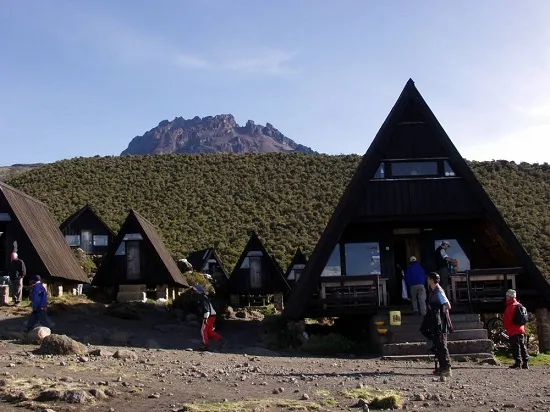
The Marangu Route is Kilimanjaro's oldest, most established trail — affectionately nicknamed the "Coca-Cola Route" for its relative accessibility and the fact that refreshments are sold at the mountain huts. It is the only route on Kilimanjaro that uses permanent hut accommodation rather than tents, making it particularly popular with climbers who prefer a slightly more comfortable experience or who are travelling without camping equipment.
The route approaches from the south-east through lush rainforest, then transitions to heather moorland, alpine desert, and finally the glaciated arctic summit zone. The gradients are gentler than routes like Machame or Lemosho, making it well-suited for first-time high-altitude trekkers.
Mandara, Horombo, and Kibo huts each provide bunk dormitories with foam mattresses, basic dining areas, and toilet facilities. You only need to bring your sleeping bag — no tent required.
Resilience Expedition operates daily departures from Moshi with -certified guides, all mountain meals, safety oxygen, and comprehensive porter welfare standards. Our 5-day itinerary is ideal for the budget-conscious adventurer or anyone with limited time who wants to experience Kilimanjaro without a tent.
5-day itinerary
-
Your Kilimanjaro adventure begins at Marangu Gate after a 45-minute drive from Moshi. The trail immediately enters dense montane rainforest, alive with birdsong, sunbirds, and colobus monkeys overhead. It is one of the most beautiful first days on any Kilimanjaro route.
-
06:30Pickup from Moshi hotel
Briefing, gear check and drive to Marangu Gate (1,870 m). Park entry and porter loading.
-
09:30Enter the rainforest
The trail starts gently, winding through giant ferns, Impatiens flowers, and towering Podocarpus trees. Colobus monkeys are commonly spotted here.
-
13:00Lunch break on the trail
Hot lunch served by your camp crew at a designated picnic point.
-
15:30Arrive Mandara Hut (2,720 m)
Check into your dormitory bunk. Explore the short optional loop to the Maundi Crater for views toward Moshi before dinner.
- 📍 ~8 km
- ⏱ 4–5 hrs
- ⛰ 1,870 m → 2,720 m
- 🏠 Mandara Hut
-
-
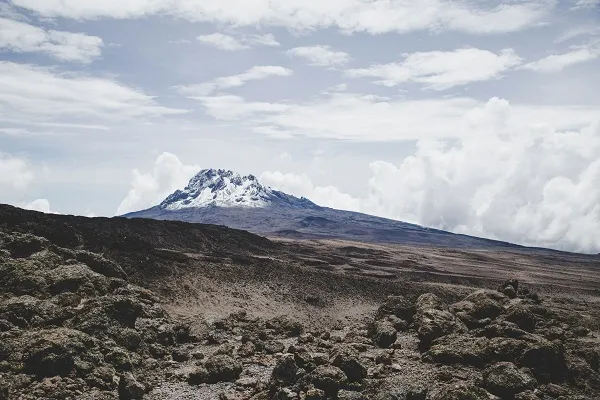
The forest thins and you emerge into the spectacular heather and moorland zone — an alien landscape of giant heathers, tree groundsels, and lobelia plants. On clear days Kibo and Mawenzi peaks come into dramatic view.
-
07:00Breakfast & depart Mandara
The trail begins to climb more steeply out of the forest. Giant heathers begin to appear as you gain altitude.
-
10:00Break out of forest — moorland views
First unobstructed views of Kibo's summit cone and the jagged Mawenzi peak. Giant senecios appear — plants that grow just 1 cm per year.
-
13:30Saddle between peaks — lunch
Rest on the moorland plateau between Kibo and Mawenzi. Hot lunch with spectacular views in all directions.
-
15:30Arrive Horombo Hut (3,720 m)
The largest and most comfortable hut complex on the route. Rest, hydrate, and watch the sunset paint Kibo's glacier orange.
- 📍 ~12 km
- ⏱ 5–7 hrs
- ⛰ 2,720 m → 3,720 m
- 🏠 Horombo Hut
-
-
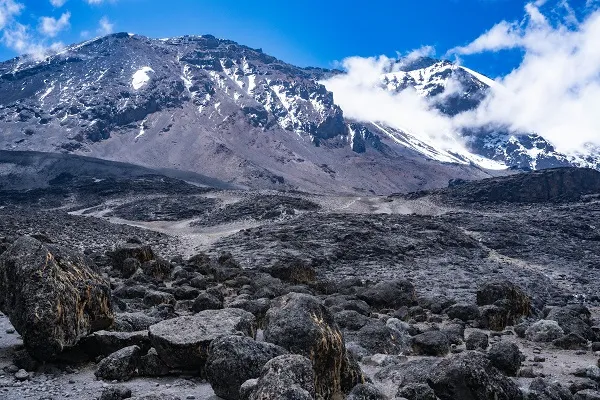
The landscape shifts dramatically into the alpine desert zone — bare, rocky, windswept terrain with increasingly thin air. Kibo Hut sits directly below the summit cone. Rest as much as possible this afternoon: summit night starts at midnight.
-
07:00Depart Horombo
Leave the last vegetation behind and enter the alpine desert. The trail is wider and less steep, crossing the open saddle between Kibo and Mawenzi.
-
11:30Last Water Point
Fill all water bottles — there is no water source beyond this point until the descent.
-
13:30Arrive Kibo Hut (4,703 m)
A stone dormitory hut at the base of the summit cone. Rest immediately. Guide delivers full summit night briefing: 23:00 wake-up, gear check, pace strategy, turn-back criteria.
-
17:30Early dinner & sleep
High-calorie dinner. Force yourself to sleep even if the altitude makes it difficult. The summit push begins at midnight.
- 📍 ~10 km
- ⏱ 5–7 hrs
- ⛰ 3,720 m → 4,703 m
- 🏠 Kibo Hut
-
-
The night everything has been building toward. Headlamps on at midnight, you ascend steep scree slopes in the dark and cold to Gilman's Point on the crater rim, then walk the final section around the crater to Uhuru Peak — the highest point in Africa. A long descent to Horombo Hut follows.
-
23:00Wake up — begin summit push
Tea, biscuits, and final layer checks. Temperature will be −10°C to −20°C near the summit. Headlamps on. One step at a time.
-
04:00Gilman's Point — Crater Rim (5,681 m)
First milestone — you have reached the official crater rim. A TANAPA certificate is awarded here for those who cannot continue. Rest briefly then push on.
-
05:30UHURU PEAK — 5,895 m 🏔
The Roof of Africa. Sunrise, a vast ocean of clouds below, the summit glacier to your left. Photographs at the famous yellow sign. This moment is yours.
-
07:00Begin descent to Horombo
Long descent back through Kibo Hut (collect remaining gear) and on to Horombo Hut. Knees will feel every step. Trekking poles essential.
-
15:00Arrive Horombo Hut
Dinner, rest, and celebration. You have climbed the highest mountain in Africa.
- 📍 ~18 km total
- ⏱ 10–14 hrs
- ⛰ 4,703 m → 5,895 m → 3,720 m
- 🏠 Horombo Hut
-
-
The final descent back through the rainforest to Marangu Gate, where your official TANAPA summit certificate awaits. The porters' farewell song is an emotional and unforgettable moment that marks the true end of your Kilimanjaro journey.
-
08:00Final breakfast at Horombo
A slow morning. Say goodbye to the hut staff and sign the tip register for porters and guides.
-
09:00Descend through rainforest
4–5 hour walk back through Mandara Hut and down through the forest. Descending muscles will feel it — pole support is vital.
-
13:30Marangu Gate — certificate presentation
Your official TANAPA Kilimanjaro Summit Certificate is presented. Porters perform their traditional farewell song.
-
14:30Return to Moshi — celebration dinner
Hot shower, rest, then a group dinner in Moshi. End of services. Karibu sana — you summited Africa.
- 📍 ~20 km descent
- ⏱ 4–5 hrs
- ⛰ 3,720 m → 1,870 m
- 🏨 Return to Moshi
-
Choose your package
All packages follow the identical 5-day Marangu Route itinerary with hut accommodation. The tiers differ in pre/post-climb hotel, guide ratio, and included extras.
- Budget guesthouse in Moshi (pre & post)
- All park & hut fees
- -certified lead guide
- All porters & mountain cook
- 3 meals/day + snacks on mountain
- Emergency oxygen cylinder
- Pulse oximeter monitoring
- TANAPA summit certificate
- Mid-range hotel Moshi (pre & post)
- All park & hut fees
- Dedicated lead guide + assistant
- All porters, cook & waiter
- 3 meals/day + hot drinks + snacks
- Safety oxygen + Gamow bag
- Twice-daily oximeter check
- Airport transfers included
- TANAPA summit certificate
- Boutique hotel Moshi (pre & post)
- All park & hut fees
- Private 1:1 guide ratio
- Full porter crew + toilet tent
- Restaurant-quality meals + snack bar
- Oxygen, Gamow bag & AED
- 3× daily oximeter check
- Airport transfers + Moshi cultural tour
- Safari combo pricing available
What's included
- All TANAPA national park fees
- Mountain hut accommodation fees (all 4 nights)
- -certified professional lead guide
- Assistant guide (1 per 3 climbers)
- Porters (~3 per climber)
- Camp cook & all mountain meals
- Emergency supplemental oxygen
- Daily pulse oximeter health monitoring
- TANAPA summit certificate
- Rescue fee contribution (KINAPA)
- International flights to JRO airport
- Tanzania tourist visa (~$50 USD)
- Personal travel & medical insurance
- Personal hiking gear (rentals available)
- Sleeping bag (required — rentals available)
- Gratuities for guides and porters
- Alcoholic beverages
- Altitude medication (Diamox — by prescription)
Marangu vs other routes
How does the Marangu Route compare to Kilimanjaro's other popular options?
| Route | Days | Sleeping | Success Rate | Difficulty | Price from |
|---|---|---|---|---|---|
| Marangu ← You are here | 5 days | Huts 🏠 | ~65–70% | Moderate | $1,650 |
| Machame Route | 7 days | Tents ⛺ | ~85% | Challenging | $1,900 |
| Rongai Route | 7 days | Tents ⛺ | ~80% | Moderate | $1,950 |
| Lemosho Route | 8 days | Tents ⛺ | ~92% | Challenging | $2,200 |
Best time to climb
Kilimanjaro is climbable year-round. Conditions vary by season:
| Months | Season | Summit Conditions | Crowds |
|---|---|---|---|
| Jan – Feb | Dry & cold | Excellent | Moderate |
| Mar – May | Long rains | Avoid | Low |
| Jun – Oct | Dry (peak) | Excellent | High |
| Nov | Short rains | Acceptable | Low |
| Dec | Dry & cold | Excellent | Moderate |
Frequently asked questions
-
Prices range from $1,650 (standard group) to $2,400 (private luxury). All packages include park fees, hut accommodation for 4 nights, all meals on the mountain, guides, porters, and safety equipment. International flights and visa are not included.
-
The Marangu Route is the only route on Kilimanjaro with permanent hut dormitory accommodation. Every other route requires camping in tents. The huts (Mandara, Horombo, Kibo) provide bunk beds with foam mattresses, basic dining areas, and toilet facilities — no tent needed. This makes it significantly more comfortable and accessible, especially for those travelling light.
-
The gradients on the Marangu Route are gentler than routes like Machame or Lemosho. However, the 5-day itinerary allows less acclimatization time — which is the primary reason its success rate of 65–70% is lower than the 8-day Lemosho (92%). The altitude challenge at 5,895 m is the same regardless of which route you take. If maximising your summit chances is the priority, consider the 8-day Lemosho Route instead.
-
Yes. The huts provide foam mattresses but not sleeping bags or bed linen. You must bring a −10°C rated sleeping bag at minimum. Resilience Expedition offers sleeping bag rentals in Moshi if you don't have one — just let us know when booking and we'll organise it for you.
-
Yes — Resilience Expedition is a (Kilimanjaro Porters Assistance Project) partner. All porters are paid above the fair wage standard, are never overloaded beyond TANAPA weight limits (20 kg max per porter), receive appropriate clothing and equipment for every trip, and are covered by health and accident insurance. We do not compromise on porter welfare.


