
About this climb
The Umbwe Route is Kilimanjaro's most direct, most challenging, and least-travelled serious route. Starting at Umbwe Gate at just 1,650 m, it climbs a narrow, exposed ridge straight up the southern face of the mountain — ascending faster and more directly than any other path. What the Umbwe lacks in acclimatization time, it delivers in raw adventure, extraordinary solitude, and a sense of having genuinely earned the summit.
On the 7-day itinerary, the Umbwe Ridge is followed by a "climb high, sleep low" acclimatization day at Lava Tower (4,630 m), the famous Barranco Wall scramble on Day 4, and the standard southern circuit approach to Barafu and the summit. The descent is via the Mweka Route.
The Umbwe is recommended only for climbers with solid prior high-altitude experience above 4,000 m, excellent cardiovascular fitness, and a genuine understanding of their personal altitude response. If this is your first attempt at a high-altitude peak, the Umbwe Route's lower acclimatization profile significantly increases your risk of altitude sickness and summit failure. We recommend the Machame, Lemosho, or Rongai routes for first-time high-altitude climbers.
The Umbwe Route corridor is a narrow jungle ridge that drops steeply on both sides. It is technically a walk — no ropes or climbing equipment required — but the gradient is relentless and the terrain is less forgiving than any other Kilimanjaro route. Expect long days of continuous uphill in the lower sections, very few other climbers on the trail, and a profound sense of entering the mountain on its own terms.
The Umbwe is popular with trail runners and ultra-endurance athletes seeking the fastest serious ascent; experienced mountaineers returning for a second or third Kilimanjaro climb; and climbers who specifically want the least-crowded, most solitary, most raw experience on the mountain. If you want challenge, wilderness, and solitude rather than scenic variety or maximum success probability, the Umbwe is your route.
7-day itinerary
-
Umbwe Gate sits low in the forest at 1,650 m — the lowest starting point of any major Kilimanjaro route. The forest entry is immediate and the gradient is immediate. The trail climbs a narrow jungle ridge between two stream valleys, enveloped in dense rainforest with enormous fig trees overhead. This is a steep, physical day from the very first hour.
-
07:00Pickup from Moshi hotel
~1.5 hour drive to Umbwe Gate. Shorter drive than most routes. Gear check, park registration, and porter loading before entering the forest.
-
09:00Enter the Umbwe forest ridge
The trail immediately begins climbing a narrow, steep ridge. Very different from the Machame or Marangu — dense, enclosed, relentless. The ridge has significant exposure on both sides.
-
13:00Hot lunch on the ridge
Brief break. Porters have moved ahead. The trail continues steeply upward after lunch — no gentle section today.
-
16:30Arrive Cave Camp 1 (2,850 m)
Named for the distinctive lava cave nearby used by early Umbwe climbers. Dense heather and erica shrubs. Dinner, hot drinks, and first oxygen saturation check by guide.
- 📍 ~10 km
- ⏱ 5–7 hrs
- ⛰ 1,650 m → 2,850 m
- ⛺ Cave Camp 1
-
-
The forest gives way to giant heather and senecio moorland as you ascend the upper Umbwe ridge. The gradient remains demanding throughout. Views begin to open dramatically as the canopy thins — Kibo's summit cone visible directly ahead along the ridge line for the first time, closer and more imposing than on any other route at this altitude.
-
07:30Depart Cave Camp 1 — continue the ridge
Ascend out of the dense forest into giant heather zone. The ridge becomes slightly more open but no less steep.
-
11:00First open views — Kibo direct ahead
Emerge above the heather zone. The summit cone is directly ahead along the ridge — a perspective seen by very few Kilimanjaro climbers. The exposure on either side of the ridge becomes more pronounced.
-
13:30Arrive Cave Camp 2 (3,450 m)
Second lava cave camp. Arrive early for important afternoon rest. Monitor altitude symptoms carefully — the steep ascent profile increases the likelihood of early AMS symptoms here. Hydrate fully.
- 📍 ~7 km
- ⏱ 4–6 hrs
- ⛰ 2,850 m → 3,450 m
- ⛺ Cave Camp 2
-
-
The most physiologically important day on the entire Umbwe Route — and more critical here than on any other Kilimanjaro itinerary due to the route's compressed acclimatization profile. You ascend directly to the Lava Tower (4,630 m) — higher than any Alpine summit — for the crucial acclimatization lunch, then descend into the Barranco Valley to camp. The "climb high, sleep low" profile is the primary acclimatization mechanism on this route.
Why this day is especially important on the UmbweBecause the Umbwe Ridge ascends so fast, your body has had less time at each altitude zone than on the Machame or Lemosho. The Lava Tower acclimatization day is your primary physiological compensating mechanism — the 4,630 m exposure, followed by sleeping at 3,960 m, provides the best acclimatization stimulus the 7-day Umbwe itinerary can deliver. Do not rush this day.
-
07:30Depart Cave Camp 2 — ascend to Lava Tower
Continue up the Umbwe Ridge into the alpine desert zone. The summit cone looms large and close. Route joins the southern circuit near the Lava Tower junction.
-
12:30Lava Tower — 4,630 m (lunch)
Reach the dramatic volcanic plug at 4,630 m. Rest and eat. Altitude effects may be significant at this stage given the fast ascent. Monitor closely. Do not rush.
-
14:30Descend to Barranco Camp (3,960 m)
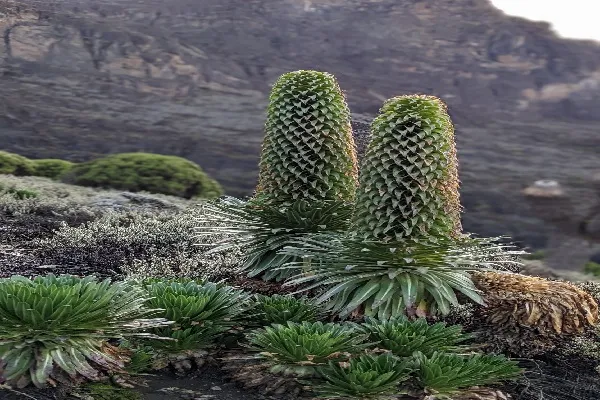
Descend into the Great Barranco Valley. The wall rises sheer ahead. Altitude discomfort eases on the descent. The vegetation returns — giant senecios and lobelias.
-
18:00Dinner & Barranco Wall briefing
Guide walks the team through the wall ascent plan for tomorrow. The wall is visible from camp.
- 📍 ~12 km
- ⏱ 7–9 hrs
- ⛰ 3,450 m → 4,630 m → 3,960 m
- ⛺ Barranco Camp
-
-
The Umbwe Route joins the southern circuit at Barranco Camp, bringing its climbers to the same iconic Barranco Wall experienced by Machame and Lemosho climbers. The 300-metre exposed rock scramble remains one of Kilimanjaro's defining moments — and on the Umbwe, arriving at the wall with the steep ridge behind you, the achievement feels especially earned. A shorter afternoon to Karanga Camp follows.
-
07:00Cross the valley — begin the Barranco Wall
Cross the valley floor and face the 300-metre wall. Hands on rock, feet finding holds, guides positioned throughout. Take your time. The scramble takes 1.5–2 hours.
-
09:30Summit of the wall — panoramic views
Emerge on top. Southern Glaciers directly ahead. Barranco Valley far below. Brief rest — then continue east toward Karanga.
-
12:30Arrive Karanga Camp (3,995 m)
Relaxed afternoon. Last significant water point — fill all bottles. Rest and hydrate completely for tomorrow's ascent to Barafu.
- 📍 ~6 km
- ⏱ 4–5 hrs
- ⛰ 3,960 m → 3,995 m
- 🧗 Barranco Wall scramble
- ⛺ Karanga Camp
-
-
A short, critical day. Arriving early at Barafu maximises rest time before the midnight summit push. Given the Umbwe's compressed acclimatization profile, every hour of rest and every litre of water today is especially important for summit performance tonight.
-
07:30Depart Karanga — ascend to Barafu
Short but relentless climb through rocky alpine desert. Air very thin. Move deliberately. Do not arrive at Barafu on depleted energy reserves.
-
11:30Arrive Barafu Base Camp (4,673 m)
Lunch immediately on arrival. Complete rest. No walking, no standing around in the cold unnecessarily. Sleep as much as possible.
-
16:00Full summit push briefing
Guide covers the complete ascent: 23:00 wake-up, layering system, pace, hydration strategy, turn-back criteria, and emergency protocols. Early dinner and bed by 18:00.
- 📍 ~4 km
- ⏱ 3–4 hrs
- ⛰ 3,995 m → 4,673 m
- ⛺ Barafu Base Camp
-
-
The summit push. Midnight departure by headlamp, ascending steep scree toward Stella Point on the crater rim, then the final arc walk to Uhuru Peak. On the Umbwe, climbers who have committed to this demanding route and made it to Barafu have already proved extraordinary resolve — the summit night is the culmination of that. A long descent to Mweka Camp follows.
-
23:00Wake up — begin summit push
Hot tea, biscuits, final layer check. Temperature −10°C to −20°C near summit. Headlamps on. The Umbwe climber's creed: you know what hard feels like — this is just more of it.
-
05:00Stella Point — Crater Rim (5,745 m)
The hardest section done. Dawn breaking. Brief rest and then the final rim walk. TANAPA certificate available here for those who cannot continue.
-
06:15UHURU PEAK — 5,895 m 🏔
The Roof of Africa. Sunrise. The yellow summit sign. After everything the Umbwe demanded — the ridge, the cave camps, the relentless gradient — this moment belongs to you completely.
-
08:00Begin descent to Mweka Camp (3,100 m)
Long descent via the Mweka trail. Trekking poles essential. Arrive Mweka Camp in mid-afternoon.
- 📍 ~18 km total
- ⏱ 12–15 hrs
- ⛰ 4,673 m → 5,895 m → 3,100 m
- ⛺ Mweka Camp
-
-
The final descent through the rainforest to Mweka Gate and your official TANAPA summit certificate. The porter farewell song at the gate carries a particular emotional weight after the Umbwe — every person in that group knows what the climb demanded.
-
07:30Final breakfast & porter goodbyes
Unhurried last morning. Sign the porter tip register. Say goodbye to each crew member by name — they matched the mountain step for step.
-
08:30Descend to Mweka Gate through forest
3–4 hour walk through the southern forest. Tired legs, clear mind. Trekking poles on steep sections.
-
12:30Mweka Gate — certificate presentation
Your TANAPA Kilimanjaro Summit Certificate. The porter farewell song. Karibu sana — you climbed Africa via its most uncompromising route.
-
14:00Return to Moshi — celebration
Hot shower, rest, and a well-earned group dinner. End of all services.
- 📍 ~9 km
- ⏱ 3–4 hrs
- ⛰ 3,100 m → 1,640 m
- 🏨 Return to Moshi
-
Choose your package
All packages follow the identical 7-day Umbwe Route itinerary with tented camping. The tier affects hotel comfort, guide ratio, and equipment standard.
- Budget guesthouse Moshi (Day 1 & Day 7)
- All TANAPA park & camping fees
- -certified lead guide
- All porters, cook & sleeping tents
- 3 meals/day + snacks on mountain
- Emergency supplemental oxygen
- Daily pulse oximeter monitoring
- TANAPA summit certificate
- Mid-range hotel Moshi (Day 1 & Day 7)
- All TANAPA park & camping fees
- Dedicated lead guide + assistant guide
- All porters, cook, waiter & toilet tent
- 3 meals/day + hot drinks + snacks
- Safety oxygen + Gamow bag
- Twice-daily oximeter check
- Airport transfers included
- TANAPA summit certificate
- Boutique hotel Moshi (Day 1 & Day 7)
- All TANAPA park & camping fees
- Private 1:1 guide ratio
- Full crew + private toilet + shower tent
- Restaurant-quality meals + full snack bar
- Oxygen, Gamow bag & AED device
- 3× daily oximeter + satellite communicator
- Airport transfers + Moshi cultural tour
- Safari combo pricing available
What's included
- All TANAPA national park entry fees
- Camping fees for all 6 nights on the mountain
- -certified professional lead guide
- Assistant guide (1 per 3 climbers)
- Porters (~3 per climber) + mountain cook
- High-quality dome sleeping tents + dining tent
- All mountain meals (3 per day) + water
- Emergency supplemental oxygen cylinder
- Daily pulse oximeter health monitoring
- TANAPA summit certificate at Mweka Gate
- KINAPA rescue fee contribution
- International flights to KIA / JRO airport
- Tanzania tourist visa (~$50 USD)
- Personal travel & evacuation insurance
- Personal hiking gear (rental available in Moshi)
- Sleeping bag −15°C rated (rental available)
- Trekking poles — strongly recommended (rental available)
- Tips / gratuities for guides and porters
- Alcoholic beverages
- Diamox altitude medication (prescription required)
How Umbwe compares to other routes
The Umbwe Route context among all Kilimanjaro options — note the lower success rate compared to routes with more acclimatization time:
| Route | Days | Sleeping | Success | Difficulty | Crowds | From |
|---|---|---|---|---|---|---|
| Marangu 6-day | 6 | Huts 🏠 | ~80% | Moderate | High | $1,850 |
| Machame 7-day | 7 | Tents ⛺ | ~85% | Challenging | High | $1,900 |
| Umbwe 7-day ← You are here | 7 | Tents ⛺ | ~70–75% | Hardest | Very low | $1,950 |
| Rongai 7-day | 7 | Tents + Huts | ~85% | Moderate | Low | $2,100 |
| Lemosho 8-day | 8 | Tents ⛺ | ~92% | Challenging | Moderate | $2,200 |
Best time to climb
The Umbwe Route's dense forest lower section can be extremely slippery in wet conditions — timing is especially important on this route:
| Months | Season | Summit | Umbwe Ridge Trail | Crowds |
|---|---|---|---|---|
| Jan – Feb | Dry & cold | Excellent | Firm grip, dry forest | Very low |
| Mar – May | Long rains | Avoid | Very slippery ridge — dangerous | Minimal |
| Jun – Oct | Dry (peak) | Excellent | Dry, firm, best conditions | Low |
| Nov | Short rains | Caution | Wet — slippery ridge sections | Very low |
| Dec | Dry & cold | Excellent | Firm, dry, clear | Very low |
The Umbwe ridge is significantly more dangerous in wet conditions than any other Kilimanjaro route because of the narrow, steep trail with drops on either side. We strongly advise against attempting the Umbwe during the long rains (March–May) or the short rains (November), when the forest path becomes very slippery.
Frequently asked questions
-
Yes — the Umbwe Route is universally considered Kilimanjaro's most demanding route. It climbs the mountain via the steepest, most direct path, ascending faster than any other route and giving your body the least time to acclimatize at each altitude zone. The forest ridge section is narrow, steep, and exposed. The compressed altitude gain produces a lower summit success rate (~70–75%) compared to the Machame (~85%) or Lemosho (~88–92%). It is genuinely only suited to experienced, fit climbers with prior high-altitude experience.
-
The Umbwe Route is best suited to three types of climbers. First, experienced mountaineers or trail runners with a strong track record above 4,000 m who specifically want Kilimanjaro's most direct and challenging ascent. Second, returning Kilimanjaro climbers who have already summited via a longer route and want to attempt a harder, more direct line. Third, those who prioritise absolute solitude and raw adventure over success probability and scenic variety. If you are not in one of these categories, we strongly recommend the 7-day Machame, 7-day Lemosho, or 7-day Rongai instead.
-
Prices range from $1,950 (standard group) to $2,800 (private luxury) per person. All packages include all TANAPA park fees, camping fees for 6 nights, tents, all meals-certified guides and porters, emergency oxygen, and the TANAPA summit certificate. International flights and visa are not included.
-
Yes. On the 7-day Umbwe itinerary, the route joins the southern circuit at Barranco Camp after the Lava Tower acclimatization day, bringing Umbwe climbers to the same iconic Barranco Wall on Day 4. The 300-metre hands-and-feet rock scramble is non-technical (no ropes required) and is consistently rated the highlight of the climb — guides position throughout and assist every climber.
-
The Umbwe Route carries higher physical risks than other Kilimanjaro routes for two reasons. First, the steep, narrow ridge trail with significant drops on either side is significantly more dangerous when wet — we strongly advise against climbing during the rainy seasons. Second, the fast ascent profile increases the statistical risk of altitude-related illness (AMS, HACE, HAPE) compared to longer routes. However, with appropriate experience, fitness, careful acclimatization monitoring by our guides, and dry weather conditions, the Umbwe can be climbed safely. All our guides carry emergency oxygen and pulse oximeters, and will initiate descent at any sign of serious altitude illness.
-
Yes, without exception. Resilience Expedition is a registered (Kilimanjaro Porters Assistance Project) partner. All porters receive wages above the fair wage standard, are never loaded beyond TANAPA's 20 kg limit, receive appropriate clothing and equipment, are covered by health and accident insurance, and receive sufficient food. Porter welfare is non-negotiable on every climb we run.


