Why Tanzania is Africa's greatest safari destination
No country on Earth can match Tanzania's combination of wildlife spectacle, landscape diversity, and travel infrastructure. Here is the definitive case for making 2026 or 2027 your Tanzania year.
Tanzania protects more land than any other country on Earth as a percentage of its total area — 28% of the country is designated national park, game reserve, or conservation area. This creates a wildlife abundance that no other African destination can equal. The Serengeti hosts the largest terrestrial mammal migration in natural history. The Ngorongoro Crater is the world's largest intact volcanic caldera and shelters the highest density of predators on Earth. Tarangire has the greatest elephant concentrations in Tanzania. Lake Manyara has tree-climbing lions found almost nowhere else.
Unlike East African competitors, Tanzania has maintained strict conservation policies — no off-road driving in most parks, no ballooning outside the Serengeti, genuine anti-poaching enforcement — that have preserved the wildlife in a state that Kenya's more-visited parks increasingly cannot match. The result is a safari that still feels genuinely wild.
Add Zanzibar — 60km off the coast, with its powder-white beaches, coral reefs, and historic Stone Town — and Tanzania becomes the only country where you can summit Africa's highest mountain, witness the world's greatest wildlife migration, and spend your final nights on an Indian Ocean island, all within a single 14-day itinerary.
We are based in Moshi, Tanzania — not in a European booking office. Every guide, vehicle, and lodge relationship we use is personal, direct, and inspected. When you book with us, 100% of your money goes to Tanzania. We respond to every enquiry within 24 hours and all quotes are fully personalised — never templated.
Park-by-park safari guide
Tanzania's five northern circuit parks each offer a completely distinct wildlife experience. Understanding what makes each park unique helps you build the perfect itinerary for your priorities and travel dates.
Serengeti National Park
🚗 4–5 hrs from Arusha / 2–3 hrs from Karatu
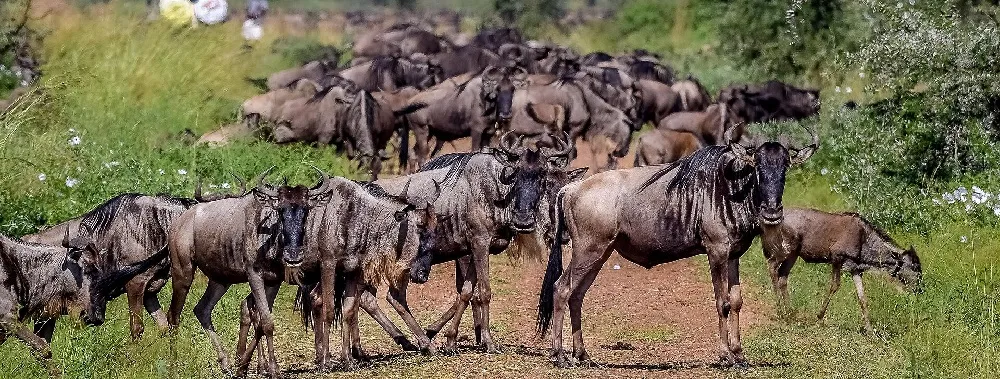
Tanzania's most iconic park — 14,750 km² of open savanna hosting the eternal cycle of the Great Migration. Over 1.5 million wildebeest, 250,000 zebra and gazelle circle the ecosystem year-round. The Mara River crossings (July–August) are Earth's greatest wildlife spectacle. Big Five resident year-round.
Ngorongoro Crater
🚗 30 min from Karatu / 2 hrs from Arusha
The world's most extraordinary wildlife arena — a collapsed volcanic caldera 20km wide sheltering 30,000 animals. Africa's highest predator density. Home to the endangered black rhino, enormous lion prides, dense elephant herds, and flamingo-fringed soda lake. All Big Five in a single day.
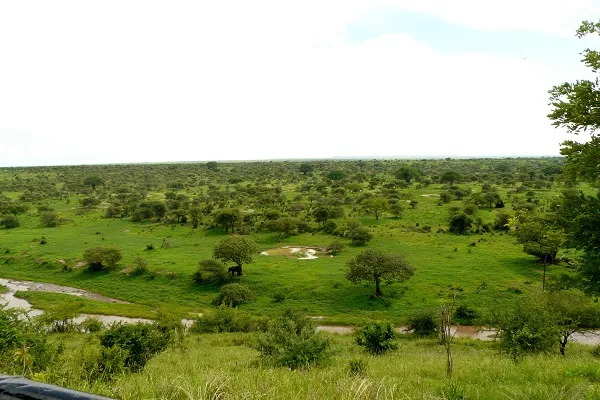
Tarangire National Park
🚗 2 hrs from Arusha / 2 hrs from Karatu
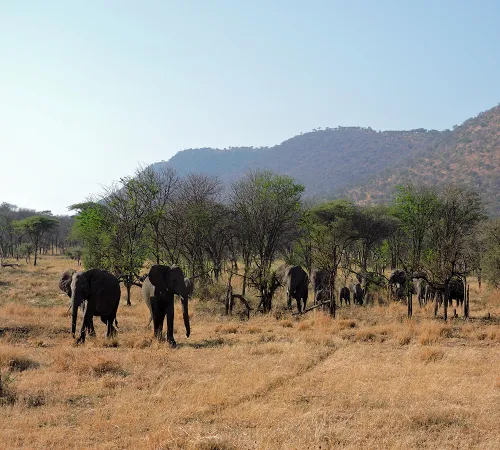
Tanzania's most underrated park — ancient baobab forests, the Tarangire River, and the largest elephant herds in Tanzania. During the dry season, herds of 100–300 elephants drink at the river. 550+ bird species make it East Africa's finest birding destination. Big Five present year-round.
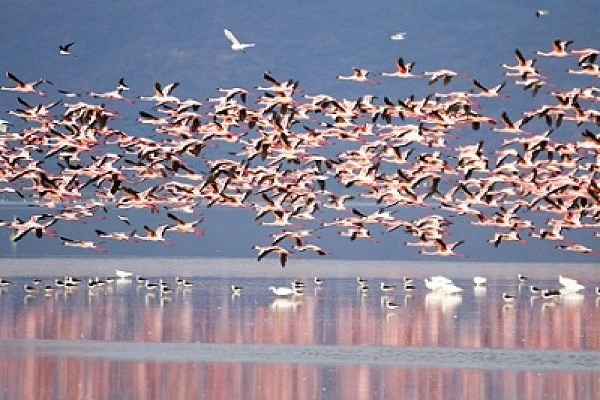
Lake Manyara National Park
🚗 1.5 hrs from Arusha / 45 min from Karatu
Compact, wildly diverse, and utterly unique — Lake Manyara combines a vivid soda lake with groundwater forest, savanna, and escarpment. Famous for Tanzania's unique tree-climbing lions, massive flamingo flocks, hippo pools, and 400+ bird species. Perfect for a half-day or full day.
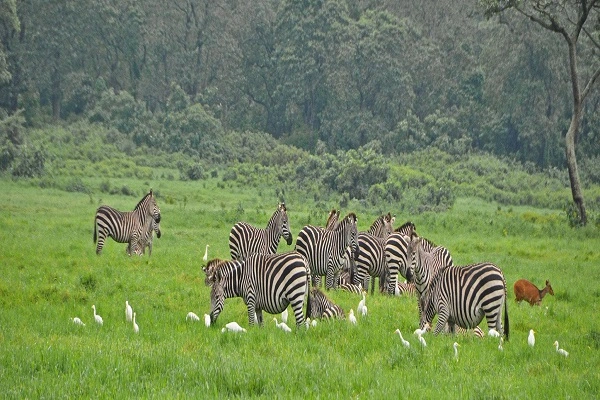
Arusha National Park
🚗 45 min from Arusha city centre
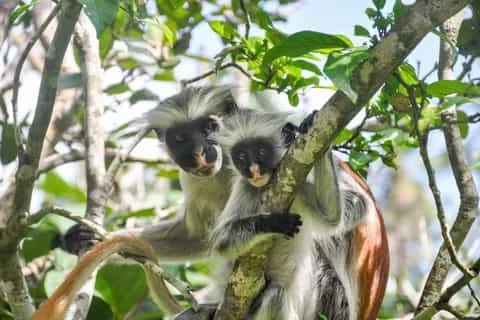
Tanzania's most accessible national park — 45 minutes from Arusha airport. Momella Lakes with flamingoes, Colobus monkeys in the forest, giraffe and zebra on open plains, and the towering Mt Meru backdrop. One of the few parks where walking safaris with an armed ranger are permitted.
Build your custom circuit
Every combination of parks above can be built into a private itinerary — day trips, 2-night overnights, or the complete 7-day Northern Circuit. We handle everything.
The Great Wildebeest Migration — month by month
The most spectacular wildlife event on Earth — 1.5 million wildebeest, 250,000 zebra and 400,000 Thomson's gazelle move in an endless clockwise loop through the Serengeti-Mara ecosystem. Here is where to be and when.
The Great Migration is often described as a seasonal event, but the wildebeest are moving year-round. The dramatic river crossings occur July–August (Mara River) and briefly in October (as the herds return south). The calving season (January–February) is equally dramatic — 500,000 calves born over 3 weeks, with predators hunting in extraordinary numbers.
Calving Season: January – February
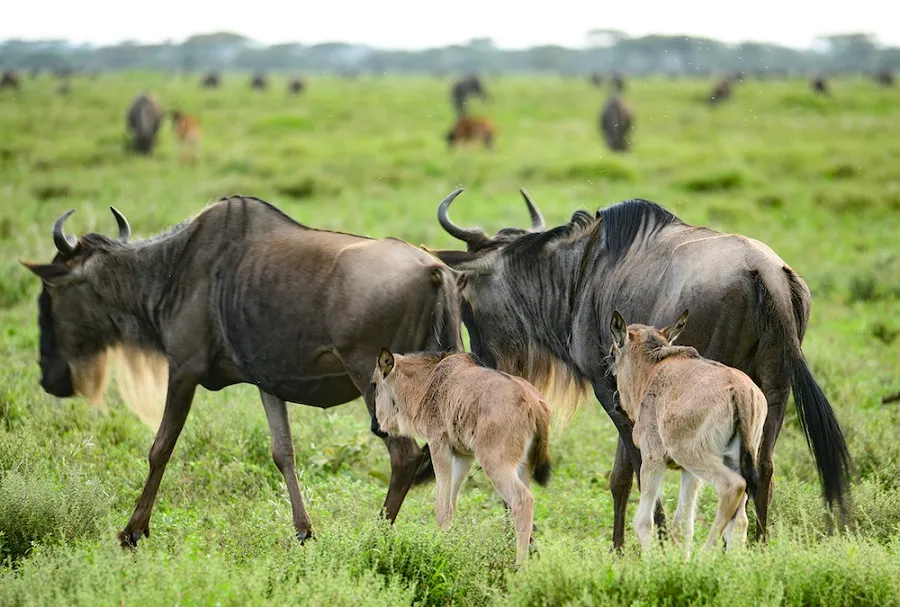
The best-kept secret of Tanzania safari planning. January–February is when 500,000 wildebeest calves are born on the Serengeti's southern short-grass plains near Ngorongoro — over three weeks of the most extraordinary predator activity of the year. Cheetah, lion, hyena, and wild dog all hunt the vulnerable newborns in scenes of breathtaking drama. Visitor numbers are low, prices are at their annual lowest for this season, and the calving itself is unforgettable.
River Crossings: July – August
The famous Mara River crossings are unpredictable — wildebeest can cross 10 times in a day or not at all for three days. This unpredictability is part of the magic. The northern Serengeti holds the herds from July through early October, with peak crossing frequency in August. Book at least 9–12 months ahead for July–August camps in the northern Serengeti — these sell out first among all Tanzania camps.
Month-by-month Tanzania safari guide — 2026 & 2027
Every month in Tanzania offers a distinct and rewarding safari experience. The right month depends on your priorities — migration crossings, calving, birding, budget, or avoiding crowds.
January
Short Dry · Calving Season- 500,000 wildebeest calves born in 3 weeks
- Serengeti predators hunting at annual maximum
- Ngorongoro Crater at its finest
- Low visitor numbers, good prices
February
Dry · Warm- Best month for calving season drama
- Ngorongoro lion prides hunting newborns
- Clear blue skies — excellent photography
- Low to moderate visitor numbers
March
Long Rains Begin- Long rains begin mid-month
- Migratory birds arrive — 500+ species active
- Prices drop 30–40% from peak rates
- Some roads may be challenging
April
Long Rains · Lush- Heavy rains — green season discount max
- Ngorongoro Crater accessible and dramatic
- Virtually no other visitors in parks
- Best value accommodation prices
May
Rains Easing- Rains ease late May
- Migratory birds in full numbers
- Parks beautifully lush and green
- Good value — conditions improving
June
Dry Season Opens- Dry season returns — game viewing excellent
- Grumeti River crossings begin
- Tarangire elephant herds building
- Shoulder prices — good availability
July
Peak Dry · Peak Season- Mara River crossings at full frequency
- All parks in peak wildlife condition
- Ngorongoro Crater dense with animals
- Book 12 months ahead — full capacity
August
Peak Dry Season- Most crossing frequency of the year
- Tarangire: 100–300 elephants daily
- Clearest skies — finest photography
- Busiest month — advance booking essential
September
Late Dry Season- Migration begins returning to Serengeti
- Tarangire at peak — elephant concentrations
- Slightly fewer visitors than August
- Excellent value vs August
October
Transition · Short Rains- Short rains begin — afternoon showers only
- Migration returning to southern Serengeti
- Prices drop — excellent shoulder month
- Zanzibar best beach conditions
November
Short Rains- Short rains — brief afternoon showers
- Newborn animals across all parks
- Migratory birds in full numbers
- Low prices, genuine bush atmosphere
December
Rains Ease · Festive- Rains ease mid-December — conditions improve
- Festive Christmas & New Year climbs/safaris
- Calving season approaching — southern Serengeti active
- Holiday premium pricing applies
Sample itineraries for 2026 & 2027
Four tried-and-tested itineraries covering every length and style of Tanzania safari — from a focused 4-day Ngorongoro experience to the full 10-day Northern Circuit and Zanzibar.
Ngorongoro & Tarangire Express
Full Northern Circuit
Northern Circuit & Zanzibar
Kilimanjaro + Safari + Zanzibar
Zanzibar — the perfect safari finale
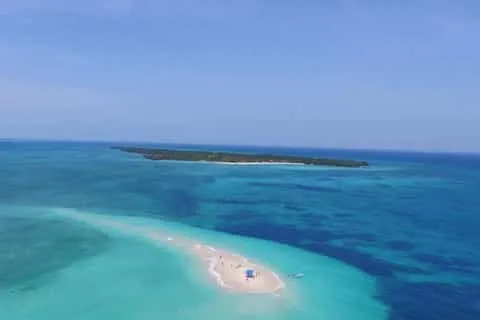
60km off the Tanzanian coast, the spice island of Zanzibar offers a seamless transition from dust and game drives to white sand beaches, turquoise Indian Ocean water, and the UNESCO World Heritage Site of Stone Town.
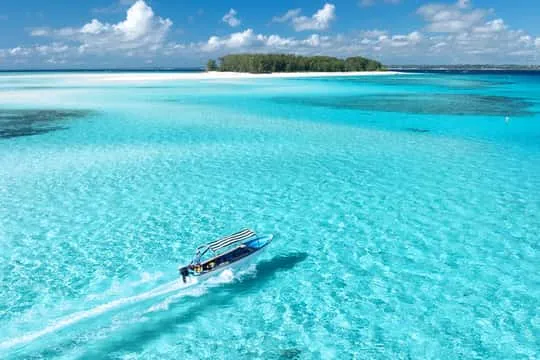
Most visitors fly Arusha → Zanzibar (1 hour) at the end of their safari — arriving for 2–4 nights of Indian Ocean recovery before their international flight home. The contrast is one of travel's greatest pleasures: dust, predators, and drama replaced overnight by powder sand, coral reefs, and warm turquoise water.
Zanzibar's beaches vary dramatically. The north (Nungwi, Kendwa) has calm turquoise water year-round. The east (Paje, Bwejuu) is the world-class kitesurfing coast and better for budget travellers. The northeast (Matemwe) is quieter and upscale. All are within easy reach of Stone Town's historic alleys, spice farm tours, and sunset dhow cruises.
Stone Town
UNESCO World Heritage Site — Arab, Persian, Indian and Swahili architecture. Narrow alleys, carved doorways, and evening culture.

Nungwi & Kendwa
North coast — calm turquoise water, white sand, dhow sunset cruises, swimming year-round. The most popular beach area.
Spice Farm Tour
Zanzibar's famous spice farms — cloves, vanilla, nutmeg, and cinnamon. A half-day tour combining culture, history, and fresh flavours.

Coral Reef Snorkelling
Mnemba Atoll off Matemwe is among the Indian Ocean's finest coral reef snorkelling — sea turtles, rays, and colourful reef fish.

Paje Kitesurfing
East coast — consistent trade winds make Paje a world-class kitesurfing destination. Also ideal for budget accommodation and local restaurants.
Precision Air and Coastal Aviation operate direct daily flights from Arusha (ARK) and Kilimanjaro (JRO) to Zanzibar (ZNZ). Flight time is approximately 55 minutes. We arrange all connecting flights as part of your safari-Zanzibar package — you just land, and your Zanzibar transfer is waiting.
Safari costs — what to budget for 2026 & 2027
Tanzania safari costs are driven by three factors: the time of year, your accommodation tier, and the number of parks included. This section gives you honest, current figures to plan your budget.
| Category | Budget | Mid-Range | Luxury |
|---|---|---|---|
| Daily rate |
Budget $150–250 |
Mid-range $300–500 |
Luxury $600–1,500+ |
| Accommodation | Public campsites | Tented camps (3–4★) | 5★ exclusive camps |
| Serengeti Fee | $80 / person / day | ||
| Ngorongoro | $70 / person + $70 / vehicle | ||
| Zanzibar | $60–120 | $150–350 | $400–1,200 |
Travel in the green season (March–May or November) for 30–40% lower accommodation rates. Choose 3–4 nights rather than 2 nights in the Serengeti — more nights = lower daily rate as park fees are spread across more game drives. Travel as a group of 4 — private vehicle costs split four ways dramatically reduces per-person cost. Request our group discount for 5+ people.
Where to stay — accommodation guide
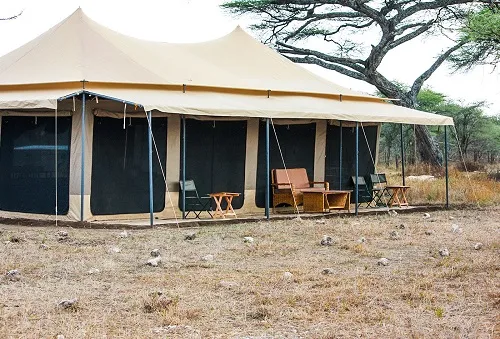
Tanzania accommodation ranges from authentic public campsites (where elephants genuinely walk through camp) to the world's most spectacular luxury tented camps with private plunge pools overlooking the Serengeti.