
About this climb
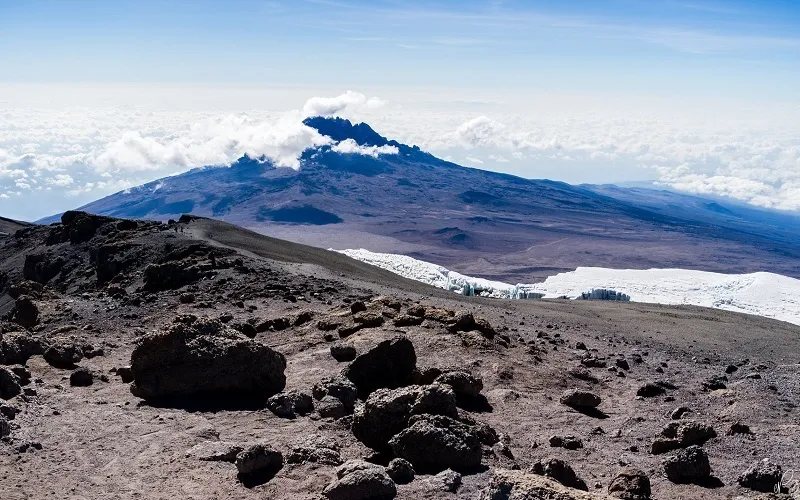
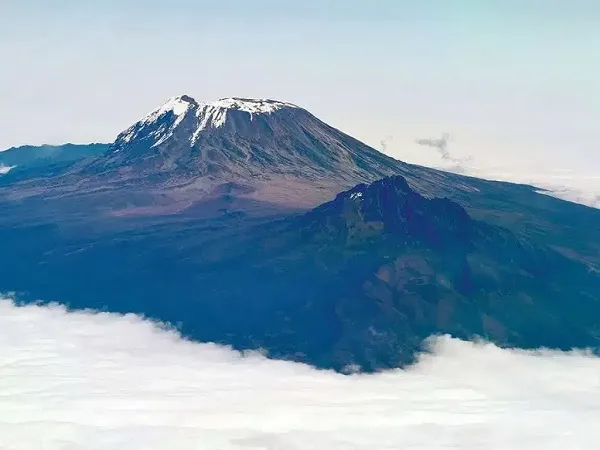
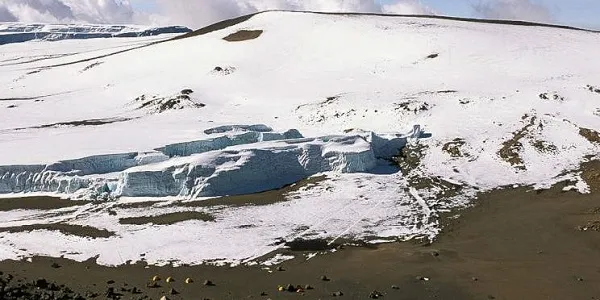
The 11-day Northern Circuit is the longest and most physiologically comprehensive Kilimanjaro itinerary available on any standard commercial programme. It takes the 10-day itinerary — already the highest-success Kilimanjaro route — and adds a second dedicated rest and acclimatization day, this time at School Hut (4,750 m), the highest non-summit camp on the mountain. The result is an acclimatization staircase that no other standard itinerary can match: two full rest days at two distinct altitude zones, separated by the traverse of the remote northern wilderness.
The physiological case is compelling. After the first rest day at Moir Hut (4,200 m) on Day 5, bodies have adapted to the moderate northern altitude. The long traverse to Third Cave and the subsequent push to School Hut (4,750 m) on Day 7 then delivers climbers to the highest pre-summit position on the mountain. The Day 8 rest day here — at 4,750 m, just 1,145 m below the summit — allows the body to complete its high-altitude adaptation before the summit push on Night 10. No other standard Kilimanjaro route comes close to this acclimatization profile.
The 11-day is the definitive choice for: climbers with a documented history of altitude sickness (AMS, HACE, or HAPE) on any previous expedition; anyone who has attempted Kilimanjaro before and turned back or been evacuated due to altitude illness; senior climbers (65+) whose physiological altitude response is significantly slower; those for whom the Kilimanjaro summit represents a once-in-a-lifetime goal that justifies the maximum possible investment in preparation; and experienced mountaineers who simply want the most comprehensive, unhurried, and physiologically sound traverse of Africa's highest peak that a standard commercial programme can offer.
Rest Day 1 at Moir Hut (4,200 m) triggers initial high-altitude adaptation: erythropoietin release, early red blood cell production, and cardiovascular adjustments. After the northern traverse and the ascent to School Hut, Rest Day 2 at 4,750 m builds on this foundation with a second, more powerful adaptation stimulus at the altitude closest to the summit where the body can meaningfully adapt without acute altitude exposure. The combination creates the most prepared physiological state any Kilimanjaro climber can achieve before summit night on a standard itinerary.
School Hut is the highest camp on Kilimanjaro outside the summit crater. A full rest day here — with optional guided short acclimatization walks to above 5,000 m and back — provides the most powerful pre-summit altitude adaptation available on any standard itinerary. Climbers who rest at School Hut for a full day consistently report feeling significantly stronger during the subsequent summit push than those who arrive only the evening before.
11-day itinerary
-
The longest drive to any Kilimanjaro trailhead — approximately 2.5 hours from Moshi to the remote Londorossi Gate on the western flank — delivers you to the most pristine forest entry on the mountain. Eleven days begins deliberately and gently. Your body, the mountain, and the pace all begin their long acquaintance here.
-
07:00Pickup from Moshi — drive to Londorossi Gate
~2.5 hour drive northwest. Gear check, TANAPA registration, porter loading, and wildlife briefing at the gate. Buffalo and elephant use the lower forest — approach protocols explained.
-
10:30Enter the western Londorossi rainforest
Pristine Podocarpus and Macaranga forest. Colobus monkeys, hornbills, and endemic sunbirds accompany the first hours. The most biodiverse entry section on Kilimanjaro. Buffalo tracks cross the trail regularly.
-
14:30Arrive Mti Mkubwa "Big Tree" Camp (2,750 m)
Named for the magnificent Podocarpus trees overhead. First baseline health check — oxygen saturation and pulse recorded. Ten nights of tented camping begins. Early dinner and rest.
- 📍 ~7 km
- ⏱ 4–5 hrs
- ⛰ 2,360 m → 2,750 m
- ⛺ Mti Mkubwa Camp
-
-
Through heather moorland and giant senecio forest toward the Shira Plateau rim — one of Kilimanjaro's most transformative ascents. Cresting the plateau edge and seeing Kibo's summit cone enormous ahead is one of the great reveal moments in African trekking.
-
07:30Ascend through heather and giant senecio zone
The forest canopy opens into moorland. Giant lobelias appear. Air cools and thins toward the plateau rim. The gradient builds steadily.
-
12:00Plateau rim — Shira revealed
Emerge onto the vast Shira Plateau. Kibo summit dominates the eastern skyline. Lunch here with 360° views in all directions — savanna to the north, Mawenzi to the east, the Shira Ridge behind.
-
15:00Arrive Shira 1 Camp (3,610 m)
First night on the plateau. Hydrate aggressively. Health check — altitude monitoring begins in earnest.
- 📍 ~9 km
- ⏱ 6–8 hrs
- ⛰ 2,750 m → 3,610 m
- ⛺ Shira 1 Camp
-
-
A gentle plateau traverse to Shira 2 Camp, with the afternoon available for the optional Shira Cathedral acclimatization walk to ~3,900 m. The Shira Plateau's otherworldly landscape — giant groundsels, open moorland, views of Kibo — is absorbed at a measured, methodical pace.
-
07:30Plateau traverse — Shira 1 to Shira 2
Cross the heart of the Shira Plateau. Giant groundsels loom overhead. Mawenzi and the Kenyan plains visible to the northeast.
-
12:00Arrive Shira 2 Camp (3,850 m)
Hot lunch and two hours of rest. Health monitoring. On the 11-day itinerary, this unhurried pacing is intentional.
-
14:30Optional: Shira Cathedral walk (~3,900 m)
A one-hour acclimatization walk to the Cathedral rocks and back. Strongly recommended — the minor extra altitude contributes meaningfully to the overall acclimatization curve.
- 📍 ~6 km
- ⏱ 4–5 hrs
- ⛰ 3,610 m → 3,850 m
- ⛺ Shira 2 Camp
-
-
The day the Northern Circuit diverges from all other routes. After the critical acclimatization lunch at Lava Tower (4,630 m), the trail sweeps dramatically north and east around the mountain. Tomorrow is a full rest day here — the remote northern wilderness arrived at, and then savoured fully.
-
07:30Ascend to Lava Tower (4,630 m) — acclimatization lunch
4,630 m — higher than Mont Blanc. Altitude effects expected and normal. Rest fully, hydrate, do not rush. Tomorrow is a rest day; make the most of the Lava Tower acclimatization stimulus tonight.
-
13:00Northern divergence — route turns north
The trail breaks away from all other routes. The landscape opens dramatically. Within thirty minutes, all other climbers and tents are invisible. The northern wilderness begins — and tomorrow you will rest inside it.
-
16:30Arrive Moir Hut (4,200 m)
Remote camp on the northern moorland. No other route passes here. Tomorrow: a full rest day. The body begins its work tonight.
- 📍 ~11 km
- ⏱ 7–9 hrs
- ⛰ 3,850 m → 4,630 m → 4,200 m
- 🧭 Northern arc begins
- ⛺ Moir Hut
-
-
The first of two dedicated acclimatization rest days. At Moir Hut (4,200 m), in one of the most remote wilderness settings in East Africa, there is no mandatory hiking. This day belongs entirely to the body's physiological adaptation process. Erythropoietin release, red blood cell production, vascular adaptation. A full day at 4,200 m without energy expenditure — the first half of the most powerful pre-summit preparation on Kilimanjaro.
-
08:00Relaxed breakfast — no hiking schedule
Hot breakfast, hot drinks. First oxygen saturation and pulse check. Discuss how you feel — the guide monitors closely all day. The northern wilderness is silent and extraordinary.
-
10:00Optional: acclimatization walk to ~4,400 m and back
Recommended. A one-to-two hour walk north toward the ridge and back, without packs. Pure "climb high, sleep low" — distilled. Return for lunch.
-
12:30Hot lunch and extended afternoon rest
Second health check. Read, sleep, observe the northern wilderness. Mount Kenya is sometimes visible on clear days — 340 km north across the Kenyan savanna.
-
18:00Dinner & Day 6 briefing
Tomorrow: the deepest northern traverse. Final health check. Most climbers report feeling noticeably better than yesterday — Rest Day 1 working as intended.
- 📍 Optional short walk only
- 🌙 Rest Day 1 — 4,200 m
- ⛰ No altitude gain
- ⛺ Moir Hut (second night)
-
-
After two nights and a full rest day at Moir Hut, bodies are refreshed and the northern traverse continues through the most remote section of any Kilimanjaro route. The trail crosses the northern face of Kibo through open moorland — no other trekkers in any direction. On clear days, Mount Kenya is visible 340 km north. The descent to Third Cave Camp follows.
-
07:30Depart Moir Hut — continue the northern traverse
After two nights at Moir Hut and a full rest day, the body feels significantly stronger. The trail traverses open northern moorland in absolute solitude. The most remote kilometres of any Kilimanjaro route.
-
11:00Northern viewpoint — continental views
Amboseli National Park stretches north. Mount Kenya occasionally visible 340 km away. The landscape is elemental and silent. Lunch here — one of the most remote panoramas in East Africa.
-
15:30Arrive Third Cave Camp (3,870 m)
Descent from the high traverse — the complementary "sleep low" completing Rest Day 1's "stay high." The circumnavigation presses east. Dinner and early rest — tomorrow: School Hut.
- 📍 ~13 km
- ⏱ 6–8 hrs
- ⛰ 4,200 m → 3,870 m
- 🧭 Deepest northern wilderness
- ⛺ Third Cave Camp
-
-
A significant altitude push to School Hut at 4,750 m — the highest non-summit camp on Kilimanjaro. Tomorrow is Rest Day 2 here, so climbers are ascending not to push through to Barafu immediately, but to arrive, rest, and complete their high-altitude adaptation at the optimal pre-summit altitude. The arrival at School Hut knowing there is a full rest day tomorrow feels very different from arriving on a tight summit schedule.
-
07:30Ascend the northeastern shoulder to School Hut
Steep climb through alpine desert onto the northeastern ridge. Mawenzi's ragged silhouette close and dramatic. Air genuinely thin — move deliberately. No need to rush: tomorrow is entirely for rest.
-
13:30Arrive School Hut (4,750 m) — Kilimanjaro's highest camp
Kibo summit crater directly above. Almost completely deserted — only Northern Circuit climbers reach here. Rest immediately. Eat and hydrate. Tomorrow you do not hike — you adapt.
-
16:00Health check & Rest Day 2 briefing
Oxygen saturation and pulse checked. Discuss tomorrow's full rest day schedule — optional short walks to above 5,000 m available. Early dinner and sleep. The body begins its highest-altitude adaptation tonight.
- 📍 ~11 km
- ⏱ 5–7 hrs
- ⛰ 3,870 m → 4,750 m
- ⛺ School Hut (4,750 m)
-
-
The feature that makes the 11-day itinerary unique on all of Kilimanjaro. A second full acclimatization rest day — this time at School Hut, 4,750 m, just 1,145 m below the summit. The body, already primed by the Moir Hut rest day and the northern traverse, now receives its highest-altitude adaptation stimulus in a resting state. Optional guided walks to above 5,000 m are available for those who want to explore the final frontier before summit night. This is the closest to the summit any climber can rest, adapt, and prepare on a standard Kilimanjaro programme.
-
08:00Relaxed breakfast at 4,750 m
Hot breakfast, hot drinks. Oxygen saturation check — comparing this reading to Day 5 at Moir Hut reveals measurable adaptation progress. The crater is directly above. The summit is 1,145 m away.
-
10:00Optional: short walk to above 5,000 m and back
For those who want to go higher — a guided walk above 5,000 m and back. Not mandatory; optional for those who feel strong and want the highest possible pre-summit exposure. Return within two hours.
-
12:30Lunch and extended rest
Second health check. The most isolated, high-altitude afternoon of the entire climb. The summit crater looms above. Tomorrow: the Barranco Wall approach. The night after: summit night.
-
18:00Dinner and Day 9 briefing
Tomorrow is a long, spectacular day — descend from School Hut, cross the Barranco Wall, and reach Barafu. Final health check. Early sleep. The two rest days are complete. The summit is now the only remaining step.
- 📍 Optional walk above 5,000 m only
- 🌙 Rest Day 2 — 4,750 m
- ⛰ School Hut 4,750 m (no required gain)
- ⛺ School Hut (second night)
-
-
A long, dramatic day completing the full 360° circumnavigation of Kibo. After two nights at School Hut and two dedicated rest days total, climbers are the most physiologically prepared group on Kilimanjaro. The descent to Barranco, the iconic wall scramble, Karanga Valley, and the ascent to Barafu all follow in sequence. Tonight at Barafu, summit night is tomorrow.
-
07:00Descend from School Hut — approach Barranco
Descend the western flank from School Hut to Barranco Camp. The Barranco Wall rises ahead. Other climbers from Machame and Lemosho routes visible at Barranco — the first significant crowds in six days. The circumnavigation rejoins the mountain's main artery.
-
10:00The Barranco Wall — 300-metre scramble
The most famous section on Kilimanjaro. On the 11-day itinerary, climbers arrive at the wall with more acclimatization than any other group on the mountain. The scramble feels enjoyable rather than threatening. Guides positioned throughout. No ropes required.
-
12:30Karanga Valley — last water point
Fill all bottles here — last water before Barafu. Brief rest and then the final climb to base camp.
-
16:00Arrive Barafu Base Camp (4,673 m)
Complete summit briefing. Dinner immediately. Bed by 18:30. Wake-up at 23:00. Two rest days of preparation behind you. One summit night ahead.
- 📍 ~16 km
- ⏱ 8–10 hrs
- ⛰ 4,750 m → 4,673 m
- 🧗 Barranco Wall scramble
- ⛺ Barafu Base Camp
-
-
The summit push. Ten days of patient, methodical preparation — the rainforest, the plateau, the northern wilderness, two rest days, the Barranco Wall — arrive at this midnight departure. The 11-day Northern Circuit climber stands at the Barafu start line with the deepest acclimatization of any Kilimanjaro climber on a standard itinerary. The ~95%+ success rate is the measured outcome of everything that came before.
-
23:00Wake-up — summit push begins
Hot tea and biscuits. Final layer system — temperatures −10°C to −20°C near summit. Headlamps on. The guide sets a patient, sustainable pace. Ten days of preparation end here. The mountain begins.
-
05:00Stella Point — Crater Rim (5,745 m)
Dawn breaking over the cloud ocean. The glaciers catching the first light. On the 11-day itinerary, the measurable impact of two rest days is felt most clearly here — climbers who trained at School Hut consistently report feeling stronger at Stella Point than on shorter routes. Uhuru Peak: 45 minutes along the rim.
-
06:00UHURU PEAK — 5,895 m 🏔
The Roof of Africa. The wooden summit sign. Ten days. Two rest days. A complete circumnavigation. The entire northern wilderness behind you. Sunrise over the crater glaciers. This moment is entirely, completely yours.
-
08:00Begin descent to Mweka Camp (3,100 m)
Long descent via the Mweka Route. Trekking poles essential. Arrive mid-afternoon. Eleven-day celebration dinner.
- 📍 ~18 km total
- ⏱ 12–15 hrs
- ⛰ 4,673 m → 5,895 m → 3,100 m
- ⛺ Mweka Camp
-
-
The final descent through the southern rainforest to Mweka Gate, the TANAPA Summit Certificate, and the porter farewell song. Eleven days is the longest of any Kilimanjaro itinerary — the porter crew who matched you through rainforest, plateau, wilderness, two rest days, the Barranco Wall, and the summit are colleagues of a shared, extraordinary experience. The farewell song reflects that.
-
07:30Final breakfast — tip ceremony
Sign the porter tip register. Say each crew member's name. Eleven days is long enough to know everyone deeply. They carried and supported your mountain — through every zone, every night, every rest day.
-
08:30Descend to Mweka Gate through the rainforest
The southern forest that finishes the Northern Circuit is different from the western Londorossi forest that began it — the same planet, a different world. Trekking poles on steep sections. Last views of Kibo through the canopy.
-
12:30Mweka Gate — TANAPA certificate & porter farewell song
Your Kilimanjaro Summit Certificate. The entire crew performs the farewell song. Karibu sana — you completed the pinnacle Kilimanjaro itinerary. Eleven days. Two rest days. The Roof of Africa.
-
14:00Return to Moshi — celebration dinner
Hot shower, rest, and a group celebration dinner marking the completion of Kilimanjaro's most comprehensive itinerary. End of all services.
- 📍 ~9 km
- ⏱ 3–4 hrs
- ⛰ 3,100 m → 1,640 m
- 🏨 Return to Moshi
-
Choose your package
All packages follow the identical 11-day Northern Circuit itinerary with tented camping throughout all 10 nights on the mountain, including both dedicated rest days.
- Budget guesthouse Moshi (Day 1 & Day 11)
- All TANAPA park & camping fees (10 nights)
- -certified lead guide
- All porters, cook & sleeping tents
- 3 meals/day + snacks on mountain
- Both dedicated rest days fully supported
- Emergency supplemental oxygen
- Daily pulse oximeter monitoring
- TANAPA summit certificate
- Mid-range hotel Moshi (Day 1 & Day 11)
- All TANAPA park & camping fees (10 nights)
- Dedicated lead guide + assistant guide
- All porters, cook, waiter & toilet tent
- 3 meals/day + hot drinks throughout
- Guided optional walks on both rest days
- Safety oxygen + Gamow bag
- Twice-daily oximeter check
- Airport transfers included
- TANAPA summit certificate
- Boutique hotel Moshi (Day 1 & Day 11)
- All TANAPA park & camping fees (10 nights)
- Private 1:1 guide ratio
- Full crew + private toilet + shower tent
- Restaurant-quality meals + full snack bar
- Physician-level health monitoring on rest days
- Oxygen, Gamow bag & AED device
- 3× daily oximeter + satellite communicator
- Airport transfers + Moshi cultural tour
- Safari combo pricing available
What's included
- All TANAPA national park entry fees
- Camping fees for all 10 nights on the mountain
- -certified professional lead guide
- Assistant guide (1 per 3 climbers)
- Porters (~3 per climber) + mountain cook
- High-quality dome sleeping tents + dining tent
- All mountain meals (3 per day) + water
- Both dedicated rest days — Moir Hut (Day 5) & School Hut (Day 8)
- Optional acclimatization walks on both rest days
- Emergency supplemental oxygen cylinder
- Daily pulse oximeter health monitoring
- TANAPA summit certificate at Mweka Gate
- KINAPA rescue fee contribution
- International flights to KIA / JRO airport
- Tanzania tourist visa (~$50 USD)
- Personal travel & evacuation insurance
- Personal hiking gear (rental available in Moshi)
- Sleeping bag −15°C rated (rental available)
- Trekking poles — essential (rental available)
- Tips / gratuities for guides and porters
- Alcoholic beverages
- Diamox altitude medication (prescription required)
How the 11-day compares
The 11-day in context — the only standard Kilimanjaro itinerary with two dedicated rest days:
| Route | Days | Rest Days | Success | Crowds | From |
|---|---|---|---|---|---|
| Lemosho 8-day | 8 | 0 | ~88–92% | Moderate | $2,050 |
| Northern Circuit 9-day | 9 | 0 | ~90–95% | Very low | $2,350 |
| Northern Circuit 10-day | 10 | 1 (4,200 m) | ~95%+ | Very low | $2,650 |
| Northern Circuit 11-day ← You are here | 11 | ✅ 2 (4,200 m & 4,750 m) | ~95%+ | Very low | $2,950 |
Best time to climb
| Months | Season | Summit | Rest Day Conditions | Crowds |
|---|---|---|---|---|
| Jan – Feb | Dry & cold | Excellent | Clear, cold, calm — ideal for both rest days | Very low |
| Mar – May | Long rains | Possible | Cloud cover — physiologically effective | Minimal |
| Jun – Oct | Dry (peak) | Excellent | Clear, dry — Kenya views possible from Moir Hut | Low |
| Nov | Short rains | Good | Some cloud — manageable | Very low |
| Dec | Dry & clear | Excellent | Clear skies — excellent stargazing from School Hut | Very low |
The rest days are physiologically effective regardless of weather — the body adapts in cloud and rain as effectively as in sunshine. The dry seasons (January–February and June–October) add the extraordinary bonus of Mount Kenya visible from Moir Hut, and exceptional stargazing from School Hut at 4,750 m on the rest night.
Frequently asked questions
-
Both rest days follow the same structure: no mandatory hiking, relaxed meals, twice-daily health monitoring by guides, and optional short acclimatization walks (1–2 hours, no packs). Rest Day 1 at Moir Hut (4,200 m) focuses on initial high-altitude adaptation — erythropoietin production, early red blood cell increase, cardiovascular adjustment. Rest Day 2 at School Hut (4,750 m) builds on this foundation with the highest-altitude resting acclimatization stimulus available on a standard Kilimanjaro programme, including optional guided walks above 5,000 m for those who feel strong. Both days involve genuine physiological adaptation rather than passive waiting — the body works hardest during rest at altitude.
-
Yes — meaningfully, particularly for altitude-sensitive climbers. The 10-day has one rest day at Moir Hut (4,200 m). The 11-day adds a second rest day at School Hut (4,750 m) — an altitude 550 m higher, and 550 m closer to the summit. The 4,750 m rest day provides a second, more powerful acclimatization stimulus at the altitude closest to the summit where a standard itinerary can operate. For climbers with altitude sensitivity history, the School Hut rest day can be the difference between a successful summit and a forced descent due to altitude illness. For climbers without altitude history, it provides additional confidence and physiological margin. Both matter.
-
Prices range from $2,950 (standard group) to $4,100 (private luxury) per person. All packages include all TANAPA park fees, camping fees for 10 nights, tents, all meals-certified guides and porters, emergency oxygen, both dedicated rest days, and the TANAPA summit certificate. The additional cost compared to the 10-day reflects one additional park and camping night plus crew costs for the School Hut rest day. International flights and visa are not included.
-
The 11-day is the strongest recommendation for: anyone who has experienced AMS, HACE, or HAPE on any previous expedition; anyone who has attempted and not summited Kilimanjaro due to altitude illness; senior climbers (65+) where physiological altitude adaptation is meaningfully slower; those for whom Kilimanjaro represents a once-in-a-lifetime goal justifying the maximum preparation; and anyone who simply wants the most comprehensive, methodical, and physiologically sound Kilimanjaro experience available on a standard commercial programme. It is suitable for all fit, healthy adults.
-
Yes — the iconic 300-metre Barranco Wall hands-and-feet scramble is included on Day 9, as the Northern Circuit rejoins the Southern Circuit at Barranco Camp. On the 11-day, climbers arrive at the wall with two rest days of acclimatization behind them — the most physiologically prepared group on Kilimanjaro. Consistently, climbers on the 11-day itinerary describe the Barranco Wall as the most enjoyable section of the entire climb, rather than the most daunting.
-
Yes, without exception. Resilience Expedition is a registered (Kilimanjaro Porters Assistance Project) partner. All porters receive above-standard wages for all eleven days, are never loaded beyond TANAPA's 20 kg limit, receive appropriate cold-weather equipment for all altitude zones including the School Hut nights at 4,750 m, are covered by health and accident insurance, and receive adequate food throughout. Eleven days is the longest itinerary on Kilimanjaro — porter welfare is monitored daily and is non-negotiable on every climb we run.


