
Tanzania's most underrated mountain — and why it should be on your list
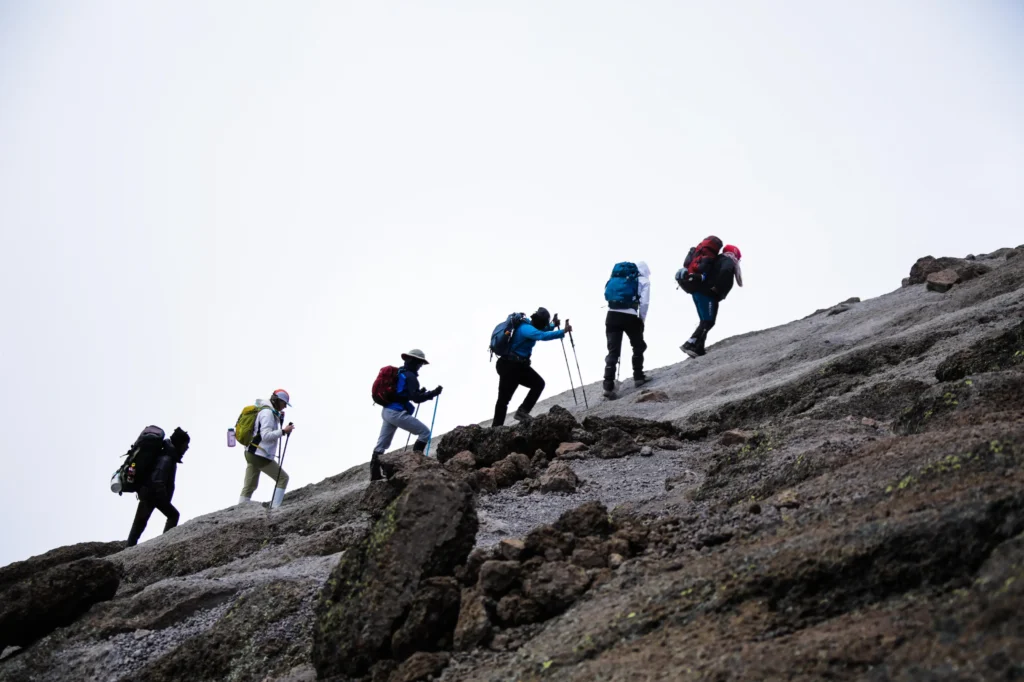
Most Tanzania visitors fly over Mount Meru on the way to Kilimanjaro — never knowing they are passing Africa's fifth-highest mountain, one of the continent's most dramatic volcanic craters, and a trekking experience that serious climbers consistently rank above the more famous peak next door.
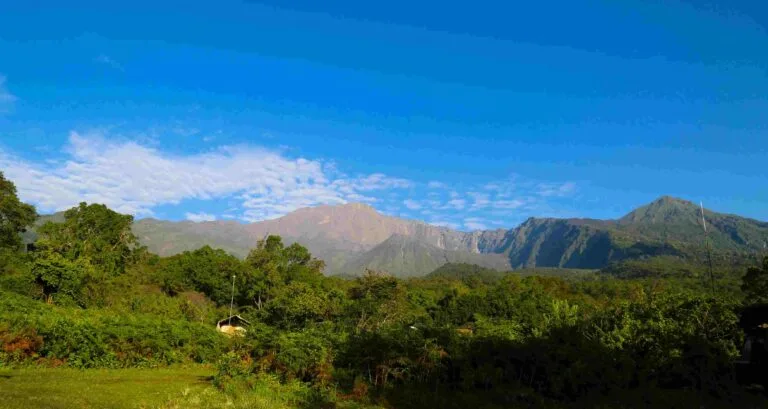
Mount Meru (4,566m) sits at the heart of Arusha National Park, just 70km west of Kilimanjaro. It is an active stratovolcano — its last significant eruption occurred in 1910 — with an extraordinary inner crater 3.5km across and a dramatic ash cone rising within it. The summit ridge, known as Socialist Peak, presents one of the most exposed and vertiginous final approaches of any trek in East Africa — a narrow knife-edge with steep drops on both sides requiring confident footwork and a head for heights.
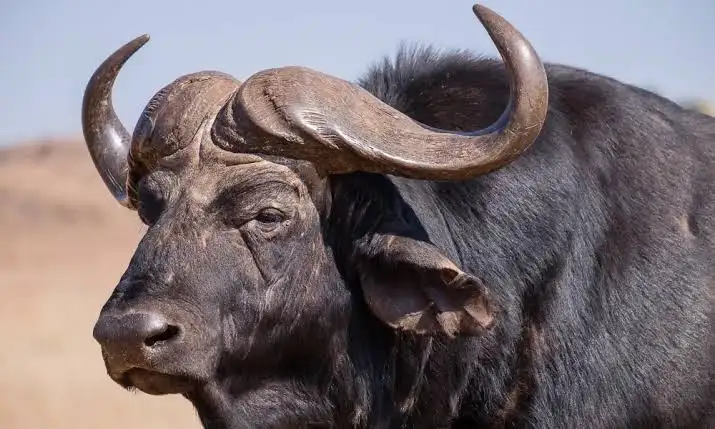
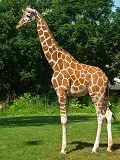
What makes Mount Meru genuinely exceptional — beyond the volcanic geology and summit views — is the wildlife. No other summit trek in East Africa passes through terrain this rich with animals. The montane forest zone (1,500–2,400m) is home to troops of black-and-white Colobus monkeys that often follow trekking groups through the canopy, Cape buffalo that must be given right of way on the trail, giraffe that browse the forest margins, and bushbuck visible in almost every clearing. An armed TANAPA ranger is mandatory for all trekking parties — both for wildlife safety and as a remarkable educational companion who helps interpret everything you encounter.
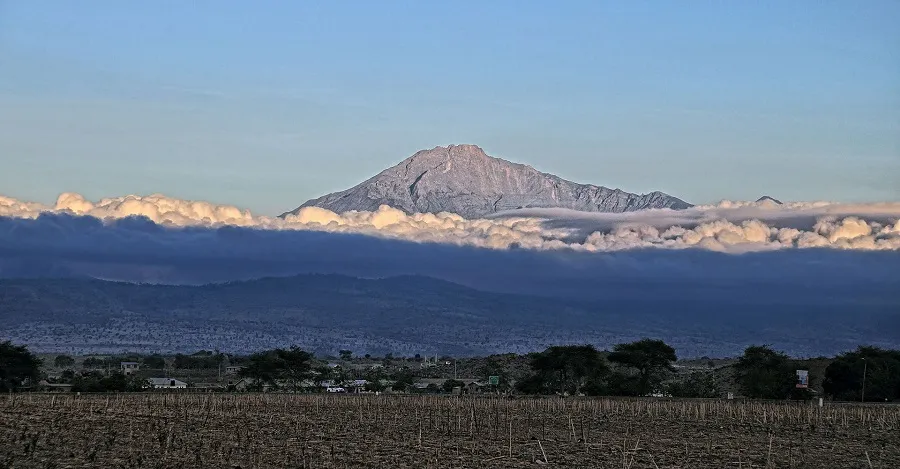
The summit view of Kilimanjaro from Meru's peak is arguably the finest available anywhere. Kilimanjaro's northern face — rarely visible from below — fills the entire eastern horizon at dawn, its glaciers and summit ice cap glowing in the first light while the shadow of Meru itself stretches across the cloud layer below. For photographers, this is one of Africa's supreme moments.
The acclimatisation advantage
Climbing Kilimanjaro within 1–2 weeks of summiting Meru dramatically increases your summit success rate on Africa's highest mountain. Sleeping at Saddle Hut (3,570m) before your Meru summit night means your body is already adapted to altitudes higher than the first three or four days on any Kilimanjaro route. The physiology is clear: gradual, extended altitude exposure is the single biggest predictor of summit success. Meru provides this without requiring you to extend your Kilimanjaro itinerary. We strongly recommend the Meru → Kilimanjaro sequence for anyone concerned about altitude on Kili.
Kilimanjaro's northern face — almost never seen from ground level — is fully exposed from the Meru summit ridge at dawn. The scale is staggering: Kilimanjaro appears enormous even from 70km away, its glaciers catching the first orange light while you stand on Africa's fifth highest point in a silence broken only by wind. Every mountaineer who makes this view makes a second trip to Tanzania.
The Mount Meru Route — one path, one extraordinary journey
Unlike Kilimanjaro's multiple routes, Mount Meru has a single trekking route — which means every climber shares the same extraordinary experience. The route begins at Momella Gate (1,500m) and follows the inner crater rim to the summit at Socialist Peak (4,566m).
The Momella Route — Mount Meru's Only Trekking Route
Momella Gate (1,500m) → Socialist Peak (4,566m) → Momella GateThe route begins at Momella Gate in Arusha National Park with mandatory ranger briefing and wildlife check. The first section climbs through grassland where giraffe graze beside the path, before entering the spectacular montane forest zone where Colobus monkey troops are almost always encountered. Miriakamba Hut (2,514m) is the first camp — a comfortable stone hut with bunk beds, flush toilets, and cooking facilities.
Day 2 ascends through moorland and heath zone to Saddle Hut (3,570m) — the highest camp on the mountain, set on the ash plain between the main crater and the outer rim. An afternoon acclimatisation hike to Little Meru (3,820m) provides extraordinary panoramic views and prepares the body for the summit push. The night at Saddle Hut is cold (sometimes below freezing) — proper sleeping bags are essential.
The summit day begins at midnight (0:00am) — rising before dawn to allow for the spectacular sunrise view of Kilimanjaro from the crater rim. The final ridge to Socialist Peak is exposed and requires careful footing in the dark. Crampons are occasionally needed after rainfall (November–May). The descent covers the entire route in a long, satisfying day back to Momella Gate.
All trekking parties on Mount Meru must be accompanied by an armed TANAPA (Tanzania National Parks) ranger for the entire duration. This is not merely a formality — the ranger is essential for navigating encounters with Cape buffalo, elephant, and leopard on the lower trail sections. The ranger fee is included in all Resilience Expedition packages. We do not allow clients to attempt the mountain without the mandatory ranger escort.
Complete 3-Day Mount Meru itinerary
The standard 3-day route — recommended for fit, experienced hikers with altitude experience. We strongly recommend the 4-day option for first-time high-altitude trekkers, families, or anyone who wants more time to acclimatise and appreciate the forest zone.
The day begins at Momella Gate with a mandatory briefing from your armed TANAPA ranger and the registration of all trekking party members. The trail leaves the gate through the short-grass plains of Arusha National Park where giraffe, zebra, and warthog are commonly encountered within the first 30 minutes. Buffalo are frequent — your ranger will manage any necessary detours. The trail enters the montane forest zone and begins climbing through increasingly dense, cathedral-like vegetation. Colobus monkey troops move through the canopy above, raining down twigs and calling with their explosive whooping alarm calls. Blue monkeys, bushbuck, reedbuck, and occasionally elephant are encountered. Miriakamba Hut (2,514m) provides comfortable bunk beds, flush toilets, hot showers (on good days), and a communal dining area where a hot dinner is prepared by your cook.
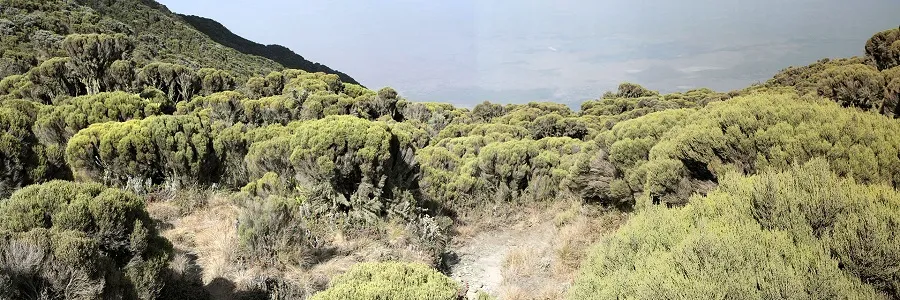
After an early breakfast, the trail climbs steeply out of the forest zone into the open heath and moorland that characterise the upper Meru slopes. Giant heather trees (Erica arborea) — some over 10 metres tall — line the trail, their gnarled trunks draped in old man's beard lichen. As the vegetation opens further, the full panorama of the volcanic crater comes into view — a vast depression filled with ash, steam vents, and a dramatic inner ash cone. The Saddle Hut (3,570m) sits on the ash plain between the outer rim and the crater — a cold, exposed, but extraordinary camp with views of both the summit ridge and, when clouds permit, Kilimanjaro's enormous flank. After lunch and rest, the afternoon acclimatisation hike to Little Meru (3,820m) is essential preparation for the summit — both physically and psychologically, as it gives you a taste of the exposed ridge that leads to Socialist Peak. The view of Kilimanjaro from Little Meru at sunset, with the summit clouds clearing and the western face lit orange, is unforgettable. Cold night — sleeping bags rated to -10°C recommended.
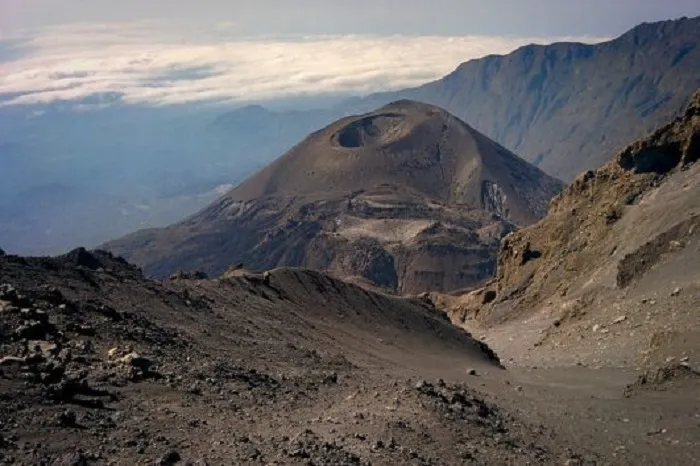
Wake at midnight (00:00), hot drink, and begin the summit push by torchlight. The exposed ridge of the volcanic crater stretches ahead — in darkness, the sensation of height is increased by the absence of visual reference beyond the torchlight. The trail is steep and loose in places but well-marked, following the outer rim of the inner crater. After approximately 3–4 hours of climbing, the dramatic summit ridge narrows to a knife-edge with the inner crater dropping sharply away to the left and the outer slopes falling steeply to the right. Careful footwork is essential. The summit — Socialist Peak (4,566m) — is reached just before or at dawn. Then: Kilimanjaro. On clear mornings, Kilimanjaro fills the entire eastern horizon — its glaciers catching the first amber light while you stand in total silence 4,566 metres above the plains below. The summit moment on Meru is, for many, the more profound of the two East African summits. Descent begins after photographs and takes the entire morning and early afternoon back to Momella Gate.
The 4-day option adds a second night at Saddle Hut (3,570m) before the summit push — providing extra acclimatisation time, an opportunity for a further acclimatisation hike on the crater rim, and better recovery from the Day 2 ascent. We recommend the 4-day option for first-time high-altitude trekkers, climbers who suffered altitude symptoms on Kilimanjaro, older trekkers, or families with children. Summit success rates on the 4-day route are marginally higher and the experience is notably less rushed. Ask us about 4-day pricing when you enquire.
No other summit trek has wildlife like Mount Meru
The lower slopes of Mount Meru pass through one of Tanzania's richest wildlife corridors — the same ecosystem as Arusha National Park. The armed ranger is not just a safety measure — encounters with Africa's megafauna on a mountain summit trail are genuinely extraordinary.
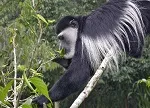
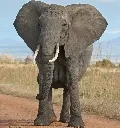
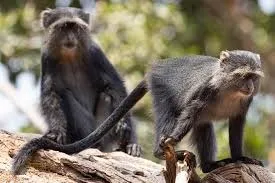
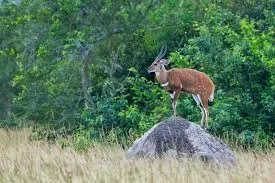
Black-and-white Colobus troops of 20–40 animals are typically encountered within the first 2 hours above Momella Gate. They often parallel the trail for long stretches — crashing through the canopy above, raining bark and leaves, and occasionally stopping to stare down at passing hikers with complete nonchalance. Your ranger will explain their ecology, diet, and territorial behaviour. For many clients, this is their most memorable wildlife encounter of the entire Tanzania trip — including the subsequent safari.
Mount Meru vs Kilimanjaro — complete comparison
The two great mountains of northern Tanzania — side by side. Understanding the differences helps you decide whether to climb one or both, and in which order.
| Comparison Factor | 🏔️ Mount Meru | ⛰️ Kilimanjaro |
|---|---|---|
| Summit altitude | 4,566m (Socialist Peak) | 5,895m (Uhuru Peak) |
| Africa rank | 5th highest | 1st highest |
| Standard duration | 3–4 days Shorter | 6–9 days |
| Trek difficulty | Moderate–Hard | Moderate–Hard (altitude) |
| Altitude sickness risk | Lower — max 4,566m | Higher — max 5,895m |
| Summit success rate | ~90% | ~65% average |
| Wildlife on trail | Extraordinary — Buffalo, giraffe, Colobus | Minimal after lower forest |
| Cost (all-inclusive) | From $620 | From $1,800 |
| Crowds | Very low — rarely busy | Busy — especially Jul–Aug |
| Technical difficulty | Exposed ridge — steep drops | Non-technical — no exposure |
| Views of Kilimanjaro | Finest available (northern face) | No views of Meru from summit |
| As Kili acclimatisation | +15–20% summit success | N/A |
| Mountain huts | All nights — no camping | Mixed (route dependent) |
| Name recognition | Low — the hidden gem | Global icon |
If you have the time and budget, the Meru → Kilimanjaro sequence is the greatest mountain experience in Africa. Meru first (3–4 days) provides acclimatisation that dramatically improves your Kilimanjaro summit chances, rewards you with the finest views of Kilimanjaro from anywhere on Earth, and is a genuinely magnificent climb in its own right — not merely preparation. Allow at least 7–10 days between the Meru summit and your Kilimanjaro start date to allow full recovery. We offer a discounted combined Meru + Kilimanjaro package — ask for details when you enquire.
Mount Meru climbing costs 2026 & 2027
A complete breakdown of every cost involved in climbing Mount Meru — from park fees to guide costs, porter fees, accommodation, and what is and isn't included in a Resilience Expedition package.
| Cost Item | Notes | Amount (USD) |
|---|---|---|
| Arusha National Park entry fee | Per person, per day (non-resident) | $50 / day |
| Arusha NP conservation fee | Per person per day — in addition to entry | $35 / day |
| Mountain hut fee | Miriakamba and Saddle Hut — per night | $35 / night |
| Armed ranger fee | Mandatory TANAPA ranger — per day | $25 / day |
| Rescue fee | Mandatory TANAPA rescue fund contribution | $20 per trek |
| Lead guide fee | TANAPA-licensed experienced guide | $30 / day |
| Assistant guide (recommended) | For groups of 3+ or beginners | $20 / day |
| Cook | Hut cooking — all meals prepared | $15 / day |
| Porters | 1 porter per person (max 15kg per porter) | $15 / porter / day |
| Transport (Arusha ↔ Momella Gate) | Private vehicle — approx 45 min each way | $80 per vehicle |
| Arusha hotel (pre/post climb) | Budget to mid-range options available | $40–150 / night |
| Tips (guide, porter, cook) | Strongly recommended — industry standard | $50–80 per trekker |
| All-inclusive Resilience Expedition 3-Day Package (solo) | From $720 / person | |
| All-inclusive Resilience Expedition 3-Day Package (group of 4) | From $620 / person | |
| All-inclusive 4-Day Package (solo) | From $890 / person | |
Our prices include: all TANAPA park fees, conservation fees, and rescue fund contribution; mountain hut accommodation (all nights); armed ranger; lead guide and assistant guide; cook; all meals from Day 1 lunch to Day 3/4 breakfast; porters (1 per person, up to 15kg); private vehicle transfers from your Arusha hotel; and Resilience Expedition 24/7 emergency support. The only things not included are: international flights, Tanzania e-visa (~$50 USD), personal travel insurance, equipment hire (sleeping bag, trekking poles — available in Arusha), and tips. No hidden fees, no surprises.
- All TANAPA park entry, conservation & rescue fees
- Mountain hut accommodation — all nights
- Armed TANAPA ranger (mandatory, for full duration)
- Lead guide (TANAPA licensed, English-speaking)
- Assistant guide (groups of 3+)
- Cook — all meals from Day 1 lunch to final breakfast
- 1 porter per trekker (max 15kg personal gear)
- Private vehicle Arusha hotel ↔ Momella Gate (both ways)
- All drinking water on mountain
- Summit certificate (Arusha National Park)
- Resilience Expedition 24/7 WhatsApp emergency support
- International flights to Tanzania (JRO or Arusha)
- Tanzania tourist e-visa (~$50 USD)
- Personal travel insurance (mandatory — must include evacuation)
- Sleeping bag rated -10°C (hire available ~$15 in Arusha)
- Trekking poles (hire available ~$5 in Arusha)
- Arusha hotel before/after climb (we can book on request)
- Tips for guide, ranger, cook, and porters
- Personal medications and first aid items
- Alcoholic beverages
Complete Mount Meru packing list
Mount Meru covers an extraordinary range of conditions — from warm grassland at 1,500m to sub-zero temperatures on the summit ridge at 4,566m. The key is layers. Click any item to check it off your list.
The Momella Gate area can be warm and sunny. Miriakamba Hut is comfortable. Saddle Hut is cold — often below freezing overnight. The summit push at midnight in the dark at 4,000m+ can involve temperatures of -5 to -15°C with wind chill. A sleeping bag rated to -10°C is non-negotiable. Many trekkers are surprised by how cold the summit night is — do not underestimate it.
🧥 Clothing — Upper Body
🥾 Clothing — Lower Body & Feet
🎿 Equipment & Gear
💊 Health, Safety & Medical
📷 Photography & Extras
📄 Documents & Money
Best time to climb Mount Meru — 2026 & 2027
Mount Meru can be climbed year-round, but two main windows offer the best summit conditions. Understanding Tanzania's seasons helps you choose the right month for your ability and priorities.
- Clear skies — Kili views almost guaranteed
- Dry trails — fastest ascent times
- Warm days at gate, cold nights at Saddle
- Low visitor numbers
- Best month for Meru + Kili combo start
- Consistently clear skies and dry trails
- Wildlife very active — forest zone superb
- Hot at gate but comfortable on summit
- Low crowds — very few teams on mountain
- Long rains begin mid-month
- Forest lush and green — beautiful but muddy
- Summit views may be obscured by cloud
- Lower prices — very few other trekkers
- Heaviest rainfall — trails very muddy
- Summit views frequently obscured
- Some camp facilities reduced
- Lowest prices but challenging conditions
- Rains ease from late May
- Forest extraordinarily lush and green
- Birding at annual peak on Meru slopes
- Conditions improving week by week
- Dry season begins — trails rapidly clearing
- Clear summit views returning
- Good wildlife activity on lower slopes
- Excellent month before safari season peak
- Finest summit views of the year
- Clear, dry, cold nights — excellent sleeping
- Wildlife extremely active on all slopes
- Book ahead — increasing demand from safari visitors
- Peak dry season — perfect photography
- Kilimanjaro summit visible almost every dawn
- Very cold summit nights — sleeping bag critical
- Slightly more trekkers — still uncrowded vs Kili
- Finest summit views — absolute clearest skies
- Excellent wildlife on all zones
- Fewer trekkers than August
- Last month of peak pricing
- Short rains begin — afternoon showers typical
- Mornings usually clear — summit views good
- Prices drop from peak — good value
- Forest zone very scenic — light dappled in mist
- Short rains — mixed conditions
- Trails passable but sometimes muddy above 3,000m
- Excellent birding throughout forest zone
- Very low trekker numbers — private mountain feel
- Rains ease from mid-December
- Conditions improving rapidly by late month
- Christmas and New Year climbs popular
- Book ahead for festive dates
- Clear skies and dry trails throughout
- Perfect for Meru → Kilimanjaro sequence
- Wildlife very active on lower slopes
- Low prices — best value of 2027
- Finest conditions of 2027
- Clear views of Kilimanjaro guaranteed on summit
- Best wildlife encounters in forest zone
- Low trekker numbers — essentially private
- Long rains return — forest zone beautiful
- Summit views can be obscured
- Lower prices begin
- Still climbable — extra waterproofs needed
- Heaviest rains of 2027
- Trails muddy above 3,000m
- Summit views very limited
- Not recommended unless flexible on summit views
- Rains ease through May
- Bird life at absolute peak on all slopes
- Trail conditions improving daily
- Good value — last low-price month
- Full dry season — excellent conditions
- Summit views crystal clear
- Wildlife active on lower forest zone
- AFCON 2027 visitors arriving — book ahead
- Peak conditions — finest of 2027
- AFCON 2027 in Tanzania — high demand
- Advance booking essential (12 months ahead)
- Combine AFCON matches with Meru trek
- Absolute finest photography conditions
- Kilimanjaro summit guaranteed at dawn
- Post-AFCON visitors extending to safari/Meru
- Book 12+ months ahead — high demand
- Absolute clearest skies of the year
- Outstanding summit and Kili views
- Slightly fewer trekkers than August
- Best value among peak months
- Short rains — mornings clear, afternoons wet
- Summit views possible with early start
- Prices drop from peak — very good value
- Forest zone beautifully lush in mist
- Short rains continue
- Forest zone extraordinary birding
- Very few trekkers — private mountain feel
- Lowest 2027 prices — excellent deals
- Rains ease mid-December
- Excellent late-December conditions
- Christmas and New Year summit experiences
- Festive premium — book ahead
What guests say about Mount Meru
"I did Meru before Kilimanjaro on our guide's recommendation and it was the best decision of the entire trip. The wildlife encounters on the Meru trail — a herd of buffalo crossing directly in front of us, the ranger guiding us patiently around them — were more dramatic than anything I saw on safari. And the view of Kilimanjaro from the summit made me cry. I cannot explain it. Just go."
"Everyone warned me Meru would feel like a consolation prize if I couldn't do Kilimanjaro. They were wrong. Meru is a more demanding, more beautiful, more exciting climb. The Colobus monkeys on the trail, the dramatic volcanic crater, the knife-edge summit ridge at midnight — Kilimanjaro doesn't have any of that. I came back and climbed Meru twice."
"I used Meru as acclimatisation for my Machame Route Kilimanjaro climb 10 days later. The difference was noticeable from day one on Kili — I had barely any altitude symptoms where my companions who hadn't done Meru struggled from Shira Camp. We both summited but I felt genuinely comfortable at altitude in a way I never have before. Resilience Expedition managed the logistics of both climbs perfectly."
Mount Meru frequently asked questions
Ready to summit Africa's hidden giant?
Send us your preferred dates and we'll build a fully personalised Mount Meru itinerary — with options for the 3-day or 4-day route, combined with Kilimanjaro, or linked to a Northern Circuit safari. No payment required to enquire, no obligation.


