📞 +255 742 119 753 ✉️ tours@resilienceexpedition.com
Certified ★ 5.0 Rating
PLAN EXPEDITION
GET A FREE QUOTE
Kilimanjaro Routes — Marangu Route — Complete Guide 2026–2027

Marangu Route
Kilimanjaro's Only
Hut-Based Summit Path The Complete 2026–2027 Guide — The "Coca-Cola Route" · Packages · Itinerary · Huts · Cost · Everything You Need to Know

The Marangu Route is Kilimanjaro's oldest, most established trail — and the only route on the entire mountain where climbers sleep in wooden A-frame huts with bunks instead of tents. Known as the "Coca-Cola Route" for its legendary hut facilities, it approaches the summit from the southeast through one of East Africa's most beautiful montane rainforests. Honest, accessible, and with the mountain's lowest entry cost — but requiring a clear understanding of its limitations before you book.

64 km total distance Only sleeping hut route 5 and 6-day itineraries Three mountain huts Packages from $1,820

In this guide

Route Overview

What Is the Marangu Route?

The Marangu Route is Kilimanjaro's oldest established trail and the only route on the mountain where climbers sleep in wooden A-frame huts rather than tents. It approaches from the southeast, beginning at Marangu Gate near the town of Marangu — approximately 45 kilometres from Moshi — and ascending through dense rainforest before emerging onto the heath and moorland zones that lead to the summit.

The route takes its nickname — the "Coca-Cola Route" — from the era when hut keepers sold soft drinks at the mountain huts, a luxury possible only because of the established infrastructure. The name has become shorthand for the route's accessibility: it is the most straightforwardly serviced and least physically demanding in terms of terrain of any major Kilimanjaro trail.

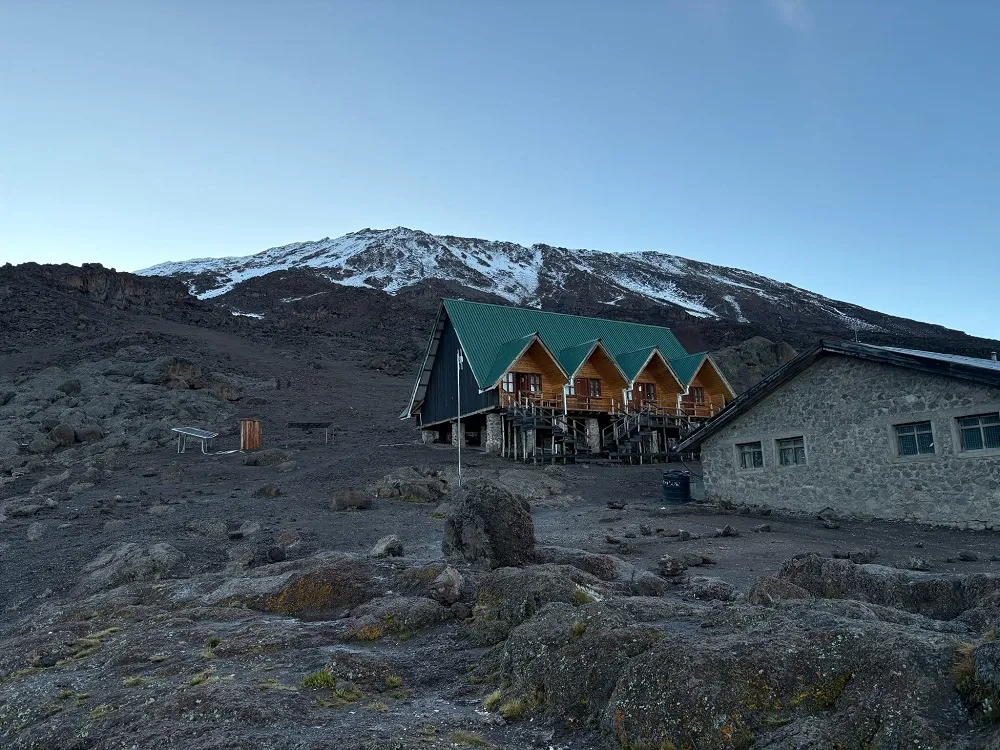
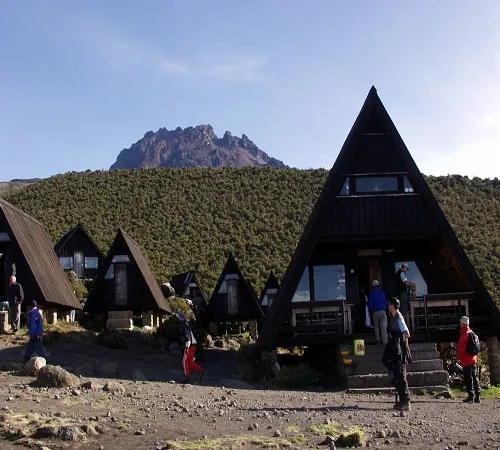
What makes Marangu genuinely unique is the hut accommodation system. Three stone and wood A-frame hut complexes — Mandara (2,700m), Horombo (3,720m), and Kibo (4,703m) — provide bunk sleeping, communal dining areas with cooking facilities, and basic toilet blocks. No other Kilimanjaro route offers any equivalent. Climbers on the 5-day itinerary also use the same path for both ascent and descent — the only out-and-back route on the mountain.

However, the Marangu Route carries the lowest summit success rate of any major Kilimanjaro route — approximately 50–60% on the 5-day version and 65–70% on the 6-day version. This is directly related to its shorter duration and the absence of acclimatization built into the itinerary structure. Understanding this reality before booking is essential — Resilience Expeditions always presents it honestly, and we strongly recommend the 6-day itinerary with its additional acclimatization day at Horombo for all climbers regardless of experience level.
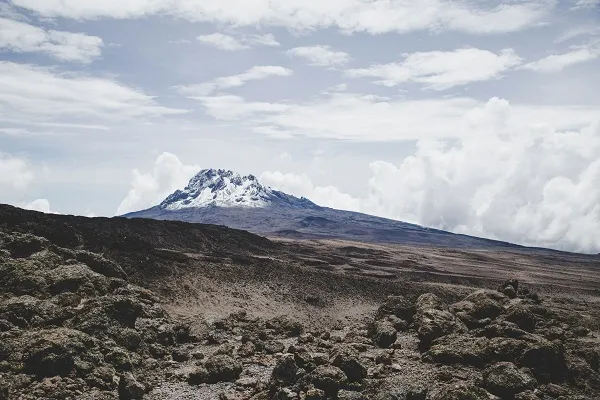
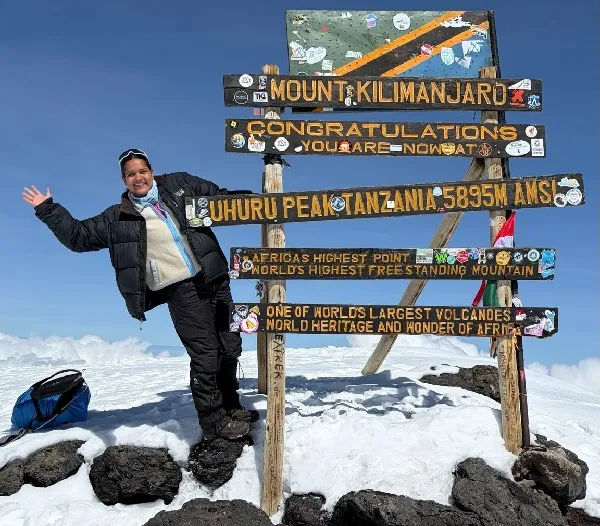
Unique to Marangu: The only Kilimanjaro route where you sleep in huts, not tents. No tent, sleeping mat, or camping equipment hire required. Communal dining areas, bunk beds, and basic toilet facilities at all three hut camps. Hut fees are included in all Resilience Expeditions Marangu packages.

Elevation Profile — Marangu Route 6-Day Itinerary (including acclimatization day)

5,895m 5,000m 4,000m 3,000m 2,000m Mandara Horombo Kibo Hut Acclimatize Uhuru Peak same path descent D1 D2 D3 D4 D5 SUMMIT D7

Choose Your Package

Marangu Route Packages & Prices — 2026–2027

Two Marangu Route packages are available from Moshi. Both are fully all-inclusive — all TANAPA park fees, hut fees, certified guide, KPAP-compliant porters, mountain cook, all meals, and Moshi hotel transfers. The 6-day itinerary is our strong recommendation for its additional acclimatization day at Horombo and meaningfully higher summit success rate. The 5-day version is available but we advise against it for most climbers.

Marangu Route 5-day Kilimanjaro — rainforest ascent through ancient montane forest on the Coca-Cola Route Experienced Climbers ~55% Success Rate Sleeping Huts
5 Days on the Mountain — 7 Days Total Trip
5-Day Marangu Route — The Coca-Cola Route Classic
From $1,820 per person · all-inclusive
Summit success rate~55%
Day 1Arrive Moshi — hotel check-in, gear check, guide briefing
Day 2Marangu Gate to Mandara Hut — through dense rainforest2,700m
Day 3Mandara Hut to Horombo Hut — moorland and heath zone3,720m
Day 4Horombo Hut to Kibo Hut — crossing the Saddle4,703m
Day 5Midnight summit — Uhuru Peak — descend to Horombo5,895m
Day 6Horombo Hut to Marangu Gate — return to Moshi
All TANAPA park fees, hut fees, and rescue fee
Certified lead guide and assistant guide
KPAP-certified porters — fair wages, 15 kg max load
Mountain cook — full board all mountain days
Hut sleeping — no tent or sleeping mat required
Pre-climb hotel accommodation (Day 1)
Moshi hotel transfers both ways
Kilimanjaro summit certificate
The honest success rate conversation

The Marangu Route has the lowest summit success rate of all major Kilimanjaro routes — approximately 55% on the 5-day version and 65–70% on the 6-day version. This is not a reflection of guide quality or operator care. It is a direct result of the route's compressed altitude profile: the 5-day version reaches Kibo Hut at 4,703m in just three days of trekking, leaving insufficient time for physiological acclimatization. We always recommend the 6-day version for this reason. If summit success rate is your primary goal, we also recommend discussing the Lemosho 8-day or Rongai 7-day routes with us before finalising your booking.

All-inclusive price transparency

Every price above includes all TANAPA park fees ($70.40/person/day), hut fees, rescue fee ($20), certified guide, assistant guide, cook, KPAP-compliant porters, all meals, hotel accommodation, and Moshi transfers. Nothing is added at checkout. Not included: international flights, Tanzania visa ($50), travel insurance, and crew gratuities.


The History Behind the Name

The "Coca-Cola Route" — What the Nickname Really Means

The Marangu Route has been called the Coca-Cola Route since at least the 1970s. The origin is literal: the hut infrastructure was sufficiently established that hut keepers could sell soft drinks — including Coca-Cola — to climbers at the mountain huts. No other Kilimanjaro route had the infrastructure to make this possible, and the name stuck as shorthand for the route's unrivalled comfort and accessibility.

Over time, the nickname acquired a second, less flattering connotation — that the Marangu Route is the "easy" route, the tourist route, the one people choose when they don't want a real challenge. This is a mischaracterisation that our guides reject firmly. Kilimanjaro at 5,895m is a serious altitude challenge on any route. The Marangu Route does not have technical terrain — no scrambling, no steep scree, no loose rock faces — but it confronts every climber with the same thinning oxygen as any other approach. The altitude does not care which path you used to reach it.

The Coca-Cola Route nickname does accurately reflect one important fact: the Marangu Route offers the most comfortable mountain experience of any Kilimanjaro trail. Sleeping in huts with bunk beds rather than tents, having communal dining areas with tables and benches, having toilet blocks at every camp — these are genuine quality-of-life advantages that matter significantly after a long day at altitude. For climbers who prioritise comfort, travelling light, or are averse to camping, the Marangu Route's hut infrastructure is a compelling reason to choose it.

"I chose Marangu because I don't camp — never have, never will. Sleeping in a real bed at Horombo at 3,720m, looking at the stars through the hut window after dinner — that was exactly what I came for. It was still hard. It was still Kilimanjaro. But I arrived rested, not exhausted from a cold night in a tent."

— Margret L., United Kingdom — Marangu Route 6-day, October 2025

The Hut Accommodation System

The Three Mountain Huts — What to Expect

The three Marangu Route hut complexes — Mandara, Horombo, and Kibo — are each a collection of A-frame wooden huts and stone buildings arranged around a central communal structure. Each has a unique character shaped by its elevation, climate zone, and the number of years it has been in operation. Here is what you will find at each.

Mandara Hut Kilimanjaro — the first mountain hut on the Marangu Route surrounded by rainforest at 2700m
2,700 m — Day 2 Camp
Mandara Hut
Capacity: 200 climbers — 60 A-frame sleeping huts
The lowest and most comfortable hut, surrounded by dense rainforest. Warm, sheltered, and with toilet blocks. A short 45-minute side walk leads to Maundi Crater, a small volcanic cone with panoramic views. Most climbers arrive early afternoon with time to rest, explore the crater, and enjoy the forest ambience before an early dinner and sleep.
Horombo Hut Kilimanjaro — the second mountain hut at 3720m with moorland landscape and Mawenzi peak behind
3,720 m — Day 3 and Day 4 Camp
Horombo Hut
Capacity: 120 climbers — the main hut complex
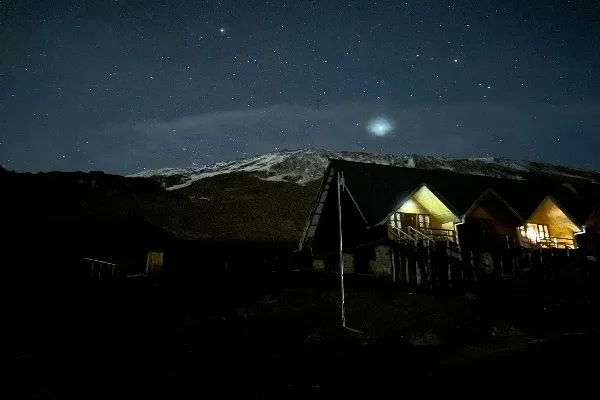
The most atmospheric hut on the route — open moorland, Mawenzi Peak rising dramatically to the east, and on clear evenings, the glaciated Kibo dome glowing above. Climbers on the 6-day itinerary spend two nights here, using the second day for the acclimatization walk to Mawenzi Tarn (4,330m). Water is available from a nearby stream. Temperature drops significantly — down to -5°C at night.
Kibo Hut Kilimanjaro — the final mountain hut at 4703m in the alpine desert before the summit push
4,703 m — Pre-Summit Camp
Kibo Hut
Capacity: 60 climbers — stone building
The spartan, wind-exposed stone building at the base of the summit cone. No comfort here — just altitude, cold, and the psychological reality of what is ahead. The hut is divided into dormitory rooms with basic bunks. Temperature can drop to -15°C or below overnight. Climbers sleep — or try to — from 19:00 before the midnight wake-up for summit night. Supplemental oxygen is available here in emergencies.
Bringing your own sleeping bag

The huts provide bunk platforms with a thin mattress and pillow. You must bring your own sleeping bag — rated to at least -10°C for Horombo and -15°C for Kibo Hut. Blankets are not provided. Sleeping bag hire is available from our Moshi equipment centre. At Mandara Hut, a lighter bag is sufficient for the rainforest elevation.


Day-by-Day Plan

Complete 6-Day Marangu Route Itinerary

The following is the complete 6-day Marangu Route itinerary as operated by Resilience Expeditions from Moshi. Day 1 is your arrival day; Days 2–7 cover the full ascent, acclimatization, summit, and descent. The 6-day version adds a full acclimatization day at Horombo on Day 4 — the single most important difference from the 5-day version.

Moshi Tanzania — arrival city for Marangu Route Kilimanjaro climb with Kilimanjaro visible on clear days
Arrival Day Moshi — 900m
Arrive Moshi — Hotel, Gear Check & Full Guide Briefing
Location: Moshi Hotel Meals: Dinner included Accommodation: Hotel room
You arrive at Kilimanjaro International Airport (JRO), 50 km from Moshi, and transfer to your hotel. Your lead guide visits in the afternoon for a complete in-person briefing covering the Marangu Route itinerary, daily schedule, hut protocols, altitude sickness recognition and response, and an equipment check. Unlike tent-based routes, you do not need to bring or hire a tent, sleeping mat, or camping equipment — only a sleeping bag, daypack, and personal kit. Confirm your sleeping bag rating with your guide tonight and hire one from our Moshi centre if needed. Early night is strongly recommended.
The Marangu Gate trailhead is approximately 45 km from Moshi — a 1-hour drive. Departure on Day 2 is typically 07:30–08:00.
Kilimanjaro rainforest zone on the Marangu Route — ancient montane forest with giant ferns and colobus monkeys
Rainforest Zone 1,860m → 2,700m
Marangu Gate to Mandara Hut — Through Africa's Oldest Rainforest
Distance: 8 km Time: 3–4 hours Gain: +840m Camp: Mandara Hut — 2,700m
After registration at Marangu Gate (1,860m), the trail enters the most biodiverse section of the entire mountain — the ancient montane rainforest. Towering African mahogany and Podocarpus trees create a cathedral canopy. Black-and-white colobus monkeys are frequently seen; blue monkeys, hornbills, and sunbirds are common companions through this zone. The trail is wide, well-maintained, and follows a gentle-to-moderate gradient. You arrive at Mandara Hut to the sight and smell of a forest camp unlike any other — a collection of Norwegian-designed A-frame huts set among giant trees. Rest in the afternoon; the Maundi Crater walk (45 minutes, highly recommended) offers a first panoramic view of the mountain and surrounding plains.
Day 2 tip: The rainforest zone receives afternoon rain on many days. Keep your rain jacket accessible at the top of your daypack and wear gaiters — the forest trail can be muddy after rain.
Marangu Route heath and moorland — approaching Horombo Hut with Mawenzi Peak and Kibo visible ahead
Heath and Moorland 2,700m → 3,720m
Mandara Hut to Horombo Hut — Two Peaks Appear
Distance: 12 km Time: 5–7 hours Gain: +1,020m Camp: Horombo Hut — 3,720m
The longest and most varied trekking day. You exit the rainforest quickly as the trail gains elevation — vegetation transitions from dense forest to moorland heath, and the landscape opens dramatically. The rocky volcanic path ascends through giant heather and Erica trees, then into open moorland where the views begin: Mawenzi Peak (5,149m) — Kilimanjaro's jagged secondary summit — rises to the northeast, and Kibo's glaciated dome appears ahead to the west. This simultaneous view of both summit cones is one of the great moments on the Marangu Route. Horombo Hut sits at 3,720m in open moorland — the most spacious and atmospheric of the three hut camps. The temperature drops sharply after sunset. Some climbers feel the first mild altitude effects tonight; tell your guide if you do.
Pace carefully on Day 3 — a gain of over 1,000 metres in one day is significant. Move slowly, drink regularly, and eat fully at the Mandara Hut lunch stop.
Acclimatization day Marangu Route — walk to Mawenzi Tarn at 4330m with dramatic Mawenzi rock towers above
Acclimatization Day 3,720m → 4,330m → 3,720m
Horombo Hut Rest Day — Acclimatization Walk to Mawenzi Tarn (6-day only)
Distance: 8 km round trip Time: 4–5 hours High point: Mawenzi Tarn — 4,330m Sleep: Return to Horombo
The most important day on the 6-day Marangu itinerary — and the day entirely absent from the 5-day version. You ascend from Horombo Hut to Mawenzi Tarn (4,330m) — a glacial tarn set beneath the dramatic Mawenzi rock towers — for lunch and a rest, then descend back to Horombo to sleep. This "walk high, sleep low" protocol directly improves your body's adaptation to altitude before the higher camps. The Mawenzi Tarn is one of the most striking destinations on the mountain: a small dark lake mirroring the jagged 5,149m volcanic rock towers above. Many climbers describe the outward walk — with Kibo summit directly ahead in the west and Mawenzi rising in the east — as the most beautiful section of the entire Marangu Route. Rest fully in the afternoon. Tonight you sleep in a real bunk. Tomorrow you go to Kibo Hut.
6-day vs 5-day: This is the day that separates the two itineraries. The 5-day version skips directly from Horombo to Kibo Hut, denying the body this critical acclimatization cycle. The data is clear: the 6-day itinerary achieves 10–15 percentage points better summit success rate.
The Kilimanjaro Saddle crossing on the Marangu Route — vast high-altitude plateau between Kibo and Mawenzi
The Saddle 3,720m → 4,703m
Horombo Hut to Kibo Hut — Crossing the Kilimanjaro Saddle
Distance: 10 km Time: 4–5 hours Gain: +983m Camp: Kibo Hut — 4,703m
You leave the relative comfort of Horombo Hut and enter the alpine desert as you cross the Kilimanjaro Saddle — the vast, lunar plateau that connects Kibo (the main summit dome) and Mawenzi (the jagged secondary peak). This crossing takes 3–4 hours across bare volcanic ground with no vegetation, strong wind exposure, and increasingly dramatic views of both peaks. Kibo Hut at 4,703m is the highest overnight stop before the summit — a stone-built dormitory building, spartan and cold. Arrive before noon. Eat a full lunch. Sleep from 19:00. This is not optional. Every hour of rest before midnight directly improves your summit chances. Pack your summit bag now: headlamp, all your warmest layers, gaiters, water, chocolate, and anything else you will need in the dark at -15°C.
Kibo Hut altitude reality: You are now at 4,703m — higher than any point in the Alps. Headache, reduced appetite, and difficulty sleeping are all common and expected. Tell your guide about any symptoms. Do not take sleeping medication — it suppresses breathing and worsens altitude effects.
Uhuru Peak Kilimanjaro at sunrise — 5895m summit of Africa on Marangu Route summit day
Summit Day 4,703m → 5,895m → 3,720m
Kibo Hut to Uhuru Peak (5,895m) to Horombo Hut — The Summit Push
Distance: 14 km total Time: 12–16 hours Ascent: +1,192m to Uhuru Descent: -2,175m to Horombo
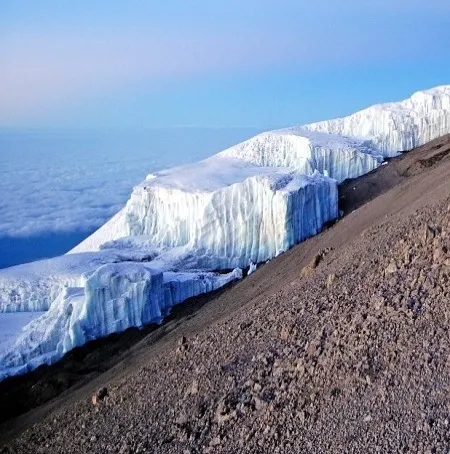
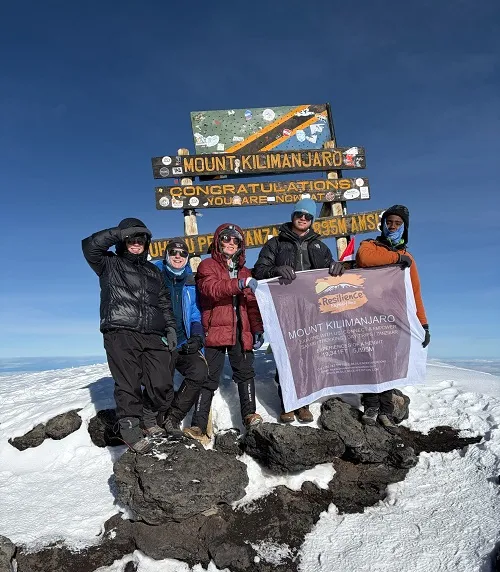
Midnight. You dress in full summit kit and begin by headlamp. The Marangu summit approach goes directly up the southeastern face — through scree and volcanic rock, past Hans Meyer Cave (5,150m), to Gillman's Point (5,681m) on the crater rim. From Gillman's Point, Uhuru Peak is another 90 minutes along the crater rim. Unlike the Rongai or Lemosho approaches, the Marangu route reaches the crater rim at Gillman's Point rather than Stella Point — and certificates are issued for both Gillman's Point and Uhuru Peak. Pole pole. Every step deliberate, every breath deep. The summit at sunrise, the crater glaciers, the endless plains below Tanzania — this is what you came for. The same path descends all the way back to Horombo Hut, arriving in the afternoon after a long and exhausting day.
Gillman's Point certificate: TANAPA awards a green certificate for reaching Uhuru Peak and a gold certificate for reaching Gillman's Point or Stella Point. Both represent genuine high-altitude achievement — Gillman's Point at 5,681m is itself higher than any peak in Europe outside the Caucasus. Never feel that Gillman's Point is a lesser summit.
Marangu Gate final descent — the end of the Marangu Route through rainforest, certificate ceremony and return to Moshi
Final Descent 3,720m → 1,860m
Horombo Hut to Marangu Gate — Return Through the Forest, Certificate Ceremony
Distance: 20 km Time: 5–7 hours Descent: -1,860m End: Marangu Gate — 1,860m
The final morning descends the same path you climbed — first through the moorland, then back into the forest, the temperature rising and the air thickening with oxygen as you lose altitude. The descent through the rainforest on Day 7 feels different from the ascent: lusher, greener, and profoundly welcoming after the cold and altitude of the upper mountain. At Marangu Gate, TANAPA rangers issue your summit certificate. The porter tip ceremony takes place here — the moment to express genuine gratitude to the team who carried your equipment and cooked your meals: lead guide $25–$30/day, assistant guide $18–$22/day, porters $10–$15/day, cook $15–$18/day. Your vehicle returns you to Moshi.

Complete Reference

Marangu Route Huts — Elevations, Distances & Facilities

The complete reference for all stops on the Marangu Route — hut elevations, distances, trekking times, and what facilities are available at each location. All data verified by our Moshi guide team.

DayLocationElevationDistance from PreviousTrekking TimeFacilities
Day 1Moshi Hotel~900mHotel room, restaurant, equipment hire
Day 2Marangu Gate (start)1,860mGate registration, toilets, TANAPA office
Day 2Mandara Hut2,700m8 km3–4 hrsA-frame huts, communal dining, flush toilets, solar charging, stream water, basic medical kit
Day 3Horombo Hut3,720m12 km5–7 hrsA-frame huts, communal dining, toilets, water, ranger station, first aid
Day 4Mawenzi Tarn (acclimatization)4,330m4 km2–2.5 hrsNo overnight accommodation — day walk from Horombo only
Day 4Return to Horombo Hut3,720m4 km1.5–2 hrsSame as Day 3
Day 5Kibo Hut4,703m10 km4–5 hrsStone dormitory, basic bunks, toilets, ranger station, emergency oxygen, no running water
Day 6Gillman's Point (crater rim)5,681m4 km4–6 hrsTANAPA certificate (Gillman's Point), descent waypoint
Day 6Uhuru Peak — SUMMIT5,895m1.5 km from Gillman's45–90 minSummit sign, TANAPA green certificate
Day 6Horombo Hut (descent)3,720m14 km5–7 hrsSame as Day 3
Day 7Marangu Gate → Moshi1,860m20 km5–7 hrsGate, certificate issue, vehicle return

Honest Summit Data

Marangu Route Summit Success Rates — The Complete Picture

The Marangu Route has the lowest summit success rate of any standard Kilimanjaro route. This is not a criticism of the route or of operators who offer it — it is a factual consequence of the itinerary structure. Understanding this data is essential for making an informed booking decision.

Marangu Route 5-day Kilimanjaro — summit success rate approximately 55 percent
5-Day Marangu
~55%
The standard itinerary reaches Kibo Hut in 3 trekking days with no dedicated acclimatization. Suitable only for experienced trekkers with documented prior high-altitude acclimatization. Not recommended by Resilience Expeditions as a first Kilimanjaro climb.
Not recommended for most climbers
Marangu Route 6-day Kilimanjaro — summit approach with acclimatization day at Horombo
6-Day Marangu
65–70%
The additional Horombo acclimatization day with the Mawenzi Tarn walk improves success rate by 10–15 percentage points. This is the version Resilience Expeditions recommends for all Marangu climbers.
Our recommendation
Lemosho Route 8-day compared to Marangu — higher success rate alternative
Lemosho 8-day (for comparison)
90%+
Shown for honest comparison. If summit success rate is your primary priority, the Lemosho 8-day itinerary achieves over 90% with Resilience Expeditions — at a higher cost of $2,380.
Why is the success rate lower on Marangu?

The Marangu Route's lower success rate has nothing to do with terrain difficulty or route quality. It is caused by one thing: compressed altitude gain with insufficient acclimatization time. The 5-day version gains 2,843m in 4 days. The 8-day Lemosho gains the same altitude over 7 days with two dedicated acclimatization cycles. Human bodies adapt to altitude slowly — the physiology does not change based on route name or itinerary preference. More days at altitude equals a better-adapted body equals a higher summit rate. This is the complete explanation.


How It Compares

Marangu vs Other Kilimanjaro Routes

The Marangu Route's complete comparison against all other major Kilimanjaro routes — presented honestly with no flattering omissions.

RouteDaysAccommodationSuccess RateCrowdsSceneryFrom
MaranguThis route 5–6 Sleeping Huts — unique 55–70% Very High Good — rainforest $1,820
Lemosho 6–8 Tents 90%+ (8-day) Low–Medium Exceptional $1,840
Machame 6–7 Tents 85% (7-day) Very High Excellent $1,950
Rongai 6–7 Tents 85% (7-day) Low Very Good $2,050
Northern Circuit 8–10 Tents 95%+ (10-day) Very Low Exceptional $2,800
Umbwe 5–6 Tents 70% (6-day) Very Low Good $1,820
Who should choose Marangu?

Choose Marangu if: You do not camp and the hut accommodation is essential to your decision. You have prior altitude experience above 4,000m and understand the compressed itinerary. You are travelling on the most limited budget available. You prefer the most established and serviced trail on the mountain. Do not choose Marangu if: Summit success rate is your primary criterion — choose Lemosho 8-day instead. You are a first-time high-altitude climber without prior 4,000m+ experience — the 6-day version mitigates this, but the Lemosho or Rongai acclimatization profiles remain superior.


Transparent Pricing

Marangu Route Cost Breakdown — Every Component Explained

The Marangu Route is the most affordable major Kilimanjaro route primarily because TANAPA's hut fees replace the more expensive private camping equipment hire. However, the park fees themselves are identical to all other routes. Below is the complete itemised breakdown.

Cost Component5-Day Marangu6-Day Marangu
TANAPA park fees ($70.40/person/day)$352$422
TANAPA hut fees (included in our price)$140$165
KINAPA rescue fee$20$20
Lead guide + assistant guide wages$175$210
KPAP-certified porters (ratio 2:1)$150$180
Mountain cook$75$90
All meals on mountain$125$150
Pre-climb hotel accommodation$80$80
Vehicle transfers (Moshi–Gate–Moshi)$50$50
Operator margin$653$633
Total — Resilience Expeditions price$1,820$2,000
The hut cost advantage

The Marangu Route's lower price compared to Lemosho or Machame is real, but the reason is specific: hut accommodation eliminates the need for private camping equipment — tents, sleeping mats, and cooking equipment are not required. This saving is partially offset by the TANAPA hut fees. The net result is a meaningful but not dramatic saving versus comparable tent-based routes. As with all Kilimanjaro routes, the primary cost variables are park fee days and crew wages — and crew wages are where ethical operators like Resilience Expeditions invest rather than cut.


Physical Preparation

Difficulty & Fitness Requirements

The Marangu Route terrain is rated Moderate — it has the least technically demanding trail of any major Kilimanjaro route. The path is wide, well-maintained, and follows gradients that are genuinely more gradual than Machame, Lemosho, or Umbwe. There is no scrambling, no hands-on-rock sections, and no steep sustained scree on the ascent until the final push above Kibo Hut.

However: altitude is not terrain. The summit push above Kibo Hut involves sustained ascent through deep volcanic scree and loose rock at elevations above 4,700m where oxygen partial pressure is approximately 52% of sea-level values. This section is physically demanding regardless of the route used to reach Kibo Hut — and the compressed Marangu itinerary means climbers face it with less time for acclimatization than on any other route.

Baseline fitness requirement: You should be able to complete a continuous 5–6 hour hill walk with 600m of elevation gain carrying a 4 kg daypack and feel tired but functional at the end. The Day 3 ascent from Mandara (2,700m) to Horombo (3,720m) — 12 km with 1,020m of gain — is the most demanding day on the Marangu Route in terms of both distance and elevation. Being fit enough to complete this day comfortably is the best single predictor of your Marangu success.

Recommended training (10–14 weeks): Three to four aerobic sessions per week building from 30 minutes to 50 minutes. A weekly long hike starting at 3 hours and increasing to 6 hours over the training period. Introduce a loaded daypack (4–5 kg) from Week 5. Complete at least one hill day of 6+ hours before travel. Prioritise cardiovascular endurance — not strength or speed.


What to Bring

Marangu Route Packing List 2026 — Hut-Specific Edition

Packing for the Marangu Route is significantly lighter than tent-based routes because the huts provide accommodation, communal dining facilities, and sleeping platforms. Items marked Not Needed are genuinely not required — bringing them adds unnecessary weight. Essential items are non-negotiable regardless of the hut accommodation.

Sleeping — Hut-Specific
Huts provide bunk platform and pillow — bring only your sleeping bag
Sleeping bag — rated to -15°C minimum for Kibo Hut (Essential)
Sleeping bag liner — adds 3–5°C warmth and keeps the bag cleaner (Strongly recommended)
Tent — not required at any point on Marangu (Not needed)
Sleeping mat or inflatable pad — huts provide bunk platforms (Not needed)
Camping cooking equipment — huts have dining areas (Not needed)
Insulation and Warmth
Summit night temperatures reach -15°C to -25°C at the top
Down jacket — 600-fill minimum, rated to -20°C (Essential)
Thermal base layers, top and bottom — merino wool preferred (Essential)
Fleece mid-layer jacket (Essential)
Waterproof hardshell jacket (Essential)
Waterproof shell trousers (Essential)
Summit gloves — insulated waterproof pair (Essential)
Wool hat and balaclava (Essential)
Lightweight trekking trousers for lower zones
Wool trekking socks — 4 pairs minimum
Footwear
Broken-in boots before Tanzania — blisters at altitude are serious
Waterproof mountain boots — ankle support, completely broken-in (Essential)
Gaiters — scree on the Kibo Hut summit push is severe (Essential)
Sandals or lightweight shoes — for comfort inside the huts in evenings
Trekking poles — two poles strongly recommended for the Day 3 ascent and all descents
Hydration and Nutrition
Dehydration accelerates altitude sickness — 3–4 litres per day
Water bottles — two 1-litre insulated bottles (Essential)
Water purification tablets or Steripen (Essential)
Energy snacks — bars, chocolate, nuts — 1,000+ kcal per trekking day
Electrolyte tablets — important for hydration above 3,000m
Health and Safety
Medical preparation before flying is critical
Diamox (acetazolamide) 125mg twice daily — prescribed by your doctor (Essential)
Ibuprofen and paracetamol — altitude headache management (Essential)
Travel insurance — must include mountain rescue and evacuation (Essential)
Blister plasters and moleskin — apply on Day 2 at first hot-spot
Sunscreen SPF 50+ and lip balm with SPF — UV exposure increases at altitude
Antibacterial hand gel
Bags and Technology
Porter bag maximum 15 kg — lighter than tent-based routes
Duffel bag — porter bag, maximum 15 kg (Essential)
Daypack — 20–25 litres, for your personal daily carry (Essential)
Headlamp with fresh batteries — summit starts at midnight (Essential)
Power bank — limited or no charging at Kibo Hut
Sunglasses — UV400 glacier-rated for summit day
Camera or smartphone — keep in inner pocket above 4,000m

Safety and Medical

Altitude Sickness on Marangu — What You Must Know

Altitude sickness is a greater risk on the Marangu Route than on any other standard Kilimanjaro itinerary — specifically because the compressed timeline gives the body less time to adapt before reaching the highest camps. The 6-day itinerary with its Horombo acclimatization day mitigates this meaningfully, but does not eliminate it. Understanding AMS before you begin is not optional on Marangu — it is essential.

Marangu Route Horombo Hut — mild altitude sickness symptoms at 3720m overnight camp
Mild AMS — Common Above 3,500m
Expected at this altitude. Always tell your guide.
Headache on arriving at Horombo or Kibo Hut
Fatigue beyond normal trekking tiredness
Reduced appetite or mild nausea
Difficulty sleeping at Horombo or Kibo Hut
Dizziness when standing quickly
Mild shortness of breath at rest in the hut
Response: Rest. Hydrate. Ibuprofen or paracetamol for headache. Tell your guide. Do not ascend while symptoms persist. Most mild AMS resolves in 4–12 hours at the same elevation. The hut environment makes rest easier than a tent.
Kilimanjaro emergency descent — severe altitude sickness requires immediate action and descent
Severe AMS — Medical Emergency
Descend immediately. Huts make this faster on Marangu.
Severe headache unresponsive to rest and medication
Vomiting — not just nausea
Inability to walk a straight line — stumbling
Confusion or disorientation
Gurgling or wet breathing sounds (HAPE)
Blue lips or fingernails at any elevation
Response: DESCEND IMMEDIATELY. On Marangu, descent is rapid — the same path back to lower huts is well-maintained and faster in descent than any cross-mountain route. Your guide makes the call to descend and their decision is final. Kibo Hut has emergency oxygen available.
Diamox is strongly recommended on Marangu

Given the Marangu Route's compressed altitude profile, Diamox (acetazolamide) is more important on Marangu than on longer routes. We recommend 125mg twice daily starting the day before the climb begins. The medication stimulates faster breathing, increases blood oxygen saturation, and meaningfully reduces AMS risk during rapid altitude gain. Discuss with your doctor at least 3 weeks before travel. Do not use if allergic to sulphonamides. Resilience Expeditions guides carry supplemental oxygen at Kibo Hut and on all summit days.


When to Climb

Best Time to Climb the Marangu Route — 2026–2027

The Marangu Route is seasonally affected by the same weather patterns as all southern and eastern Kilimanjaro approaches. The route's popularity means it can be busy year-round, though the shoulder months of January–March offer both good conditions and significantly lower crowds.

JanExcellentDry, clear, quieter prices.
FebExcellentBest dry season value.
MarGoodRains begin late month.
AprAvoidLong rains — muddy forest.
MayAvoidHeaviest rains.
JunGoodDrying. Good value.
JulPeakBest weather — busy.
AugPeakBusiest month on route.
SepExcellentDry — quieter than Aug.
OctVery GoodShort rains approaching.
NovRainsShort rains. Muddy forest.
DecGoodDrying out, festive rates.
Marangu-specific crowd note

The Marangu Route is the busiest Kilimanjaro trail in July–August — huts at Horombo and Mandara can reach capacity, leading to crowded sleeping quarters and communal areas. January, February, and September offer excellent weather with a fraction of the peak-season crowds, shorter hut queues, and more tranquil conditions in the forest. If you are choosing Marangu partly for the hut experience, these months maximise what the huts offer. Avoid July and August if solitude is a priority.


Every Question Answered

Marangu Route — Frequently Asked Questions

  • The Marangu Route earned the "Coca-Cola Route" nickname because its established hut infrastructure allowed hut keepers to sell soft drinks — including Coca-Cola — at the mountain huts. No other route had the infrastructure to make this possible. The name has become synonymous with the route's unrivalled comfort and accessibility, but it does not mean the route is easy. Kilimanjaro's altitude challenges every climber equally regardless of path taken. The name accurately describes the facilities, not the difficulty.
  • Three things make the Marangu Route genuinely unique: (1) It is the only Kilimanjaro route with sleeping huts. All other routes use tents. Marangu climbers sleep in A-frame wooden hut bunks at Mandara (2,700m), Horombo (3,720m), and Kibo (4,703m). No tent or sleeping mat is required. (2) It is the only out-and-back route — both ascent and descent use the same path. All other routes use separate ascent and descent trails. (3) It is the lowest-cost route for a given duration — the hut infrastructure replaces expensive private camping equipment without fully adding equivalent costs. These three factors make it the most accessible entry point to Kilimanjaro climbing.
  • Resilience Expeditions Marangu Route packages: 5-day from $1,820 per person and 6-day from $2,000 per person — fully all-inclusive of all TANAPA park fees, hut fees, rescue fee, certified guide, assistant guide, mountain cook, KPAP-compliant porters, all meals on the mountain, pre-climb hotel accommodation, and Moshi hotel transfers both ways. Not included: international flights, Tanzania visa ($50 USD), travel insurance, and crew gratuities. Prices are based on a group of two; solo supplements apply.
  • Yes — a sleeping bag is essential on the Marangu Route despite the hut accommodation. The huts provide a bunk platform and pillow, but no blankets or bedding. You must bring a sleeping bag rated to at least -10°C for Horombo Hut and -15°C for Kibo Hut. A sleeping bag liner is also strongly recommended as it adds warmth and keeps the bag cleaner through repeated use. Sleeping bag hire is available from our Moshi equipment centre — request a hire list when you enquire. What you do not need: tent, sleeping mat, camping stove, cooking equipment, or any other camping gear.
  • The Marangu Route's lower success rate (~55% on 5-day, ~65–70% on 6-day) has one cause: compressed altitude gain with insufficient acclimatization time. The 5-day version reaches Kibo Hut at 4,703m in just 3 trekking days. The body's physiological adaptation to altitude — increasing red blood cell production, deeper breathing reflex, cardiovascular adjustment — takes 5–10 days at a given altitude to complete. The Marangu itinerary reaches the highest camps before these adaptations are meaningfully underway. This is also why the 6-day version with its Horombo acclimatization day performs notably better. The route itself is not the problem — the available number of days is.
  • The Marangu Route's terrain is genuinely accessible for first-time trekkers — the trail is well-maintained with no technical sections. However, its compressed altitude profile makes it challenging for first-time high-altitude climbers. For a beginner's first Kilimanjaro climb, we recommend the 6-day Marangu (not the 5-day) or the Rongai 7-day or Lemosho 8-day if summit success rate is a priority. If the hut accommodation is the deciding factor — if you do not camp and want huts — then the 6-day Marangu is the correct choice, chosen with clear understanding of its lower success rate compared to longer tent-based routes.
  • The difference is one day spent at Horombo Hut (3,720m) for acclimatization. On the 5-day itinerary: Day 3 is Mandara to Horombo; Day 4 is Horombo directly to Kibo Hut; Day 5 is summit and descent. On the 6-day itinerary: Day 4 is an extra acclimatization day at Horombo — a guided walk to Mawenzi Tarn (4,330m) and back — with a second night at Horombo before continuing to Kibo Hut. This single additional day meaningfully improves summit success rates by 10–15 percentage points and costs $180 more. We recommend the 6-day version for all climbers regardless of experience level.
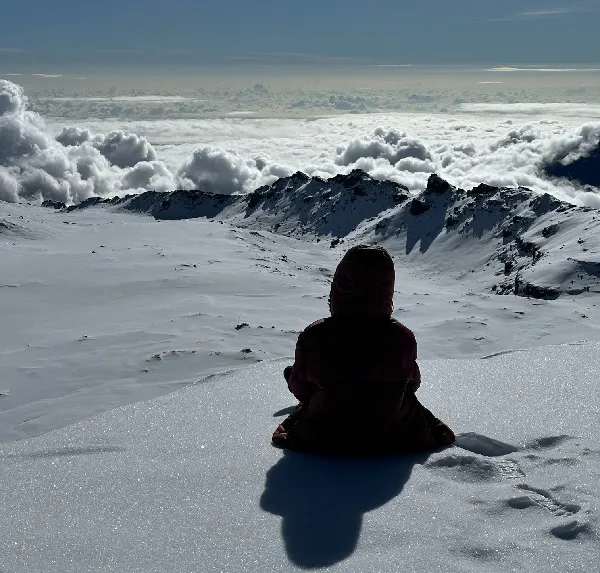
  • Yes — the Marangu Route is particularly well-suited for combination trips because of its shorter total duration. The standard combination sequence is: 6-day Marangu climb (8 days total) — 1–2 days recovery in Moshi — 5–7 day northern circuit safari (Serengeti, Ngorongoro, Tarangire) — optional Zanzibar extension. A complete Tanzania experience of this type takes 16–22 days depending on the safari length. Resilience Expeditions offers combined Marangu and safari packages at a discount versus separate bookings. The shorter Marangu commitment allows a more balanced itinerary for travelers combining both mountain and wildlife experiences in one trip.
  • TANAPA (Tanzania National Parks Authority) issues official certificates at Marangu Gate upon descent: a green certificate for reaching Uhuru Peak (5,895m — the true summit) and a gold certificate for reaching Gillman's Point (5,681m — the crater rim point first reached on the Marangu summit approach) or Stella Point (5,739m on other routes). Both certificates are official TANAPA documents and represent genuine high-altitude achievements. Gillman's Point at 5,681m is itself higher than any mountain in Europe outside the Caucasus range — reaching it is a significant mountaineering accomplishment regardless of the Uhuru distance.
Marangu Route — hut route from $1,820 all-inclusive Get your free quote today