
What Is the Northern Circuit?
The Northern Circuit is one of seven primary routes used to climb Mount Kilimanjaro, Africa's highest peak at 5,895 metres. It shares its start with the Lemosho Route — beginning at Londorossi Gate and the Lemosho Glades trailhead on the mountain's quiet western side — but instead of cutting south to Barranco after crossing the Shira Plateau, it continues clockwise around the mountain's remote northern slopes, facing Kenya, before curving back to approach the summit from the northeast.
It is Kilimanjaro's newest official route, only opened to climbers in the early 2010s, and by far its longest — approximately 98 kilometres of trekking over 8, 9, or 10 days. Because it takes longer and costs more than Machame or Marangu, relatively few climbers choose it, which makes it, alongside Umbwe, the quietest route on the mountain — but for a completely different reason: gentle, well-graded trails rather than a steep, direct climb.
The extra distance is spent almost entirely on acclimatization: more nights at altitude, more gradual elevation gain, and a genuinely restful pace before the final summit push from School Hut on the mountain's northeast side. It is a camping-only route and descends via the Mweka Route on the southeast face, the same descent used by Lemosho, Machame, and Umbwe.
It is widely regarded by experienced guides as the single best route for maximising your chance of reaching Uhuru Peak — the trade-off being the extra days and cost required to achieve that success rate.
Why Choose the Northern Circuit?
There are seven primary routes up Kilimanjaro. The Northern Circuit is the one we recommend when success rate matters more than anything else — here is why:
1. The highest summit success rate on the mountain. More days at altitude means more time for your body to acclimatize before the summit push. The Northern Circuit's 9 or 10-day profile consistently outperforms every other route, including the 8-day Lemosho, on pure success-rate data.
2. Total solitude, the entire way. Where Umbwe achieves quiet through a steep, fast climb, the Northern Circuit achieves it through sheer distance from the popular trailheads. You will see other groups on the Shira Plateau in the first few days, then almost nobody at all as you circle the mountain's northern slopes toward Kenya.
3. Views no other route offers. The northern traverse looks out over Kenya's Amboseli plains, a genuinely different perspective on the mountain than any southern-approach route provides, plus a full circumnavigation of Kibo's upper cone.
4. A gentler daily pace. Despite covering the most total distance, the Northern Circuit's days are individually less strenuous than Umbwe's or even Machame's steepest sections, because the extra time is used to spread the climbing out rather than compress it.
5. The best choice for a "bucket list" climb. If Kilimanjaro is a once-in-a-lifetime trip and you want to give yourself the best possible chance of reaching Uhuru Peak while seeing the most of the mountain, the Northern Circuit is very hard to beat.
Our senior guides' recommendation: if budget and time allow, the Northern Circuit is the single best route on the mountain for success rate and solitude combined. It costs more and takes longer than any other option, and that is precisely the trade-off — more days at altitude, translated directly into a higher chance of standing on the roof of Africa.
Kilimanjaro's 5 Climate Zones — Northern Circuit
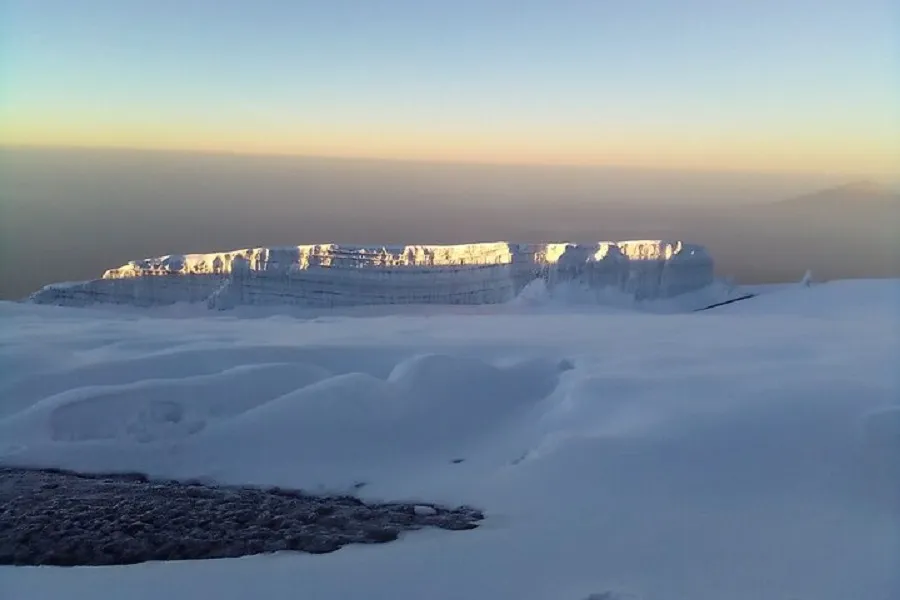
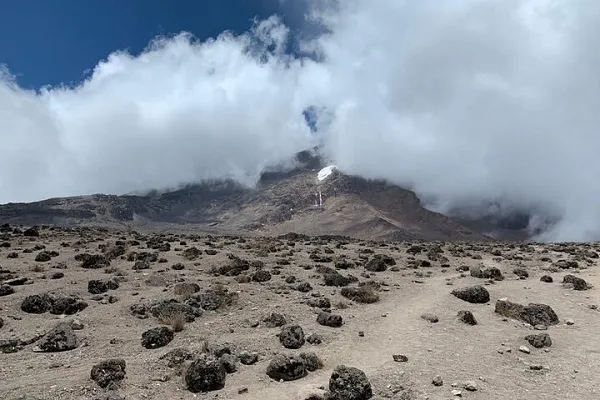
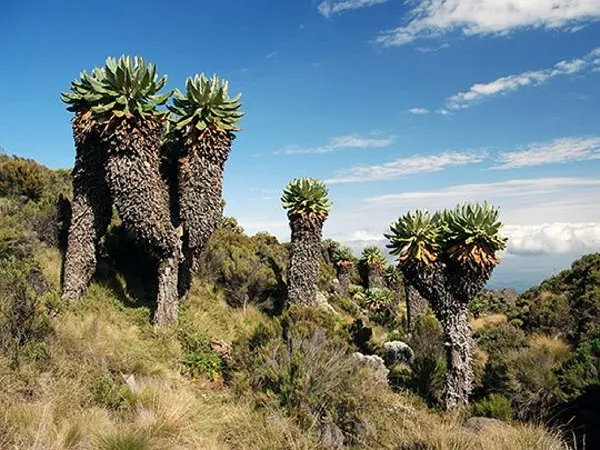
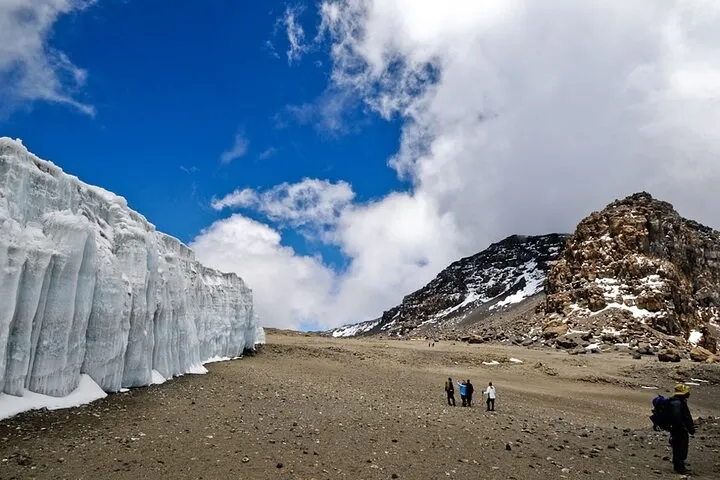
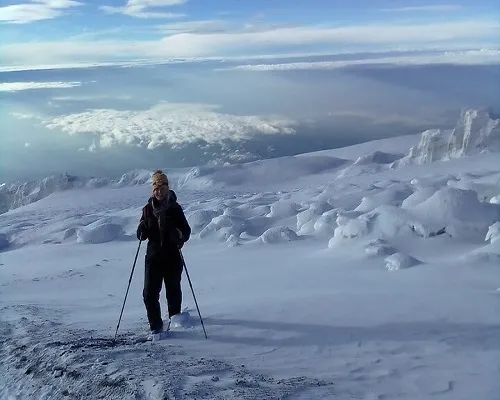
Like Lemosho, the Northern Circuit passes through all five of Kilimanjaro's distinct ecological zones — but spends far longer in the upper zones, circling the alpine desert on the mountain's northern side before the final summit approach.
Northern Circuit Packages & Pricing
The Northern Circuit is offered in three durations, each adding further acclimatization time. Every package is fully inclusive of park fees, guide, cook, porters, camping equipment, meals on the mountain, and transfers from Moshi.
Fastest option
8-Day Northern Circuit
Lemosho Gate → Mti Mkubwa → Shira Camp → Moir Hut → Buffalo Camp → School Hut → Uhuru Peak → Mweka. A compressed version of the full circuit — still one of the mountain's highest success rates, with the Third Cave night combined into a longer traverse day.
Recommended
9-Day Northern Circuit
Lemosho Gate → Mti Mkubwa → Shira 1 → Shira 2 → Moir Hut → Buffalo Camp → Third Cave → School Hut → Uhuru Peak → Mweka. The complete circuit with every camp included — our recommended climb for the highest realistic success rate.
 Maximum success rate
10-Day Northern Circuit
The full 9-day circuit plus one additional rest day at Third Cave Camp — the single most acclimatized itinerary offered on Kilimanjaro. Ideal for climbers who want to remove as much uncertainty as possible, or who are combining the climb with a milestone occasion.
Northern Circuit — Complete 9-Day Itinerary
The following is the complete 9-day Northern Circuit itinerary as operated by Resilience Expeditions from Moshi. Day 1 is your arrival day in Moshi; Days 2–10 cover the full climb and descent. All distances and elevations are verified field measurements from our guide team.
All Northern Circuit Camps & Elevations
The complete camp-by-camp reference for the 9-day Northern Circuit — including elevation, distance from previous camp, hiking time, and available facilities at each camp.
| Day | Camp | Elevation | Distance | Time | Facilities |
|---|---|---|---|---|---|
| Day 1 | Moshi Hotel | ~900m | — | — | Hotel room, restaurant |
| Day 2 | Mti Mkubwa (Big Tree Camp) | 2,820m | 6 km | 3–4 hrs | Tented camp, long-drop toilets |
| Day 3 | Shira 1 Camp | 3,500m | 8 km | 5–6 hrs | Tented camp, chemical toilets |
| Day 4 | Shira 2 Camp | 3,850m | 9 km | 5–6 hrs | Tented camp, chemical toilets, ranger huts |
| Day 5 | Moir Hut | 4,200m | 12 km | 6–7 hrs | Small tented camp, very quiet, basic toilets |
| Day 6 | Buffalo Camp (Pofu) | 4,020m | 12 km | 6–7 hrs | Small tented camp, remote, basic toilets |
| Day 7 | Third Cave Camp | 3,960m | 10 km | 5–6 hrs | Small tented camp, sheltered, basic toilets |
| Day 8 | School Hut | 4,750m | 8 km | 5–6 hrs | Tented camp, ranger post, basic toilets |
| Day 9 | Uhuru Peak — SUMMIT | 5,895m | 6 km up | 5–6 hrs up | Summit sign, certificate |
| Day 9 | Mweka Camp | 3,100m | 9 km down | 5–6 hrs down | Tented camp, toilets |
| Day 10 | Mweka Gate → Moshi | 1,630m | 9 km | 3–4 hrs | Gate, certificate issue, vehicle return |
Northern Circuit Summit Success Rates — 2026
The Northern Circuit achieves the highest summit success rate of any standard Kilimanjaro itinerary, for the simple reason that it spends more days at altitude than any other route before the summit push. Here is what the data shows across the available durations.
These are the highest figures of any route on the mountain — and, refreshingly, the numbers most operators quote for this route tend to be genuinely accurate, since the Northern Circuit's clientele skews toward well-prepared, well-informed climbers. Resilience Expeditions achieved a 96% Uhuru Peak success rate on the Northern Circuit in 2025 — we publish this figure because we track every climb. If you want the single highest realistic chance of reaching Uhuru Peak, and can accommodate the extra days and cost, this is the route.
Northern Circuit vs Other Kilimanjaro Routes
How does the Northern Circuit compare to the other six major Kilimanjaro routes? Here is the honest comparison across every meaningful factor.
| Route | Days | Distance | Success Rate | Crowds | Scenery | Price from |
|---|---|---|---|---|---|---|
Northern Circuit ← This route |
8–10 | 98 km | 95%+ (9-day) | Very Low | ★★★★★ | $2,800 |
Lemosho |
6–8 | 70 km | 90%+ (8-day) | Low | ★★★★★ | $1,840 |
Machame |
6–7 | 62 km | 85%+ (7-day) | High | ★★★★ | $1,750 |
Marangu |
5–6 | 64 km | 65% (5-day) | Very High | ★★★ | $1,820 |
Rongai |
6–7 | 65 km | 80% (7-day) | Low–Medium | ★★★★ | $2,050 |
Umbwe |
5–6 | 53 km | 70–75% (6-day) | Very Low | ★★★ | $1,820 |
Climbers who want the single best chance of summiting, and can accommodate the time and cost: 9-day Northern Circuit. First-time climbers with a tighter budget: 8-day Lemosho. Best combination of value and success rate: 7-day Machame. Experienced climbers wanting solitude on a shorter, steeper route: 6-day Umbwe. Anyone wanting hut accommodation instead of tents: Marangu.
Northern Circuit Cost 2026–2027 — Every Item Explained
The Northern Circuit is Kilimanjaro's most expensive standard route, for one honest reason: more park-fee days and more crew days than any other itinerary. Here is every cost itemised, so you can compare quotes from any operator with complete clarity.
| Cost Item | 8-Day Northern Circuit | 9-Day (recommended) | 10-Day |
|---|---|---|---|
| TANAPA park fees ($70.40/day/person) | $563 | $634 | $704 |
| KINAPA rescue fee | $20 | $20 | $20 |
| Guide, cook & porters | $650 | $740 | $830 |
| Camping equipment | $180 | $205 | $230 |
| All meals on mountain | $230 | $260 | $290 |
| Pre/post-climb accommodation Moshi | $120 | $120 | $140 |
| Airport/hotel transfers | $60 | $60 | $60 |
| Operator margin | $977 | $1,111 | $1,226 |
| TOTAL (Resilience Expeditions) | $2,800 | $3,150 | $3,500 |
Kilimanjaro quotes vary by up to 80% for the same route. The differences are almost entirely in guide quality and crew wages, not in park fees or equipment. Low-cost operators pay guides $8–$12/day and porters $5–$8/day — below subsistence level for the weight they carry over nine days of remote trekking. Resilience Expeditions pays guides $25–$40/day and porters $15–$18/day, plus tips. Because the Northern Circuit involves so many crew-days, wage differences compound more here than on any other route — this is the route where checking crew wages before booking matters most.
Difficulty & Fitness Requirements
The Northern Circuit is rated Moderate — individually, its days are gentler than Machame's or Umbwe's steepest sections, because the extra length is used to spread the climbing out rather than compress it. It requires no technical mountaineering skills — no ropes, harnesses, or prior climbing experience needed.
The primary challenge is endurance and time rather than gradient or altitude shock. Mount Kilimanjaro's summit at 5,895m is significantly higher than any point in Europe or North America outside of the highest Alaskan peaks, and while the Northern Circuit's pacing minimizes altitude shock better than any other route, nine consecutive days of trekking still demands sustained stamina.
What fitness level is required? You should be able to hike for 5–7 hours continuously on varied terrain, day after day, carrying a daypack of 4–6 kg, with good cardiovascular fitness and solid overall endurance. The individual days are less physically punishing than the steepest days on Machame or Umbwe, but the cumulative fatigue over nine days is real.
Training recommendation: Begin 12–16 weeks before your climb. Build toward consecutive multi-day hiking rather than single long days — two or three back-to-back hiking days in the final two months will prepare you better for the Northern Circuit's cumulative demands than one very long training hike.
A useful self-assessment: Can you hike for 5-6 hours on consecutive days without your body breaking down? If yes, you have the physical baseline for the Northern Circuit — the route is forgiving of moderate single-day fitness but rewards genuine stamina across a full week. If you're building toward this, focus your training on back-to-back hiking days rather than one big effort.
Northern Circuit Route — Complete Packing List
Every item below has been vetted by our summit guides through hundreds of Northern Circuit climbs. Items marked as Essential are non-negotiable for your safety and summit success. Everything else is strongly recommended but flexible.
Resilience Expeditions has a full equipment rental service in Moshi — sleeping bags, trekking poles, gaiters, summit gloves, crampons, and more. Ask about rental when you enquire to significantly reduce your gear purchase costs. We recommend buying your own broken-in boots; everything else can be rented from us.
Altitude Sickness — What You Must Know
Altitude sickness (AMS — Acute Mountain Sickness) is the primary safety risk on Kilimanjaro. Understanding it is essential — not because you will necessarily experience it, but because recognizing its symptoms in yourself or a fellow climber could be a life-or-death distinction at extreme altitude.
AMS is not a sign of weakness. It is a physiological response to reduced oxygen pressure at altitude and can affect any person regardless of fitness, age, or experience. An Olympic-level athlete is no less susceptible than a first-time trekker. Fitness helps you hike; acclimatization protects you at altitude. These are different things.
Diamox is a prescription medication that aids acclimatization by stimulating faster breathing, increasing blood oxygen levels. Many climbers take it prophylactically (125mg twice daily from Day 1) to reduce AMS risk. Discuss with your doctor at least 2 weeks before your climb. Common side effects include increased urination and tingling in fingers — both harmless. Do not take Diamox if you are allergic to sulpha drugs or have kidney disease. Our guides carry supplemental oxygen at Barafu Camp and summit day.
Best Time to Climb the Northern Circuit Route
Mount Kilimanjaro is technically climbable year-round, but two dry seasons offer significantly better summit conditions, clearer views, and safer scree and rock surfaces. Here is the honest month-by-month breakdown for Northern Circuit Route climbers.
January–March offers some of the best Northern Circuit conditions — dry, cold, clear summit views, and 20–30% lower prices than the July–September peak. July–October gives the most reliable weather but the busiest trails. September is the quiet peak-season sweet spot — excellent weather, the July–August crowds have thinned, and prices are marginally lower. Avoid April–May unless you have no flexibility; the long rains make the forest and moorland zones genuinely difficult.
Northern Circuit — Frequently Asked Questions
-
The Northern Circuit is available in 8, 9, or 10 days on the mountain, plus 1 day pre-climb (arrival in Moshi) and 1 day post-climb (departure) — the longest itinerary of any standard Kilimanjaro route. We recommend the 9-day itinerary as the standard, complete circuit; the 10-day adds one further rest day for climbers who want the maximum possible success rate, and the 8-day compresses the middle section for those tighter on time.
-
Yes — in many ways it is the best route for a first-time climber who can accommodate the extra days and cost. Its individual days are gentler than Machame's or Umbwe's steepest sections, and its extended acclimatization schedule gives it the highest summit success rate on the mountain. No prior mountaineering experience is required. The main consideration is the longer time commitment and higher price rather than physical difficulty.
-
Resilience Expeditions prices the Northern Circuit from $2,800 per person (8-day), $3,150 per person (9-day), and $3,500 per person (10-day), all fully inclusive of park fees, guide, cook, porters, all meals, camping equipment, transfers from Moshi, and pre/post-climb accommodation. Not included: international flights, Tanzania visa ($50), travel insurance, and guide/porter gratuities. Prices are per person based on two climbers; solo supplements apply.
-
The 9-day Northern Circuit achieves 95%+ summit success rates with quality operators — the highest of any standard Kilimanjaro route. Resilience Expeditions recorded a 96% Uhuru Peak summit rate on the Northern Circuit in 2025. The 8-day version achieves around 90%+, and the 10-day version can reach 97%. This is a direct result of spending more days at altitude than any other route before the summit push.
-
The Northern Circuit is Kilimanjaro's newest official route, opened to climbers in the early 2010s, and it circles around the mountain's remote northern slopes facing Kenya — terrain no other route touches. Because it takes longer and costs more than the popular southern routes, far fewer climbers choose it, making it Kilimanjaro's quietest itinerary alongside Umbwe — though for the opposite reason: gentle, well-graded trails through genuinely remote terrain, rather than a steep, direct climb.
-
Both routes share the same first four days, starting at Lemosho Gate and crossing the Shira Plateau. From there, Lemosho turns south toward Barranco and the busier Southern Circuit, while the Northern Circuit continues around the mountain's quiet northern slopes for three additional days before curving back to summit from the northeast. The Northern Circuit costs more and takes longer, but delivers a higher success rate (95%+ vs 90%+) and more solitude throughout. If budget and time are flexible, the Northern Circuit is the stronger choice; if they're tighter, Lemosho remains excellent.
-
The two best windows are January–March (dry, cold, clear, lower prices) and July–October (peak dry season, most stable weather, clearest views across the northern slopes toward Kenya). Avoid April–May (long rains) and, if possible, November (short rains). Because so much of the Northern Circuit is spent on exposed, weather-affected terrain, dry-season timing genuinely improves the experience.
-
Included: all TANAPA park fees and rescue fees, certified TANAPA-licensed guide (1 lead guide + assistant per group), cook, KPAP-certified porters (max 15 kg porter load), all camping equipment (tents, sleeping pads, mess tent, toilet tent), Kilimanjaro certificate, transfers to/from Moshi hotel, and one night pre-climb hotel accommodation. Not included: international flights, Tanzania visa ($50), travel insurance (mandatory), guide/porter tips (strongly encouraged), rental equipment, premium drinks at camp, Day 1 hotel dinner, and personal medical costs.


