
What Is the Machame Route?
The Machame Route is one of seven primary routes used to climb Mount Kilimanjaro, Africa's highest peak at 5,895 metres. It approaches the mountain from the south, beginning at Machame Gate near the village of the same name — a 45-minute drive from Moshi and the busiest trailhead on the mountain.
Machame is Kilimanjaro's single most popular route, chosen by a large share of all climbers each year. It earned the nickname "Whiskey Route" — a steeper, more characterful counterpart to the gentle, hut-based Marangu Route, nicknamed the "Coca-Cola Route". Machame is a camping-only route: there are no huts, so every night is spent in a tent, which many climbers feel gives a more authentic mountain experience and better bonding with fellow trekkers and crew.
The route climbs steadily through rainforest to the Shira Ridge, crosses a corner of the Shira Plateau, then joins the mountain's Southern Circuit — the same trail used by the Lemosho and Umbwe routes — via Barranco Camp, Karanga Camp, and Barafu Camp before the final summit push. It spans approximately 62 kilometres of trekking over 6 or 7 days, passing through five distinct climate zones, and descends via the Mweka Route on the southeast face.
It is widely regarded by experienced guides, operators, and climbers as the best route for anyone who wants Lemosho-level scenery and a genuine wilderness experience without the extra days and cost — the trade-off being busier trails, especially in the first two days before the route spreads out.
Why Choose the Machame Route?
There are seven primary routes up Kilimanjaro. The Machame Route is consistently the most booked, and for climbers weighing up their options, here is why it remains the default choice:
1. Outstanding scenery for the price. Machame delivers dense rainforest, open moorland, the edge of the Shira Plateau, the Barranco Valley, and the Southern Circuit's alpine desert — a genuine cross-section of Kilimanjaro's landscapes without the extra days and cost of Lemosho.
2. A strong success rate when done over 7 days. Adding the Karanga Camp night turns Machame into a well-paced, gradual climb. The 7-day itinerary's success rate (85%+) sits just behind Lemosho's 8-day figure and comfortably ahead of Marangu, Rongai, and the 6-day version of Machame itself.
3. The Barranco Wall. Like Lemosho, Machame climbers tackle the famous 200-metre Barranco Wall scramble on the morning of Day 4 (of the 7-day itinerary) — widely rated the most exciting single section of trail on the mountain, and requiring no technical equipment.
4. A genuine camping experience. With no huts on this route, every night is spent in a tent under the stars, with meals taken together in a mess tent. Many repeat Kilimanjaro climbers say the camaraderie built on a camping route is part of what makes the climb memorable.
5. Flexibility and availability. Because it is the most-used route, Machame departures are easy to schedule at short notice, and it suits solo travellers who want to join or form a group quickly.
Our senior guides' recommendation: always book the 7-day version, never the 6-day. The single extra night at Karanga Camp is the cheapest and most effective way to raise your summit odds on this route — it costs roughly $200 more but adds five to ten percentage points to your success rate. If budget allows one upgrade on Machame, this is it.
Kilimanjaro's 5 Climate Zones — Machame Route
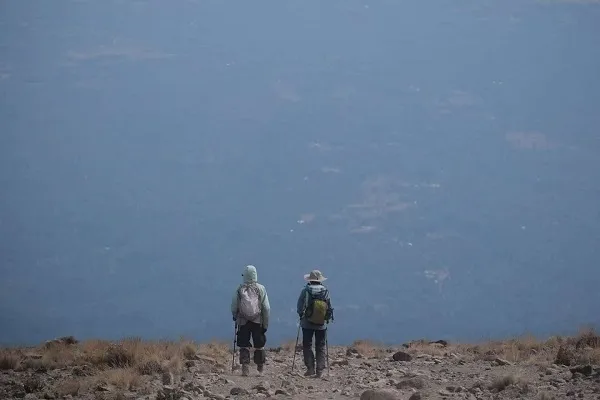
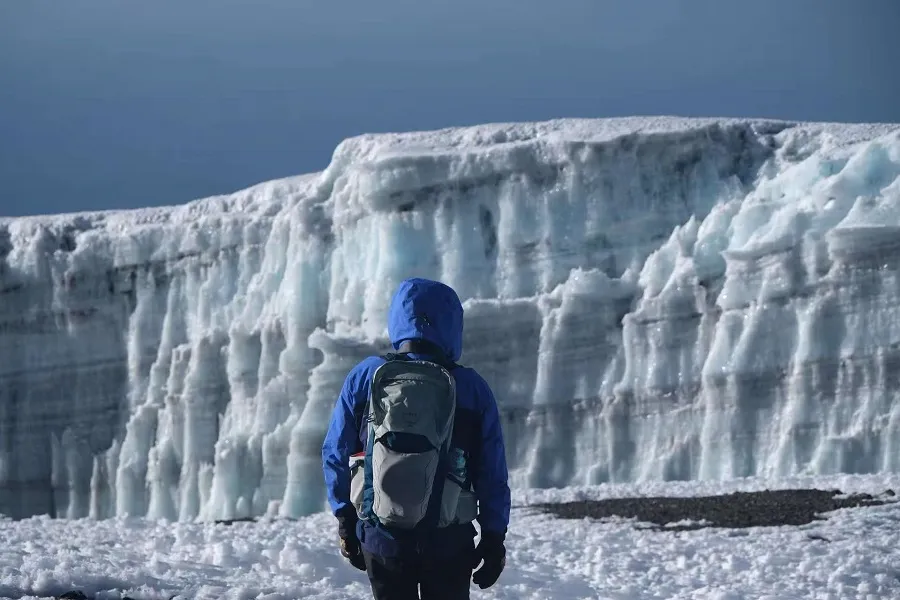
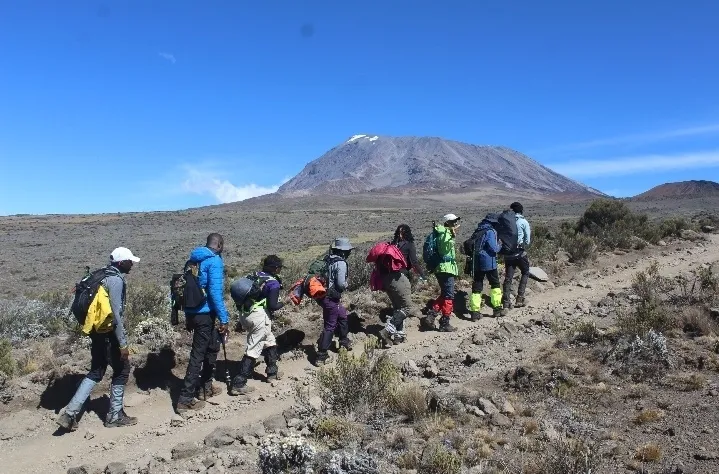
Like the other southern-approach routes, the Machame Route passes through all five of Kilimanjaro's distinct ecological zones — each one a completely different world in terms of temperature, vegetation, wildlife, and landscape character.
Machame Route Packages & Pricing
The Machame Route is offered in two standard durations, plus an optional premium extension for experienced climbers. Every package is fully inclusive of park fees, guide, cook, porters, camping equipment, meals on the mountain, and transfers from Moshi. Compare the day-by-day shape of each climb below, then open the full itinerary for whichever option suits your fitness, budget, and appetite for adventure.
 Fastest option
6-Day Machame
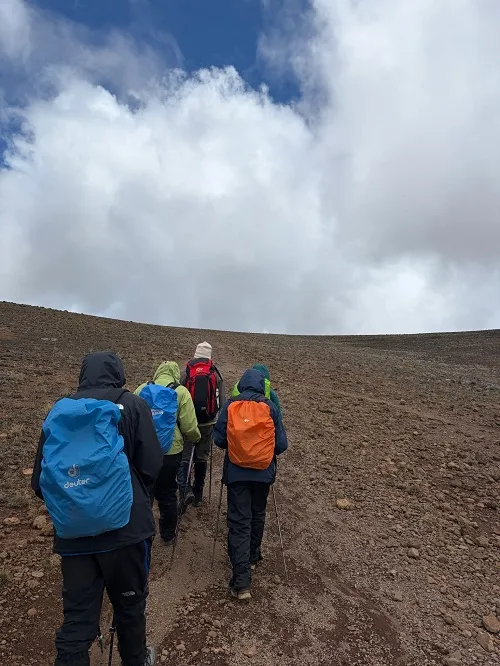
Machame Gate → Machame Camp → Shira Camp → Barranco via Lava Tower → Barafu direct (Karanga skipped) → Uhuru Peak → Mweka. The condensed climb — one long day replaces the Karanga rest night. Best for fit, previously-acclimatized trekkers.
 Recommended
7-Day Machame
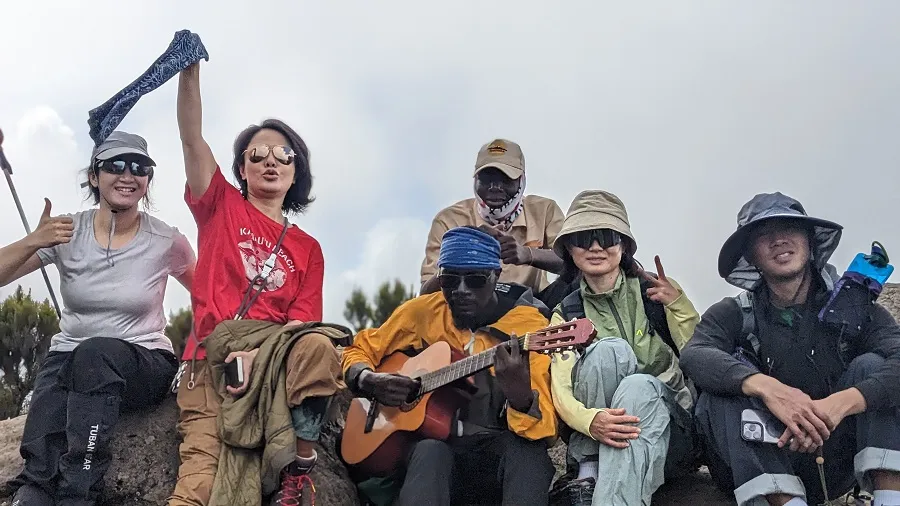
Machame Gate → Machame Camp → Shira Camp → Barranco via Lava Tower → Karanga → Barafu → Uhuru Peak → Mweka. The standard, best-value itinerary with a full acclimatization night at Karanga Camp — our recommended climb for the great majority of trekkers.
 Advanced climbers
7-Day Machame + Crater Camp
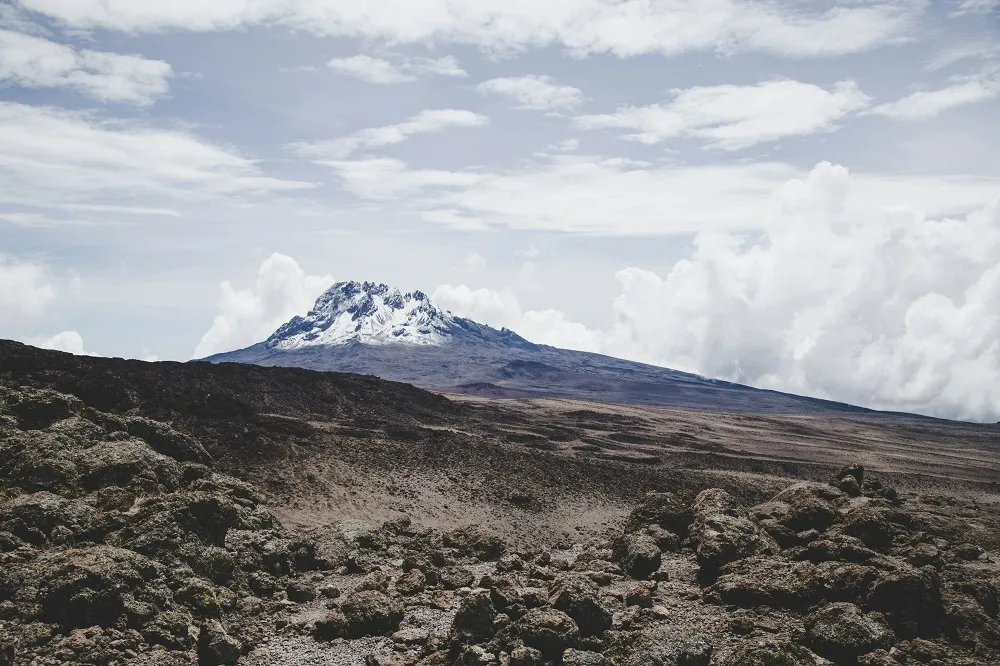
Same route to Barafu, then a specialist night camping inside the crater rim at ~5,730m before a short pre-dawn walk to Uhuru Peak. An extraordinary, rarely-offered experience for experienced high-altitude climbers only — requires a specialist permit and additional guide support.
Machame Route — Complete 7-Day Itinerary
The following is the complete 7-day Machame Route itinerary as operated by Resilience Expeditions from Moshi. Day 1 is your arrival day in Moshi; Days 2–8 cover the full climb and descent. All distances and elevations are verified field measurements from our guide team.
All Machame Route Camps & Elevations
The complete camp-by-camp reference for the 7-day Machame Route — including elevation, distance from previous camp, hiking time, and available facilities at each camp.
| Day | Camp | Elevation | Distance | Time | Facilities |
|---|---|---|---|---|---|
| Day 1 | Moshi Hotel | ~900m | — | — | Hotel room, restaurant |
| Day 2 | Machame Camp | 2,835m | 11 km | 5–7 hrs | Tented camp, long-drop toilets, busiest camp on the mountain |
| Day 3 | Shira Camp | 3,750m | 5 km | 4–6 hrs | Tented camp, chemical toilets, exposed to wind |
| Day 4 | Lava Tower (lunch only) | 4,600m | 6 km up | 4 hrs up | Ranger post, emergency shelter |
| Day 4 | Barranco Camp | 3,960m | 4 km down | 2–3 hrs down | Tented camp, toilets, busy in peak season |
| Day 5 | Karanga Camp | 3,995m | 5 km | 4–5 hrs | Tented camp, basic toilets, last reliable water |
| Day 6 | Barafu Camp | 4,673m | 4 km | 3–4 hrs | Tented camp, ranger station, basic toilets |
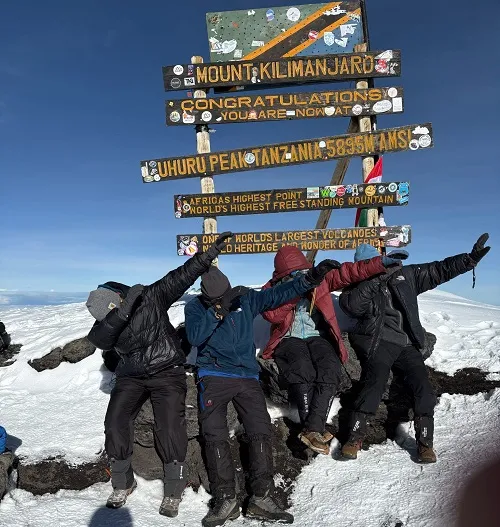
| Day 7 | Uhuru Peak — SUMMIT | 5,895m | 5 km up | 5–7 hrs up | Summit sign, certificate |
| Day 7 | Mweka Camp | 3,100m | 8 km down | 5–6 hrs down | Tented camp, toilets |
| Day 8 | Mweka Gate → Moshi | 1,640m | 10 km | 3–4 hrs | Gate, certificate issue, vehicle return |
Machame Route Summit Success Rates — 2026
The Machame Route achieves the second-highest summit success rate of any standard Kilimanjaro itinerary, just behind the 8-day Lemosho, when combined with a quality operator and proper preparation. Here is what the data shows across the available durations.
Success rate data varies dramatically between operators. The figures above reflect average rates across the industry on the Machame Route with quality operators. Resilience Expeditions achieved an 87% Uhuru Peak success rate on the 7-day Machame in 2025 — we publish this figure because we track every climb. Budget operators cutting corners on crew quality, guide experience, and pacing protocols can return rates of 55–65% on the 6-day version of this route. The route matters; the operator matters more.
Machame vs Other Kilimanjaro Routes
How does the Machame Route compare to the other six major Kilimanjaro routes? Here is the honest comparison across every meaningful factor.
| Route | Days | Distance | Success Rate | Crowds | Scenery | Price from |
|---|---|---|---|---|---|---|
Machame ← This route |
6–7 | 62 km | 85%+ (7-day) | High | ★★★★ | $1,750 |
Lemosho |
6–8 | 70 km | 90%+ (8-day) | Low | ★★★★★ | $1,840 |
Marangu |
5–6 | 64 km | 65% (5-day) | Very High | ★★★ | $1,820 |
Rongai |
6–7 | 65 km | 80% (7-day) | Low–Medium | ★★★★ | $2,050 |
Northern Circuit |
8–10 | 98 km | 95%+ (10-day) | Very Low | ★★★★★ | $2,800 |
Umbwe |
5–6 | 53 km | 70% (6-day) | Very Low | ★★★ | $1,820 |
Climbers wanting the best combination of value, scenery, and success rate: 7-day Machame Route. Climbers who can afford extra time for the highest success rate and most solitude: 8-day Lemosho. Groups booking at short notice: Machame's popularity makes it the easiest route to schedule quickly. Anyone wanting hut accommodation instead of tents: Marangu (only hut route). Experienced climbers seeking an extra high-altitude challenge: Machame + Crater Camp.
Machame Route Cost 2026–2027 — Every Item Explained
The Machame Route is one of the more affordable ways to climb Kilimanjaro because it needs fewer park-fee days and fewer crew days than Lemosho or the Northern Circuit. Here is every cost itemised, so you can compare quotes from any operator with complete clarity.
| Cost Item | 6-Day Machame | 7-Day Machame (recommended) | 7-Day + Crater Camp |
|---|---|---|---|
| TANAPA park fees ($70.40/day/person) | $422 | $493 | $563 |
| KINAPA rescue fee | $20 | $20 | $20 |
| Crater Camp special permit | — | — | $350 |
| Guide, cook & porters | $400 | $465 | $610 |
| Camping equipment | $110 | $130 | $150 |
| All meals on mountain | $140 | $165 | $190 |
| Pre/post-climb accommodation Moshi | $100 | $100 | $120 |
| Airport/hotel transfers | $60 | $60 | $60 |
| Operator margin | $498 | $517 | $697 |
| TOTAL (Resilience Expeditions) | $1,750 | $1,950 | $2,650 |
Kilimanjaro quotes vary by up to 80% for the same route. The differences are almost entirely in guide quality and crew wages, not in park fees or equipment. Low-cost operators pay guides $8–$12/day and porters $5–$8/day — below subsistence level for the weight they carry. Resilience Expeditions pays guides $25–$40/day and porters $15–$18/day, plus tips. Because Machame is the busiest route, it also attracts the most budget operators cutting corners — this is the route where checking crew wages before booking matters most. When comparing quotes, ask: "What are your guide and porter daily wages?" The answer tells you everything about the company.
Difficulty & Fitness Requirements
The Machame Route is rated Moderate to Challenging — slightly steeper underfoot than Lemosho or Rongai, which is exactly what earned it the "Whiskey Route" nickname. It requires no technical mountaineering skills — no ropes, harnesses, carabiners, or prior climbing experience. The Barranco Wall (Day 5 of the 7-day itinerary) involves hands-on-rock scrambling for approximately 200 metres but requires no equipment beyond gloves.
The primary challenge is altitude, not terrain. Mount Kilimanjaro's summit at 5,895m is significantly higher than any point in Europe or North America outside of the highest Alaskan peaks. Altitude sickness can affect any climber regardless of fitness level — an Olympic athlete is not immune to AMS (Acute Mountain Sickness).
What fitness level is required? You should be able to hike for 6–8 hours continuously on steep, varied terrain carrying a daypack of 4–6 kg, and have reasonable cardiovascular fitness. Day 3 (Machame Camp to Shira Camp) is the steepest single day of any standard Kilimanjaro itinerary, so a good baseline of leg strength matters more here than on gentler routes.
Training recommendation: Begin 12–16 weeks before your climb. Mix long-distance hiking (4+ hours, increasing distance weekly, ideally with some steep sustained climbs), cardiovascular training (running, cycling, swimming), and strength training for your legs and core. One overnight or multi-day trek in the final 8 weeks is strongly recommended to test your gear and gauge your stamina.
A useful self-assessment: Can you carry a 5 kg pack and walk for 6 hours uphill, including at least one long steep section, without stopping more than twice? If yes, you have the physical baseline for Machame. If no, you have 3–4 months to build it — which is plenty of time with consistent training. The mountain is not unforgiving to those who are reasonably fit and properly prepared. It is unforgiving only to those who are unfit or unacclimatized.
Machame Route — Complete Packing List
Every item below has been vetted by our summit guides through hundreds of Machame climbs. Items marked as Essential are non-negotiable for your safety and summit success. Everything else is strongly recommended but flexible.
Resilience Expeditions has a full equipment rental service in Moshi — sleeping bags, trekking poles, gaiters, summit gloves, crampons, and more. Ask about rental when you enquire to significantly reduce your gear purchase costs. We recommend buying your own broken-in boots; everything else can be rented from us.
Altitude Sickness — What You Must Know
Altitude sickness (AMS — Acute Mountain Sickness) is the primary safety risk on Kilimanjaro. Understanding it is essential — not because you will necessarily experience it, but because recognizing its symptoms in yourself or a fellow climber could be a life-or-death distinction at extreme altitude.
AMS is not a sign of weakness. It is a physiological response to reduced oxygen pressure at altitude and can affect any person regardless of fitness, age, or experience. An Olympic-level athlete is no less susceptible than a first-time trekker. Fitness helps you hike; acclimatization protects you at altitude. These are different things.
Diamox is a prescription medication that aids acclimatization by stimulating faster breathing, increasing blood oxygen levels. Many climbers take it prophylactically (125mg twice daily from Day 1) to reduce AMS risk. Discuss with your doctor at least 2 weeks before your climb. Common side effects include increased urination and tingling in fingers — both harmless. Do not take Diamox if you are allergic to sulpha drugs or have kidney disease. Our guides carry supplemental oxygen at Barafu Camp and summit day.
Best Time to Climb the Machame Route
Mount Kilimanjaro is technically climbable year-round, but two dry seasons offer significantly better summit conditions, clearer views, and safer scree and rock surfaces. Here is the honest month-by-month breakdown for Machame Route climbers.
January–March offers some of the best Machame conditions — dry, cold, clear summit views, and 20–30% lower prices than the July–September peak. July–October gives the most reliable weather but the busiest trails. September is the quiet peak-season sweet spot — excellent weather, the July–August crowds have thinned, and prices are marginally lower. Avoid April–May unless you have no flexibility; the long rains make the forest and moorland zones genuinely difficult.
Machame Route — Frequently Asked Questions
-
The Machame Route is available in 6 or 7 days on the mountain, plus 1 day pre-climb (arrival in Moshi) and 1 day post-climb (departure). Total trip length from arrival to departure is 8 or 9 days respectively. We strongly recommend the 7-day itinerary for its added Karanga Camp acclimatization night and higher summit success rate (85%+). The 6-day version achieves around 80% and is best suited to fit, experienced trekkers.
-
Yes, with the 7-day itinerary — Machame is the second most beginner-friendly route on the mountain after Lemosho. The main difference from Lemosho is Day 3, which is steeper and more sustained, so a slightly higher baseline of leg fitness helps. No prior mountaineering experience is required. The Barranco Wall (Day 5) involves light scrambling but no technical equipment. We do not recommend the 6-day version for first-time high-altitude trekkers.
-
Resilience Expeditions prices the Machame Route from $1,750 per person (6-day) and $1,950 per person (7-day), all fully inclusive of park fees, guide, cook, porters, all meals, camping equipment, transfers from Moshi, and pre/post-climb accommodation. The premium 7-day + Crater Camp option starts from $2,650. Not included: international flights, Tanzania visa ($50), travel insurance, and guide/porter gratuities. Prices are per person based on two climbers; solo supplements apply.
-
The 7-day Machame Route achieves 85%+ summit success rates with quality operators. Resilience Expeditions recorded an 87% Uhuru Peak summit rate on the 7-day Machame in 2025. The 6-day achieves around 80%. Because Machame is the busiest route, success rate varies more between operators here than on quieter routes — guides trained in altitude recognition, twice-daily medical checks, and proper pacing protocols all contribute substantially to success. Choosing a reputable operator is at least as important as route selection.
-
Machame's nickname plays off the older Marangu Route's nickname, the "Coca-Cola Route" — named for its gentle, hut-based, soft-drink-easy profile. Machame, by contrast, is steeper, camping-only, and has more character — earning it the "Whiskey Route" label among guides and operators. It is not a comment on difficulty relative to Lemosho or the Northern Circuit, which are comparable or gentler in gradient but longer in duration.
-
Machame vs Lemosho is the most common route comparison question. The key differences: (1) Machame is Tanzania's busiest route throughout, while Lemosho is quiet for its first 3–4 days. (2) Lemosho crosses the full Shira Plateau — Machame only touches its western edge. (3) Lemosho's 8-day acclimatization profile edges out Machame's 7-day, giving Lemosho a slightly higher success rate (90%+ vs 85%+). (4) Machame costs approximately $200–$300 less per person and takes one fewer day. The routes merge at Barranco Camp and share the same terrain from there to the summit. If budget and trip length are the priority, Machame 7-day is the better choice; if success rate and solitude matter most, choose Lemosho.
-
The two best windows are January–March (dry, cold, clear, lower prices) and July–October (peak dry season, most stable weather, busiest). September is the quiet sweet spot within peak season. Avoid April–May (long rains — muddy trails, poor visibility, slippery conditions, and the forest section on Day 2 becomes especially heavy going). November has short rains but is generally manageable. December is good as the mountain dries out.
-
Included: all TANAPA park fees and rescue fees, certified TANAPA-licensed guide (1 lead guide + assistant per group), cook, KPAP-certified porters (max 15 kg porter load), all camping equipment (tents, sleeping pads, mess tent, toilet tent), Kilimanjaro certificate, transfers to/from Moshi hotel, and one night pre-climb hotel accommodation. Not included: international flights, Tanzania visa ($50), travel insurance (mandatory), guide/porter tips (strongly encouraged), rental equipment, premium drinks at camp, Day 1 hotel dinner, and personal medical costs.


