
What Does a Kilimanjaro Climb Actually Cost?
The honest answer has three layers. The climb itself costs from $1,650 to $2,200 per person on one of our group departures, depending on the route and the number of days. A more private climb costs more: on the 7-day Machame, the semi-private package is from $2,350 and the luxury private package from $2,800. And the total trip, once you add flights, tips, visa, insurance and gear, usually lands between about $3,000 and $6,000 per person for climbers travelling from Europe or North America.
Everything on this page uses the prices published on our own route and package pages, and the park-fee rates published for 2026. Where a figure is our estimate rather than a published price, we say so. If you already know your route, jump straight to the full list of Kilimanjaro packages; if you are still choosing, our Kilimanjaro routes guide explains how the routes differ.
Three ideas will save you the most money and disappointment, and we come back to each in detail below:
- Price is only half the picture. A cheap, short climb with a low success rate can cost more per summit than a longer one. The cost-per-summit table below shows this with real numbers.
- About half of every price is park fees. Those fees are fixed by the national park, which is why a price far below the going rate is a warning sign rather than a bargain.
- Timing matters. Our group departures drop to $1,650 to $1,720 in late April and are cheaper in May and November, while the Christmas and New Year departures cost more.
All prices are per person in US dollars and are the "from" prices on our package pages in October 2026. Exact prices depend on your dates, group size and package type, so ask for an itemised quote on our contact page. Your quote is the complete price: it includes everything listed on the package page.
Kilimanjaro Prices by Route and Length
Kilimanjaro has six main routes, and each can be done over different numbers of days. Price rises with the number of days because every extra day adds conservation fees, camping fees and crew costs, but a longer climb also acclimatises you better. Here are our six most-booked packages, with the full price list below.
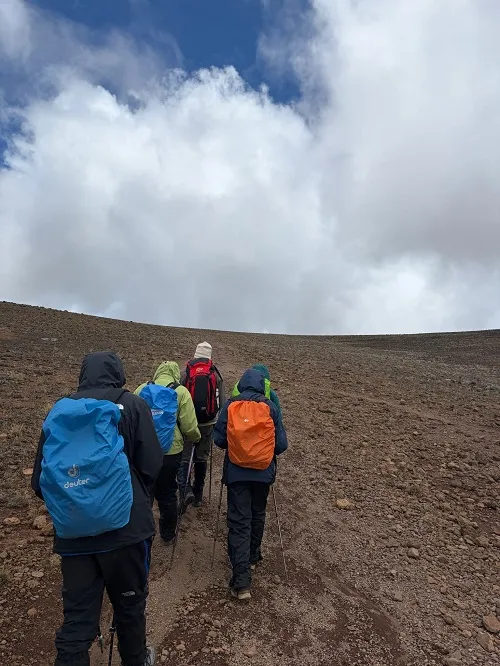 Lowest Machame price
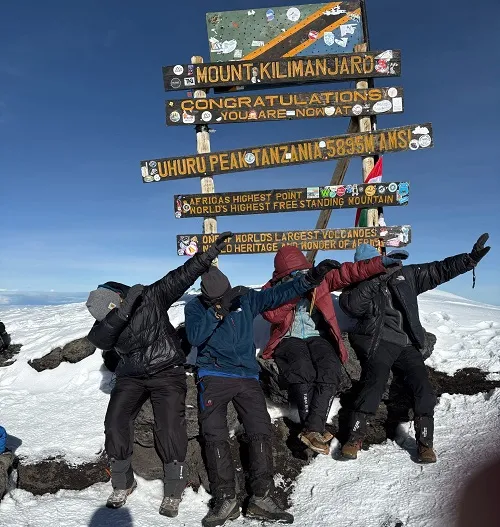 Best value
 Quiet northern approach
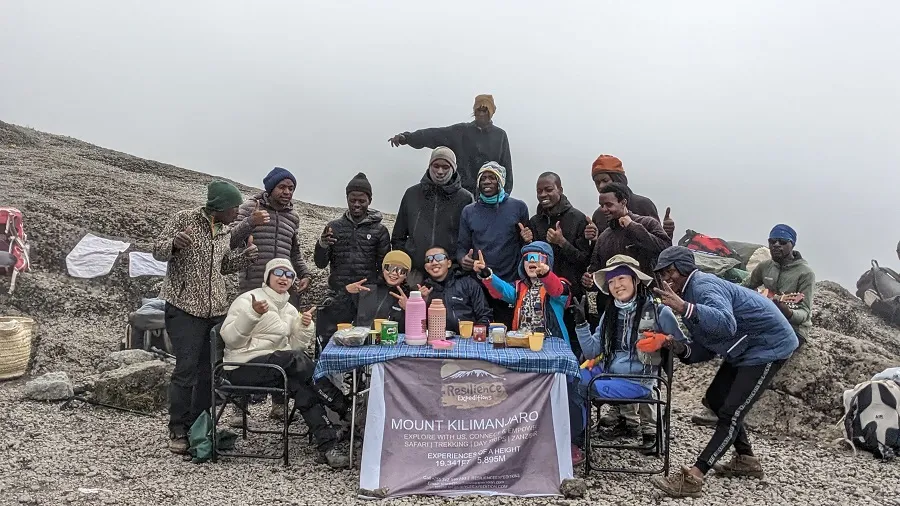 Strong success rate
 Highest success
All ten published packages
| Package | Days / nights | Sleeping | Price from (per person) | Success rate |
|---|---|---|---|---|
| 5 / 4 | Huts | $1,650 | ~65% | |
| 6 / 5 | Huts | $1,850 | ~78% | |
| 6 / 5 | Tents | $1,800 | ~65% | |
| 7 / 6 | Tents | $1,950 | ~72% | |
| 6 / 5 | Tents | $1,750 | ~75% | |
| 7 / 6 | Tents | $1,900 | ~85% | |
| 6 / 5 | Tents | $1,950 | ~80% | |
| 7 / 6 | Tents | $2,100 | ~85% | |
| 7 / 6 | Tents | $2,050 | ~88% | |
| 8 / 7 | Tents | $2,200 | ~92% |
Success rates are our published figures for well-prepared climbers; they are not independent statistics. Treat them as a guide to the relative strength of each route rather than a promise. You can read the full day-by-day itinerary for every package: Marangu 5-day, Marangu 6-day, Umbwe 6-day, Umbwe 7-day, Machame 6-day, Machame 7-day, Rongai 6-day, Rongai 7-day, Lemosho 7-day and Lemosho 8-day. We also run longer 9-day, 10-day and 11-day Northern Circuit climbs; request a quote on those pages.
Why does Lemosho cost more than Machame? Mainly the extra day. The 8-day Lemosho carries an extra day of park conservation fees, camping fees and crew costs compared with the 7-day Machame. Many climbers consider it the best-value route precisely because that extra day of acclimatisation raises the chance of summiting. The Lemosho route page, Machame route page, Marangu route page, Rongai route page, Umbwe route page and Northern Circuit page explain each route in depth.
The Cheapest Climb Is Not Always the Cheapest Summit
If you fail to reach the summit, you do not get a partial refund, and you may decide to come back and try again. That makes the success rate part of the cost. A simple way to compare routes is to divide the price by the success rate, giving the price you would pay per successful summit on average. The table below does this for all ten packages, sorted from lowest to highest.
| Package | Price | Published success rate | Price divided by success rate |
|---|---|---|---|
| Machame 7-day | $1,900 | ~85% | $2,235 |
| Lemosho 7-day | $2,050 | ~88% | $2,330 |
| Machame 6-day | $1,750 | ~75% | $2,333 |
| Marangu 6-day | $1,850 | ~78% | $2,372 |
| Lemosho 8-day | $2,200 | ~92% | $2,391 |
| Rongai 6-day | $1,950 | ~80% | $2,438 |
| Rongai 7-day | $2,100 | ~85% | $2,471 |
| Marangu 5-day | $1,650 | ~65% | $2,538 |
| Umbwe 7-day | $1,950 | ~72% | $2,708 |
| Umbwe 6-day | $1,800 | ~65% | $2,769 |
This is an illustration, not a precise calculation: success rates are published figures, individual climbers differ, and the table ignores flights and time off work, which would make a failed climb even costlier. But the pattern is clear. The 7-day Machame comes out cheapest per summit, while the shortest routes with the lowest success rates, such as the 5-day Marangu and the 6-day Umbwe, are the most expensive per summit even though their ticket prices are the lowest. The 8-day Lemosho costs more up front but has the highest success rate of the standard routes.
Altitude is the main reason shorter routes fail. Your body needs time to adapt, and each extra day gives it more. Our altitude sickness guide explains how acclimatisation works, and the training guide shows how to improve your odds before you arrive.
If you can afford one more day, take it. The few hundred dollars it adds are usually less than the cost of an unsuccessful attempt, and a 7-day or 8-day climb is also more enjoyable than a rushed 5-day or 6-day one.
Group, Semi-Private or Private? What Each Costs
Most climbers join a group departure, but each route can also be run as a semi-private or fully private climb. The route and itinerary are identical; what changes is the comfort, the guide ratio and the safety equipment. The table shows the three levels for the 7-day Machame, where the difference is easiest to see.
| Standard (group) | Premium (semi-private) | Private (luxury) | |
|---|---|---|---|
Price from, per person | $1,900 | $2,350 | $2,800 |
Hotel in Moshi | Budget guesthouse | Mid-range hotel | Boutique hotel |
Guides | Lead guide plus 1 assistant per 3 climbers | Dedicated lead and assistant guide | 1:1 guide ratio, full crew |
Toilet on the mountain | Shared facilities | Toilet tent | Private toilet and shower tent |
Oximeter checks | Daily | Twice daily | Three times daily |
Emergency kit | Emergency oxygen | Oxygen plus Gamow bag | Oxygen, Gamow bag, AED, satellite communicator |
Meals | Three meals and water | Adds hot drinks | Restaurant-quality meals |
Airport transfers | Transfers from Moshi | Included | Included, plus Moshi cultural tour |
Standard (group climb), from $1,900. You join other climbers on a fixed departure (our group departures are limited to 12 people, and 8 on Umbwe). This is the most affordable way to climb, and the safety standard is the same: certified guides, emergency oxygen and daily oximeter checks. Solo travellers can request a place on a shared departure, so you do not need to pay for a private climb to climb alone.
Premium (semi-private), from $2,350. This is a dedicated guide team for your party, a mid-range hotel in Moshi, a toilet tent and more frequent health checks. It suits couples and small groups who want more comfort and control over the pace, without the full price of a private climb.
Private (luxury), from $2,800. A 1:1 guide ratio, a private toilet and shower tent, restaurant-quality meals and the most complete safety package, including an AED device and a satellite communicator. It is the right choice for climbers with specific needs, those travelling with family, or anyone who wants the most support. Private packages can also be combined with a safari (see below).
The same three levels are available on other routes; exact prices vary by route, so request a quote for your chosen climb. If you are not sure which level suits you, the why choose us page explains how we run every climb.
Park Fees: About Half of Every Price
Kilimanjaro National Park charges per person, per day, and the rates are the same whichever operator you use. The published 2026 rates are:
Camping fee: $50 per person per night on tented routes ($60 per night in the huts on Marangu)
Rescue fee: $20 per person, once
Crew entry fees: a small daily charge for each guide, porter and cook (we estimate about $8 per day per climber, given about three porters plus guides per climber)
VAT: 18% added to the total
Using those rates, here is what the park fees come to for a single climber on each of our packages. These are our own calculations from the published rates, so treat them as close estimates; the crew entry figure in particular is an approximation. Your quote contains the exact amount.
| Package | Conservation | Camping or huts | Rescue + crew entry | Total with 18% VAT | Share of standard price |
|---|---|---|---|---|---|
| Marangu 5-day | $350 | $240 (huts) | ~$60 | ~$767 | ~46% |
| Marangu 6-day | $420 | $300 (huts) | ~$68 | ~$930 | ~50% |
| Umbwe 6-day | $420 | $250 | ~$68 | ~$871 | ~48% |
| Umbwe 7-day | $490 | $300 | ~$76 | ~$1,022 | ~52% |
| Machame 6-day | $420 | $250 | ~$68 | ~$871 | ~50% |
| Machame 7-day | $490 | $300 | ~$76 | ~$1,022 | ~54% |
| Rongai 6-day | $420 | $250 | ~$68 | ~$871 | ~45% |
| Rongai 7-day | $490 | $300 | ~$76 | ~$1,022 | ~49% |
| Lemosho 7-day | $490 | $300 | ~$76 | ~$1,022 | ~50% |
| Lemosho 8-day | $560 | $350 | ~$84 | ~$1,173 | ~53% |
The pattern is striking. On most packages, park fees account for roughly half of the price. That is the floor under any honest Kilimanjaro price: no matter how an operator structures its costs, it must pay the park before it pays anyone else. All of our prices include these fees, the KINAPA rescue fee contribution and the TANAPA summit certificate you receive at Mweka Gate, and our group departures page states there are no hidden fees at the gate.
Why do fees rise with the number of days? Because both the conservation fee and the camping fee are charged for each day or night you are in the park. An 8-day climb therefore carries about $300 more in park fees than a 6-day one. That is why a longer route costs more, and it is also why very cheap short routes tend to be shorter on acclimatisation. If you are comparing the 6-day and 7-day Machame, the $150 price difference is almost exactly the $151 of extra park fees, so the extra day costs you very little beyond the fees themselves.
When comparing quotes, always confirm that park fees, camping fees, the rescue fee and VAT are included. A low headline price that leaves them out can end up costing more than an all-inclusive quote, and you will be asked to pay at the gate.
Where the Rest of the Price Goes
After park fees, the remaining money pays for everything that gets you up and down the mountain safely and comfortably. For a standard climb, that includes:
- The crew. A certified lead guide, an assistant guide for every three climbers, about three porters per climber and a mountain cook. Porters carry a maximum of 20 kg of company gear each (not counting their personal kit). Fair, timely wages come out of this part of the price, which is the strongest reason to be wary of very low quotes.
- Food and water. Three meals a day and drinking water for the whole climb, bought, carried and cooked on the mountain.
- Camping equipment. Dome sleeping tents, a dining tent, tables and chairs, and mats. Premium and Private packages add toilet tents.
- Safety equipment. Emergency supplemental oxygen, pulse oximeters used every morning and evening, and a Gamow bag on higher packages. See our altitude sickness guide for how monitoring works.
- Transport and accommodation. Transfers between Moshi and the gate, and hotel nights in Moshi before and after the climb. Our Moshi guide and Arusha guide cover the towns around the mountain.
- Operations. Licences, insurance, vehicles, office staff and 24-hour support.
Add the crew costs and the equipment, and it is easy to see why a climb priced far below $1,650 leaves almost nothing for any of it. Our guide on why choose Resilience Expeditions explains how we run our crews and what we do to keep them safe and well treated.
What Is Included and What Is Not
Quotes are only comparable if they include the same things. This is what is and is not covered in our packages.
| Included in the price | Not included |
|---|---|
| TANAPA national park entry fees | International flights to Kilimanjaro (JRO) |
| Camping or hut fees for every night on the mountain | Tanzania tourist visa (about $50) |
| KINAPA rescue fee contribution and TANAPA summit certificate | Personal travel and evacuation insurance |
| Certified lead guide, assistant guides (1 per 3 climbers), porters (about 3 per climber) and a mountain cook | Personal gear, sleeping bag rated to −15°C and trekking poles (rentals available in Moshi) |
| Dome sleeping tents, dining tent, three meals a day and water | Tips for guides and porters |
| Emergency supplemental oxygen and pulse oximeter monitoring | Alcohol and Diamox (prescription needed) |
| Hotel in Moshi at the start and end (Standard: guesthouse) | Single-tent supplement, hotels outside the package, personal spending |
The most common surprises with other operators are park fees not being included, hotel nights not being included, and safety equipment such as oxygen being an optional extra. Check each of these when you compare. Each package page lists inclusions: see, for example, the Machame 7-day, Lemosho 8-day and Rongai 7-day pages.
Costs Outside the Package
These are the costs that are easy to overlook. The ranges are typical figures and will vary with where you start your journey and the choices you make.
| Item | Typical cost | Notes |
|---|---|---|
| International flights | $900 to $1,800 | Varies widely by origin and season. Fly into Kilimanjaro (JRO) and avoid an Arusha or Nairobi connection unless it is cheaper. |
| Tips for the crew | $210 to $400 | $30 to $50 per climber per day, by climb length. See the tipping section. |
| Gear rental in Moshi | $0 to $224 | Sleeping bag $15/day, poles $5, duffel $5, gaiters $3: about $196 for 7 days, $224 for 8 days. |
| Gear purchase | $0 to $500+ | Depends on what you own. Boots, layers and a down jacket are the main items. |
| Tanzania tourist visa | About $50 | For many nationalities; check yours before you travel. |
| Travel and evacuation insurance | $60 to $200+ | Must cover trekking to 5,895 m and evacuation. Mainland Tanzania has also reported a mandatory inbound policy (about $44); confirm the current rule. |
| Diamox and medical | $10 to $40 | Prescription needed. Ask your doctor about altitude medication. |
| Extra hotel nights | $60 to $150 per night | Arrive a day early for gear checks and to recover after the climb. |
| Drinks, snacks, souvenirs | $50 to $150 | Alcohol is not included in the package. |
| Typical extras | $1,300 to $3,000+ | On top of the climb price. |
Flights are usually the biggest cost you control. Book early and fly into Kilimanjaro International Airport (JRO), which is about an hour from Moshi, and compare it with flights to Dar es Salaam or Nairobi with an onward connection. If you plan to add a safari, a single open-jaw ticket (in to Kilimanjaro, out of Zanzibar) can save backtracking; see our combo packages.
Gear does not need to be expensive. Most climbers already own boots and some layers, and everything bulky can be rented in Moshi. Our gear list gives rental rates: a −10°C sleeping bag is $15 per day, trekking poles $5, a 100L duffel $5 and gaiters $3, a total of $28 per day if you rent all four, which is about $196 for a 7-day climb. Check the warmth rating required for your route (the Machame page asks for a −15°C bag), and put your money into good boots and a warm down jacket, which you will use again.
Insurance must cover trekking to 5,895 m and emergency evacuation, which some standard policies exclude. Mainland Tanzania has also reported a mandatory inbound travel insurance for foreign visitors of about $44, though the details were still being confirmed when this page was updated, so check the current requirement before you travel. A simple tip: read the altitude limit in your policy before you buy.
Extra hotel nights are worth budgeting. Arriving a day early gives you time for a gear check and to recover from the flight, and a night after the climb lets you rest. Our things to do in Moshi and things to do in Arusha pages suggest how to spend them.
How Much to Tip Your Kilimanjaro Crew
Tips are a significant part of a Kilimanjaro crew's income and are not included in the package price, so budget for them from the start. We recommend about $30 to $50 per climber per day, divided among the whole crew: head guide, assistant guides, cook and porters. Multiply by the number of days on the mountain to get your total:
| Climb | Days | Per climber at $30 per day | Per climber at $50 per day |
|---|---|---|---|
| 6-day Machame | 6 | $180 | $300 |
| 7-day Machame, Rongai or Lemosho | 7 | $210 | $350 |
| 8-day Lemosho | 8 | $240 | $400 |
The right amount within the range depends on how well the crew has looked after you, and on your group size: a larger group shares the cost, while a solo climber is paying the full amount per person. Tips should be given at the end of the climb, in cash, in front of the whole crew so everyone sees what is given, and a tip envelope and guidance are provided before summit day. Your guide will explain how the tips are divided, and you should feel free to ask for the breakdown.
It is worth asking any operator how they pay their crews and what the tipping procedure is, because tips fill the gap when wages are low. Our why choose us page covers our crew welfare practices, including porter pay and the 20 kg carry limit.
Bring tips in small US dollar notes, in an envelope you prepare before the climb. Tanzanian shillings are also accepted, but dollars are what most crews expect, and you will not find a cash machine on the mountain.
Seasonal Prices: When to Climb to Save
Our group departure prices change with the season. The cheapest departures are in late April and the wet months of May and November, when fewer climbers are on the mountain, while the Christmas and New Year departures cost more. This table shows the published prices for the 2026 and 2027 departures (the pattern is the same both years).
| Route | Peak season (Jan to Mar, Jun to Oct, Dec) | Late April | May | November | Christmas to New Year |
|---|---|---|---|---|---|
| 7-day Machame | $1,900 | $1,720 | $1,820 | $1,820 | $1,900 |
| 8-day Lemosho | $2,200 | $1,980 | $2,050 | $2,100 | $2,350 (24 to 31 Dec) |
| 7-day Rongai | $2,100 | n/a | $1,950 | $1,980 | $2,100 |
| 6-day Marangu | $1,850 | $1,650 (27 Apr to 2 May) | $1,780 | $1,780 | $1,900 (27 Dec start) |
| 7-day Umbwe | $1,950 | n/a | n/a | n/a | n/a |
Low-season climbing is not free of trade-offs. The long rains fall from about late March to May and the short rains in November, which means wetter trails, more cloud and less reliable views. The Rongai and Umbwe routes are drier on their side of the mountain, and the Rongai is often recommended for wet-season climbs. The most popular and driest windows are January to March and June to October, which is why prices are highest then. See our best time to visit Tanzania guide for weather and crowd detail, and the group departures page for exact dates and availability.
If you have flexibility, shoulder-season dates give the best balance: $1,820 for the 7-day Machame in May or November is a saving of $80 on the peak price, and late April brings it down to $1,720.
Three Sample Total Budgets
To show how the pieces fit together, here are three sample budgets for one climber travelling from Europe or North America. They combine published package prices with typical figures for tips, flights, gear and insurance, which are estimates: your own flights in particular may be higher or lower.
| Item | Lean | Typical | Comfort |
|---|---|---|---|
| Climb package | $1,750 (6-day Machame group climb) | $2,200 (8-day Lemosho group climb) | $2,800 (7-day Machame, Private) |
| Tips | $240 | $320 | $350 |
| Flights | $900 | $1,300 | $1,800 |
| Gear | $0 | $224 | $500 |
| Visa and insurance | $110 | $200 | $300 |
| Extra hotel nights | $0 | $120 | $300 |
| Estimated total | ~$3,000 | ~$4,364 | ~$6,050 |
Lean (about $3,000). A group climb on the 6-day Machame, using your own gear and tips at the lower end. It works for fit, experienced trekkers on a firm budget, though the 7-day version for $150 more usually has the better success rate.
Typical (about $4,364). The 8-day Lemosho group climb with rented gear and a couple of extra hotel nights. A sensible budget for first-time climbers who want the best chance of the summit.
Comfort (about $6,050). A private 7-day Machame, with new gear, higher flights and more hotel nights. It suits anyone who wants maximum support and flexibility.
Want to extend the trip? A safari adds cost but also value: our 5-day Serengeti classic safari starts from $1,850 per person and the 10-day safari and Zanzibar combo from $3,200. See the combo section below.
How to Save Without Cutting Corners
The best savings come from timing and flexibility, not from a cheaper crew or thinner safety margins.
- Join a group departure. Standard group climbs are the lowest published prices. Solo travellers can request a place on a shared departure, so you do not pay a private rate to climb alone. See the group departures.
- Climb in the shoulder or low season. Late April, May and November departures are $80 to $220 cheaper per person than peak dates, if you can accept more rain.
- Rent bulky gear in Moshi. A sleeping bag, poles and a duffel cost about $25 a day to rent versus hundreds to buy. Our gear list shows what to rent and what to bring.
- Book flights early and compare airports. Flights are the biggest cost you control.
- Choose the right route first time. A route with a higher success rate often costs less per summit; see the cost-per-summit table.
- Train properly. Fitness raises your odds of summiting, and good preparation costs far less than a second attempt. See our training tips.
- Combine trips with one operator. Booking a climb and safari together removes duplicate transfers; see our combos.
Warm-up treks can also help. Many climbers use a trek on Mount Meru to test their fitness and acclimatise before Kilimanjaro, which is a good way to avoid wasting your main climb on an altitude problem you could have discovered earlier.
How to Spot a Too-Cheap Kilimanjaro Quote
Prices on Kilimanjaro are constrained by park fees, which are about half of the cost, plus crew wages, food and equipment. A quote far below the going rate means something is being cut. These are the questions to ask any operator, including us.
- Are all park fees, camping fees, the rescue fee and VAT included? If not, you will pay them at the gate or in a surprise invoice.
- How are porters and guides paid, and what is the carry limit? Vague answers are a red flag. The carry limit on our climbs is 20 kg of company gear per porter, excluding personal kit.
- What safety equipment is carried? You want emergency oxygen on every climb and daily pulse oximeter checks as a minimum. Ours are described on each route page.
- What is the guide-to-climber ratio? Ours is one assistant guide per three climbers on standard packages.
- What is the group size? Our group departures are limited to 12 climbers (8 on Umbwe). Very large groups mean less attention for each climber.
- Is the quote the final price? Our quotes are, and the group departures page states there are no hidden fees at the gate.
- Is the operator a licensed local company? Check for a current licence and that the name on your contract matches the company that will run your climb. A reseller adds a margin and a middleman.
- What is the cancellation policy? It should be in writing before you pay. See the next section for ours.
Read what climbers say on our reviews page and more about how we work on why choose us. If you want to compare us with other operators, ask each of them for an itemised quote that lists the same inclusions, and compare line by line.
Payment, Deposits and Cancellation
You do not need to pay anything to request a quote: the enquiry form is no-obligation, and we reply within 24 hours with an itemised price. When you decide to book, ask for the deposit amount and payment schedule in writing before you pay anything.
For our group departures, the published cancellation terms are:
| When you cancel | Deposit refund |
|---|---|
| More than 60 days before departure | Full refund |
| 30 to 59 days before departure | 50% refund |
| Within 30 days of departure | Non-refundable (we will help find an alternative date) |
| Date changes | Free where availability allows |
These terms apply to group departures; ask for the terms that apply to a semi-private or private booking when you request your quote. Whatever you book, buy travel insurance that covers cancellation as well as trekking and evacuation, because it protects the money you cannot get back. For questions, see our contact page or use the form on this page.
Adding a Safari or Zanzibar: Combo Costs
Many climbers extend their trip with a safari or a beach stay. Booking everything with one operator avoids duplicate transfers and keeps the pricing in one place. Our published prices give a useful guide:
- 5-day Serengeti classic safari: from $1,850 per person. See also the 4-day mid-range and 6-day luxury safaris and the full safari packages list.
- 10-day safari and Zanzibar combo: from $3,200 per person, for a beach finish after the safari.
- Kilimanjaro and safari combos: one itinerary and one operator; ask for a combined quote. Private climbs can include safari pricing.
- Zanzibar packages: a rest on the beach after the mountain.
The right order is nearly always climb first, then safari, then beach, because the climb demands you are rested and the beach is the reward at the end. Our Kilimanjaro and safari guide covers the timing, and the Tanzania safari guide, Serengeti, Ngorongoro and Tarangire pages describe the parks. For migration timing, see the Serengeti migration safari page.
Transparent Pricing From a Local Operator
Resilience Expeditions is a Moshi-based Tanzanian operator established in 2010. Our quoted price is the complete price, and it includes everything listed on the package page, so there are no surprises at the gate. Every climb comes with certified guides, emergency oxygen carried from Barafu Camp upwards and daily pulse oximeter monitoring. Our crews are paid fair wages on schedule and carry a maximum of 20 kg each.
Climbers rate us 4.9 out of 5 on Google; you can read the guest reviews yourself and learn more about our team on the about us page. To plan your climb, start with the Kilimanjaro packages, check the group departures or contact us for a free quote. If you are a travel agent, see our B2B partner page.
More Kilimanjaro Planning Resources
Everything you need to plan your climb is on one site. These pages cover routes, preparation, safety and add-on trips.
Frequently Asked Questions
- Published standard group prices run from $1,650 per person (5-day Marangu) to $2,200 (8-day Lemosho). The most popular choice, the 7-day Machame, is from $1,900 on the group climb, $2,350 semi-private and $2,800 private. Flights, visa, insurance, personal gear and crew tips are extra.
- Join a group departure on a short route outside peak season. Our lowest published price is $1,650 for the 5-day Marangu (hut route), and low-season group departures of the 7-day Machame start from $1,720. Very short routes have lower success rates, so the cheapest ticket is not always the cheapest summit. See the cost-per-summit comparison above and our group departures.
- Because more than half of the price goes to the national park. Park conservation, camping or hut fees, a rescue levy and crew entry fees, plus 18% VAT, come to roughly $770 to $1,170 per climber depending on length. The rest pays for a certified guide team, porters, a cook, food, tents, emergency oxygen, monitoring equipment and transfers.
- Yes. TANAPA entry fees, camping or hut fees, the KINAPA rescue levy contribution and the summit certificate are included in every package, and our group departures page states there are no hidden fees at the gate. The only way to avoid surprises is to check that any quote you compare says the same.
- We recommend about $30 to $50 per climber per day, divided among the whole crew. For a 7-day climb that is roughly $210 to $350 per climber. A tip envelope and guidance are provided before summit day, and tips are not included in the package price.
- International flights, the Tanzania tourist visa (about $50), personal travel and evacuation insurance, personal gear (rentals available in Moshi), a sleeping bag rated to −15°C if you do not rent one, trekking poles, tips for guides and porters, alcohol, and Diamox (prescription needed).
- Our gear list gives the rental rates: a −10°C sleeping bag is $15 per day, trekking poles $5, a 100L duffel $5 and gaiters $3. Renting all four for a 7-day climb comes to about $196 in total. A sleeping mat is usually included.
- On the 7-day Machame, Standard ($1,900) is the group climb with a budget guesthouse in Moshi; Premium ($2,350) adds a mid-range hotel, a dedicated guide team, a toilet tent, hot drinks, a Gamow bag, twice-daily oximeter checks and airport transfers; Private ($2,800) adds a 1:1 guide ratio, a private toilet and shower tent, restaurant-quality meals, an AED device, three daily oximeter checks, a satellite communicator and a cultural tour of Moshi.
- Often, yes. Published group departures drop to $1,720 for the 7-day Machame in late April and $1,820 in May and November, and the 8-day Lemosho falls to $1,980 in April. The rains make conditions harder, and the price rises again over Christmas and New Year. See our best time to visit Tanzania guide before you decide.
- On group departures, cancellations more than 60 days before departure receive a full deposit refund, 30 to 59 days a 50% refund, and within 30 days the deposit is non-refundable (we will help you move to another date). Date changes are free where availability allows. Ask for the deposit amount and written terms for your specific booking before paying.
- No. Kilimanjaro National Park requires climbers to be accompanied by a licensed guide, and park fees are due whichever way you book. Going through a local operator directly, rather than a reseller, is the best way to avoid paying extra margins.
- All prices are per person in US dollars. Group climbs share the mountain with other climbers (maximum 12 on our departures, 8 on Umbwe), while Semi-Private and Private packages are arranged for your own party.
- Most international climbers should plan on roughly $3,000 to $6,000 all in: the climb itself, tips, flights, visa and insurance, gear rental and a few extra hotel nights. Use the sample budgets on this page and ask for an itemised quote.
- Yes. Mount Meru is a shorter, lower trek that many climbers use as a warm-up. See our Mount Meru climbing guide.
- Combining trips with one operator removes duplicate transfers and often simplifies pricing. See our Kilimanjaro and safari combos, the 10-day safari and Zanzibar combo and Zanzibar packages.


